
 en.cryptonomist.ch
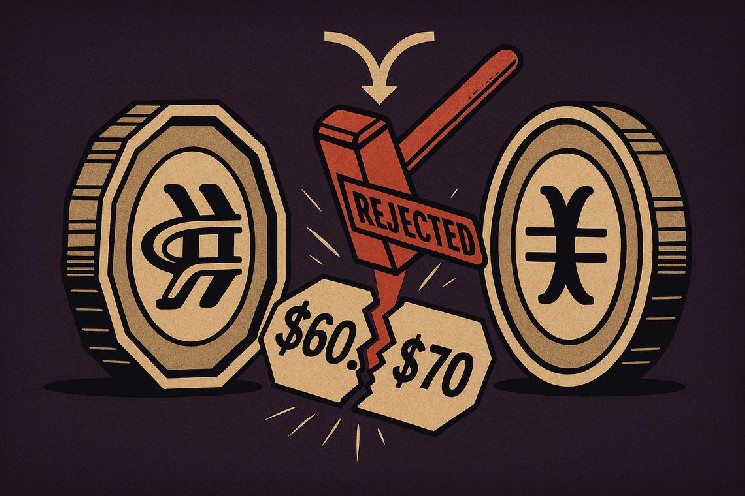
PayPal’s board looked at a $53 billion buyout offer from Stripe and Advent International and said no. That rejection, formalized on July 20, is now the most consequential strategic bet the company has made in years — and it comes with a very specific burden of proof.
Key takeaways
- Stripe and Advent International offered $60.50 per share — roughly $53 billion with a 28% premium — to take PayPal private on July 15; the board rejected it within days.
- PayPal’s advisers at Goldman Sachs and Evercore pushed back with an ask closer to $70 per share.
- PayPal’s stock had already fallen nearly 90% from its July 2021 peak of $305.88 to roughly $47.37 before the offer arrived.
- Venmo generated $1.7 billion in revenue in 2025, up about 20%, but branded checkout — PayPal’s core franchise — grew just 1%-2% on a currency-neutral basis.
- New CEO Enrique Lores, in the job since early 2026, faces significant credibility tests as PayPal executes its independent strategy.
The Stripe and Advent International Offer — and Why PayPal Said No
On July 15, Reuters reported that Stripe and Advent International had put a formal offer on the table: $60.50 per share, representing a 28% premium to the prior close and an aggregate price tag of roughly $53 billion. The deal came with about $50 billion in committed bank financing, with the two bidders reportedly planning to split ownership equally and keep the company intact rather than break it apart.
PayPal’s board, advised by Goldman Sachs and Evercore, rejected the offer within days. The public answer was a version of the standard corporate refrain — management believes it can deliver more value independently. But the private counter was more specific: sources reported PayPal’s advisers were asking closer to $70 per share, a gap of roughly $10 per share that the bidders were unwilling to close.
That gap matters because it is not just a negotiating position. It is a claim. A board that turns down $53 billion is asserting, on the record, that the organization it oversees will produce at least that much value for shareholders on its own. Given the last five years of PayPal’s history, that assertion invites serious scrutiny.
Why Stripe and Advent wanted PayPal
Neither party is operating on instinct. Stripe was valued at $159 billion in a February 2026 employee tender and has already paid $1.1 billion for Bridge, the stablecoin infrastructure company, and backed Tempo, a payments blockchain that raised $500 million at a $5 billion valuation. Advent, meanwhile, has invested more than $7.8 billion across 18 payments and fintech companies since 2008 — including Worldpay, Nets, and Nexi — with a track record of extracting value from undermanaged payments assets.
What they saw in PayPal was legible from the coverage: $PYUSD stablecoin distribution across 70 markets, the Venmo consumer network, branded checkout infrastructure, and what KBW analyst Sanjay Sakhrani described as PayPal’s distinctive consumer data advantage in agentic commerce. The bid framed PayPal as the distribution layer of the next payments cycle. Whether that value gets captured by Stripe and Advent or by PayPal’s own management is now the open question.
A Decade of Decline Behind a $44 Billion Price Tag
The stock tells a brutal story. PayPal peaked at $305.88 on July 23, 2021, when the company carried a market value approaching $360 billion. By the time Stripe and Advent’s offer arrived, shares had fallen to roughly $47.37 — a decline of almost 90% from that high, even as global payments volumes kept expanding across the industry.
The reasons are structural. According to Bernstein, PayPal’s share of US digital wallets has collapsed from approximately 90% in 2017 to about 40% in 2026, with Apple Pay hovering near 20% and Shop Pay compounding at roughly 30% annually. Total active accounts stood at 439 million at the end of March — just four million above the level from December 2022. Four years, essentially flat user growth, in a global e-commerce market that added hundreds of millions of new buyers.
Core business growth that barely registers
The revenue mix sharpens the problem. PayPal’s total revenue rose 4% in 2025 to $33.2 billion on $1.79 trillion of payment volume. But branded checkout — the business that defines what PayPal actually is — grew just 1% in Q4 2025 and 2% in Q1 2026 on a currency-neutral basis. The faster-growing piece, Braintree, operates as an unbranded enterprise processor at margins that large customers negotiate down every year.
Meanwhile, PayPal repurchased $6 billion of stock over the trailing twelve months — roughly 100 million shares — while projecting transaction margin dollars slightly down for 2026 and adjusted earnings somewhere between a mild decline and flat. Buybacks at that scale relative to market cap are typically a signal that management cannot identify more productive uses of capital. The market reflected that judgment, pricing the stock at around 8.5 times forward earnings before the bid emerged.
Leadership Turnover and a Record of Retracted Plans
PayPal’s strategic track record over the past five years is a pattern worth naming directly. In late 2021, reports surfaced that the company was exploring a Pinterest acquisition at around $70 per share — a deal in the $39 billion range. PayPal’s own stock fell on the news and jumped more than 6% premarket when the company walked away. When the market celebrates a company abandoning its biggest idea, that is a data point.
In February 2022, management abandoned a 750-million-account target it had set a year earlier, disclosed 4.5 million illegitimate accounts, and cut revenue guidance. The stock dropped 25% in a single day. Elliott Management arrived in August 2022 with a $2 billion stake, then dissolved the position entirely within a year — an activist exit that rarely accompanies a working plan.
Alex Chriss became CEO in September 2023, promising an innovation day that would “shock the world.” The stock ran up more than 10% on anticipation. On the day itself, it fell about 4%. On February 3, 2026, Chriss was removed after branded checkout growth stalled at 1%. Chairman David Dorman stated that “the pace of change and execution was not in line with the Board’s expectations.” Enrique Lores, arriving from HP, became PayPal’s third permanent CEO in under three years, with CFO Jamie Miller filling the seat in between.
There is also the Honey acquisition — bought in 2019 for $4 billion as a commerce and data asset — which resurfaced in December 2024 at the center of a viral investigation alleging it substituted affiliate codes to capture commissions from creators. A consolidated class action complaint was amended in January 2026. Whatever the legal outcome, the deal thesis never materialized in the income statement.
The Assets That Justify the Board’s Confidence
The bull case is real, which is precisely what makes the board’s position defensible — even if executing on it proves harder than articulating it. Venmo generated approximately $1.7 billion in revenue in 2025, growing about 20% year over year, with 67 million monthly active users and debit card volume up 50%. For a product that spent years monetizing almost nothing, those numbers represent genuine progress.
The OpenAI partnership, announced in October 2025, embedded PayPal’s wallet inside ChatGPT’s Instant Checkout — a meaningful early position in agentic commerce, where AI agents execute purchases autonomously on behalf of users. That is a category that did not exist at scale three years ago, and PayPal’s consumer data gives it a real edge there if the company executes.
$PYUSD reached a $4 billion market cap in March 2026, representing a meaningful foothold in stablecoin distribution across 70 markets. The board’s own reported counteroffer price of $70 per share reflects confidence in the company’s ability to capture value from these assets. Those estimates may well be right. The harder question is whether PayPal’s current management is the organization capable of closing the distance between $47 and $70 or beyond.
What Comes Next
Lores needs to show branded checkout visibly re-accelerating, Venmo revenue compounding, and credible specifics on how $PYUSD and agentic commerce partnerships translate into actual revenue lines. One quarter of positive signals matters; so does every quarter after that, because beating $53 billion on a discounted basis requires sustained delivery over multiple years.
Stripe and Advent, for their part, lose very little by waiting. Their financing is assembled, the strategic logic behind the bid remains intact, and every quarter that resembles the last five years moves PayPal shareholders closer to reconsidering whether independence was the right call. The board has wagered $53 billion of other people’s money on a CEO who has held the job for approximately five months and a strategic plan that shareholders have not yet seen in full. The invoice for that confidence will arrive one quarter at a time.
FAQ
Why did PayPal reject the $53 billion acquisition offer from Stripe and Advent International?
PayPal’s board rejected the offer because it believes the company can deliver shareholder value exceeding the $53 billion bid under its own management and strategy, with advisers pushing for a price closer to $70 per share rather than the offered $60.50.
What are the key challenges PayPal currently faces?
PayPal is dealing with slowed growth in its core branded checkout business — just 1% to 2% on a currency-neutral basis in late 2025 and early 2026 — a declining US digital wallet market share that has dropped from 90% in 2017 to about 40% in 2026, multiple leadership changes in under three years, and the need to accelerate revenue from Venmo and $PYUSD.
What is the significance of the OpenAI partnership for PayPal?
The October 2025 OpenAI deal embedded PayPal’s wallet inside ChatGPT’s Instant Checkout, giving the company an early position in agentic commerce — a category where AI systems execute purchases on behalf of users. This is considered one of PayPal’s stronger competitive advantages heading into the next phase of digital payments.
What must PayPal’s CEO Enrique Lores demonstrate to justify rejecting the $53 billion offer?
Lores must show visible re-acceleration in branded checkout growth, compounding Venmo revenue, and credible detail on how $PYUSD and agentic commerce partnerships generate measurable revenue — with results tracked across multiple quarters to demonstrate sustained execution.
Article produced with the assistance of artificial intelligence and reviewed by the editorial team.