
 bitcoinworld.co.in
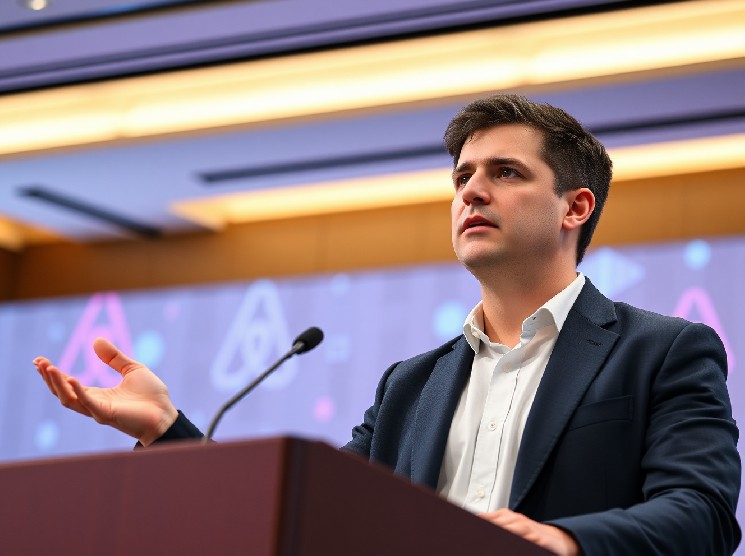
Brian Chesky, co-founder and CEO of Airbnb, has weighed in on the emerging world of real-world asset (RWA) tokenization, arguing that the sector’s defining challenge is not technological but deeply human: trust. Speaking in a recent interview, Chesky revealed he has been quietly observing the RWA space, noting that while much of the public conversation is dominated by noise, meaningful structural changes are taking place beneath the surface.
Chesky’s Perspective on RWA and Liquidity
Chesky described RWA tokenization as a mechanism that is making ownership more liquid, but he emphasized that the industry is still in its infancy. He cautioned that the most significant hurdle for widespread adoption is not the underlying blockchain infrastructure or token standards, but the establishment of a reliable trust framework. Drawing a direct parallel to Airbnb’s own history, Chesky recalled how the idea of strangers sharing homes was once considered unthinkable. It only became a global phenomenon, he said, after the company built a robust, trustworthy support system that gave both hosts and guests confidence.
The CEO argued that the eventual winners in the RWA sector will not necessarily be the teams that create the most technically sophisticated tokens. Instead, the organizations that succeed will be those that earn the right to be trusted with the management and custody of physical assets—whether real estate, art, commodities, or other tangible property.
Why Trust Is the Core Issue
Chesky’s comments arrive at a time when the RWA market is gaining traction among institutional investors and blockchain developers alike. Tokenization promises to unlock liquidity in traditionally illiquid markets, allowing fractional ownership of high-value assets. However, the sector has also faced skepticism regarding custody, regulatory clarity, and the potential for fraud. Chesky’s framing shifts the focus from technical roadmaps to the fundamental question of credibility. “The changes brought by RWA will likely feel slow for some time,” he said, “but people will eventually realize that the world has suddenly transformed.”
Implications for the Industry
For startups and established companies entering the RWA space, Chesky’s remarks serve as a strategic reminder. Building a secure smart contract is only one part of the equation. Gaining the confidence of asset owners, regulators, and end-users may prove to be the more difficult and valuable achievement. The parallel to Airbnb is instructive: the company succeeded not because it invented a new technology, but because it solved a trust problem at scale. If Chesky’s thesis holds, the RWA market may follow a similar trajectory, where reputation and reliability become the ultimate competitive advantages.
Conclusion
Brian Chesky’s observations bring a grounded, human-centric perspective to a sector often dominated by technical jargon and speculative hype. His emphasis on trust as the critical success factor challenges the industry to prioritize governance, transparency, and user confidence alongside innovation. As RWA tokenization continues to develop, the organizations that invest in building that trust may be the ones that ultimately define the market’s future.
FAQs
Q1: What is real-world asset (RWA) tokenization?
RWA tokenization is the process of representing ownership of physical assets—such as real estate, art, or commodities—as digital tokens on a blockchain. This allows for fractional ownership, easier transfer, and increased liquidity.
Q2: Why did Brian Chesky compare RWA to Airbnb’s early challenges?
Chesky drew a parallel because both involve a fundamental trust barrier. Airbnb succeeded by creating a reliable system that made strangers comfortable sharing homes. He believes RWA adoption similarly depends on establishing trust in the entities managing the underlying physical assets.
Q3: What does Chesky’s perspective mean for RWA investors?
It suggests that investors should evaluate RWA projects not only on their technology but also on their governance, track record, and ability to build credible, transparent systems. Trustworthiness may become a key differentiator in the market.