coindesk.com
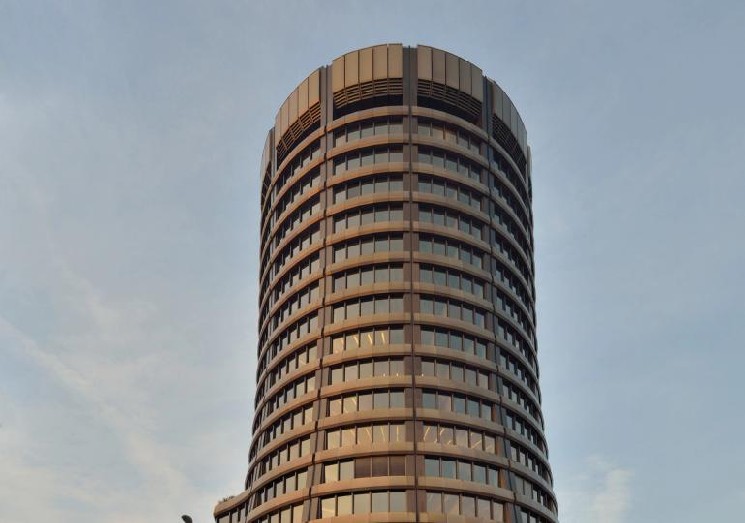
The crypto industry has long pitched stablecoins, tokens pegged to fiat currencies, as the future of blockchain-based money and payments. But the Bank for International Settlements' (BIS) latest annual report is throwing cold water on that narrative.
The report argued that stablecoins are acting less like money and more like exchange-traded funds (ETFs) or other alternative investment vehicles, whose units allow traders to gain exposure to a wide range of assets held by the fund.
The hallmark of true money is that it is accepted as a means of payment "with no questions asked." When you pay with dollars at the grocery store, malls, airports, hotels, or just about anywhere, nobody questions its legitimacy or its value. Whether it's a physical bill or a bank deposit, it's expected to be worth exactly its face value.
Secondary-market prices of tokenized versions of fiat currencies deviate from par, though mostly moderately. In other words, the token doesn't always trade at exactly $1. That's just like an ETF, which typically trades at a slight premium or discount to the fund's net asset value.
Redemptions also aren't as smooth as widely perceived, meaning investors converting a stablecoin back to cash may not always get an instant, guaranteed exchange at par value, much like ETF share redemptions can involve delays or costs depending on the fund structure.
"Redemption frictions are common, indicating that current stablecoin designs resemble exchange-traded fund (ETF) shares rather than means of payment," the report said.
More importantly, stablecoin transfers "settle neither directly nor indirectly on central bank balance sheets," and "they cannot currently ensure exchange at par across issuers and blockchains under all conditions." This is unlike a bank deposit, which is ultimately backed by access to central bank money.
The BIS believes a stablecoin's value is determined by the market's confidence in the issuer's reserves and redemption mechanism — not by a direct, guaranteed claim on the monetary system, as with a bank deposit.
Stablecoins also fail to act as money is the cash-in-advance model, whereby an issuer mints a new token only once a user deposits the equivalent cash, according to BIS.
This 100% pre-funding requirement means an issuer can't flexibly expand supply to meet economic needs, the way a commercial bank does by issuing loans that create new deposit money on its balance sheet without waiting for a customer to walk in with cash first.