
 coinedition.com

Gold fell below $4,000 per ounce on Wednesday as traders increased bets that the Federal Reserve may raise interest rates again this year. Yet the stock market avoided the type of broad collapse normally associated with expectations of forceful monetary tightening.
If precious metals traders are right about how aggressive the Fed will get to crush inflation, the stock market should be crashing. If stock traders are right that the Fed is more bark than bite when it comes to rate hikes, gold prices should be soaring. They both can't be right.
— Peter Schiff (@PeterSchiff) June 24, 2026
Notably, that contrast prompted economist Peter Schiff to question whether precious metals and equities can both be pricing the Federal Reserve correctly. Gold traders appear prepared for higher rates, while stock investors have not fully reflected the economic damage that an aggressive tightening cycle could produce.
Gold Breaks Below Critical Support
Spot gold dropped more than 3% to around $3,968, crossing below $4,000 for the first time since November 2025. U.S. futures also fell sharply, trading near $3,984 as the sell-off gained momentum.
The move extended gold’s retreat from its January record above $5,590. Bullion has now lost more than $1,600 from that peak, with selling accelerating as the dollar and Treasury yields moved higher.
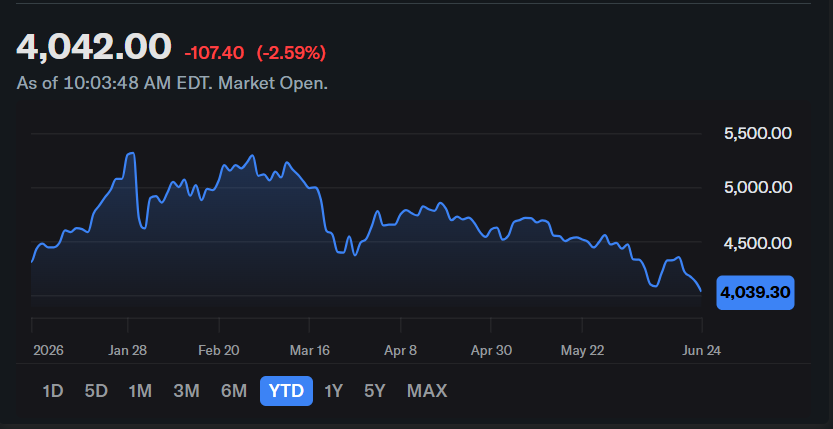
Source: YahooFinance
Gold does not pay interest, making it less attractive when yields on government bonds rise. A stronger dollar adds further pressure by increasing the metal’s cost for buyers using other currencies.
Technical attention had centered on the $4,000 to $4,100 area. Once that range failed, momentum-driven selling pushed prices lower and placed the next support levels under scrutiny.
Related: BofA Survey Shows Gold No Longer Seen as Overvalued
Fed Expectations Create a Market Divide
The Federal Reserve left its benchmark rate at 3.5% to 3.75% during Kevin Warsh’s first meeting as chair. Policymakers nevertheless signaled that borrowing costs could rise later in 2026 as inflation stays above target.
Warsh’s emphasis on price stability, combined with reduced forward guidance, strengthened expectations that the central bank may keep rates elevated or deliver another increase.
Schiff argued that this outlook creates an inconsistency across markets. If precious metals traders are correct about aggressive tightening, higher financing costs and weaker economic activity should place greater pressure on equities.
On the other hand, if stock investors are correct that the Fed will avoid substantial increases, gold would ordinarily receive support from persistent inflation and lower real returns on cash.
Related: Nasdaq 100 Futures Fall 3% as AI Stock Unwind Spreads Across Global Markets
Inflation Report Becomes the Next Test
Investors are now awaiting the Personal Consumption Expenditures price index, the Fed’s preferred inflation measure. The report is scheduled for Thursday and may clarify whether price pressures are easing or staying firm.
April’s headline PCE inflation rate stood at 3.8% year over year, already well above the central bank’s 2% objective. Elevated oil prices earlier in the Iran conflict also added to concerns about transportation and production costs.
Meanwhile, diplomatic progress between Washington and Tehran has reduced part of gold’s geopolitical support. Softer energy risks may ease headline inflation, although wage growth and services prices remain important for Fed policy.
Gold’s break below $4,000 now places the disagreement highlighted by Schiff in sharper focus. Either equities must account for a tighter policy environment, or bullion must adjust if the Fed proves less aggressive than current rate expectations suggest.