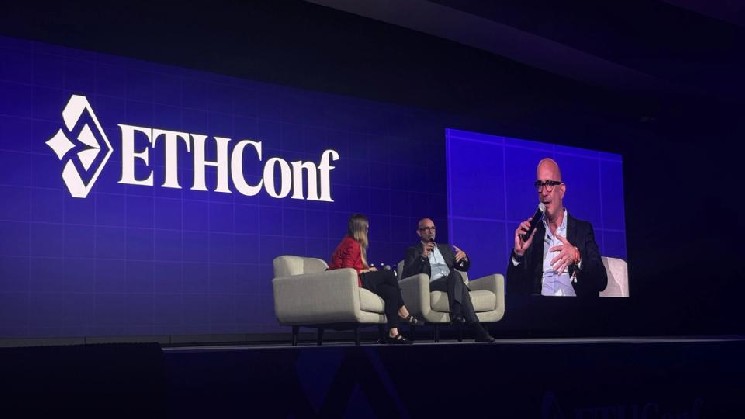
The comments come as Securitize prepares to go public and seeks to expand its role as one of the largest tokenization providers for institutions, including BlackRock.
While tokenized U.S. Treasuries have emerged as the dominant RWA category over the past two years, Domingo argued that tokenized stocks could become the industry's next major growth engine. Securitize has announced partnerships with the New York Stock Exchange and transfer agent Computershare aimed at enabling on-chain trading and settlement of equities.
Domingo also drew a distinction between what he considers "real" tokenized equities and the growing number of blockchain-based stock products offered outside the U.S.
"A lot of people that today say that they tokenize equities, they're not tokenizing equity," he said, arguing that many offerings rely on derivatives or synthetic structures rather than direct ownership of the underlying shares.
According to Domingo, the long-term goal is for blockchain-based securities to offer the same investor rights as traditional shares while benefiting from instant settlement, 24/7 transferability and deeper integration with decentralized finance.
Domingo maintained that public blockchains, particularly Ethereum, remain the preferred infrastructure for institutional tokenization despite concerns around transparency and compliance. Securitize uses smart contracts to restrict ownership to approved investors while allowing assets to move on permissionless networks.
Looking ahead, Domingo said he expects blockchain-based markets to develop alongside existing financial infrastructure before gradually absorbing a larger share of activity.
"The traditional markets are going to stay," he said. "We're going to see a new market emerge in parallel that will run on blockchain rails and be much more efficient."
Read more: BlackRock-backed tokenization firm Securitize clears key hurdle to go public on NYSE

 coindesk.com