The deal, announced in March, values Abra at $750 million and will see the combined company renamed Abra Financial Inc., with plans to list on Nasdaq under the ticker ABRX, subject to regulatory approvals.
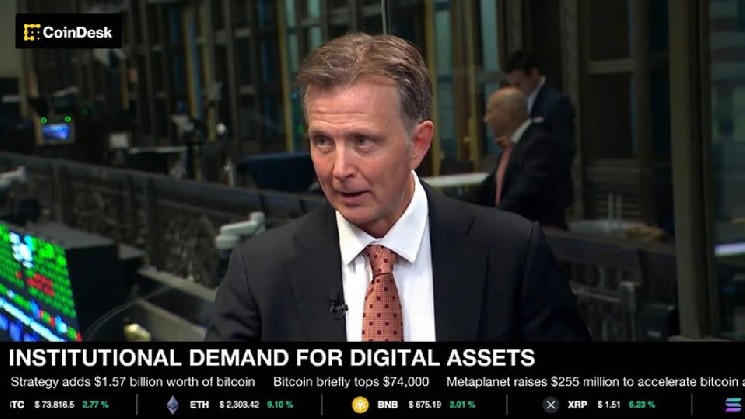
"The goal is to list this summer, pending SEC approval," Barhydt told CoinDesk in an interview
Abra Financial
Today, Abra operates as an asset tokenization and distribution platform under its parent company, Abra Financial Holdings.
The distribution side centers on Abra Capital Management, an SEC-registered investment adviser that serves high-net-worth individuals, ultra-high-net-worth clients and institutions. Through the platform, clients can access digital asset investment strategies, yield products, staking and collateralized lending.
AbraFi, the tokenization arm, is focused on creating tokenized financial products on the Solana blockchain in partnership with a decentralized autonomous organization (DAO). Its flagship offering, USDAF, is a yield-bearing dollar-denominated asset that has attracted growing interest from institutions and wealthy investors, according to Barhydt.
The company plans to expand that lineup in coming months with BTCAF, a bitcoin-based yield product that will be available to advisory clients and, outside the U.S., retail investors. Barhydt says investors should expect a growing range of tokenized yield products built around digital assets.
Lending
Lending is a major growth area. Abra already allows clients to borrow against bitcoin , ether (ETH) and solana (SOL) holdings, and Barhydt says the company is investing heavily in expanding its lending capabilities with new products and services.
The broader ambition, he says, is to become the industry's "killer crypto banking platform," combining tokenization, custody, yield generation, staking and lending through both proprietary products and third-party offerings.
For Barhydt, however, the bigger opportunity extends beyond crypto-native investors.
Tokenization
Wall Street's attention is increasingly shifting away from bitcoin price movements and toward the tokenization of real-world assets, according to Barhydt.
In his view, the ability to tokenize assets and make them liquid, transferable and usable as collateral through decentralized finance (DeFi) is a far more consequential development than debates over exchange-traded funds (ETFs) or short-term market cycles.
"Everything is becoming tokenized and liquid via DeFi," Barhydt says.
That narrative, he says, is resonating with institutional investors because it connects crypto infrastructure to broader financial markets. Anything that can be pledged as collateral in traditional finance can eventually be represented onchain and used in decentralized lending markets.
As Abra works through the final stages of its public listing process, Barhydt sees the company positioned at the intersection of those trends: tokenization, yield generation and digital asset wealth management.
"The next generation of wealth management is onchain," he says.
Read more: The institutional edge: moomoo targets Wall Street-grade trading tools for retail crypto investors

 coindesk.com