What This Means for Prediction Markets
The bet underscores the increasing use of platforms like Polymarket for political forecasting. Unlike traditional polling, prediction markets require participants to put real money behind their beliefs, which some analysts argue can produce more accurate, real-time assessments of election probabilities. However, the influence of a single large trader can also skew the market, creating temporary distortions that smaller traders may follow.
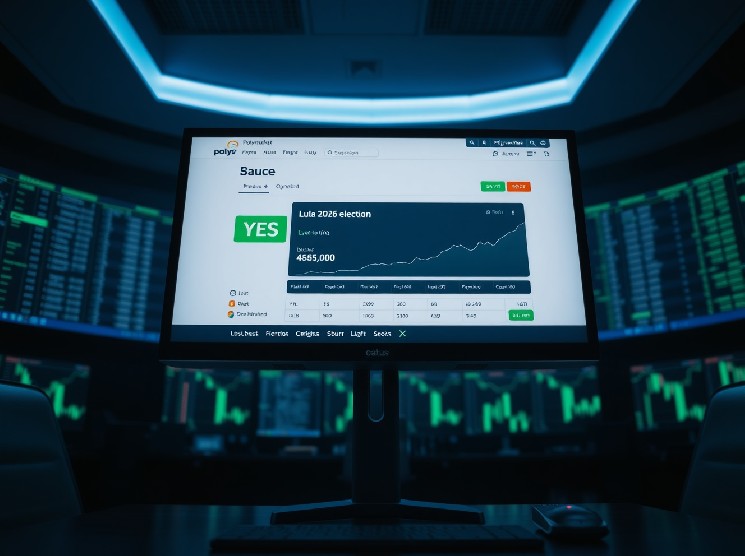
This particular trade is notable not only for its size but also for its timing. The Brazilian political landscape remains fluid, with multiple candidates and coalitions still forming ahead of the 2026 election. The market’s current odds, which have moved against Lula since the whale’s entry, suggest that other traders are pricing in increased uncertainty or stronger opposition.
Broader Implications for Investors and Observers
For readers tracking Brazilian politics or cryptocurrency-based prediction markets, this trade offers a concrete data point. It demonstrates that significant capital is being deployed based on political expectations, and that market sentiment can shift rapidly. It also serves as a reminder that prediction markets are not infallible—they reflect the collective opinion of a sometimes small and specialized group of traders, not necessarily the broader electorate.
Conclusion
The $328,000 wager on Lula’s 2026 victory is a high-stakes bet that provides a window into how prediction markets are being used to speculate on political outcomes. While the whale’s track record shows past profitability, the current position is underwater, and the final outcome will not be known for years. This story matters because it illustrates the convergence of cryptocurrency, political forecasting, and high-risk investment—a trend that is likely to grow as the 2026 election cycle approaches.
FAQs
Q1: What is Polymarket?
Polymarket is a decentralized prediction market platform where users can bet on the outcomes of real-world events, including elections, using cryptocurrency. Trades are executed on-chain and settled via smart contracts.
Q2: How accurate are prediction markets compared to polls?
Studies suggest prediction markets can be as accurate as, or sometimes more accurate than, traditional polling, because participants have financial skin in the game. However, they can be influenced by a small number of large traders and may not fully represent public opinion.
Q3: Is it legal to bet on U.S. or Brazilian elections on Polymarket?
Legality varies by jurisdiction. In the United States, the Commodity Futures Trading Commission (CFTC) has taken action against some political prediction markets. Users should verify the legal status in their own country before participating.

 bitcoinworld.co.in