en
Back to the list

Trump discloses over 3,700 trades in first quarter, raising scrutiny

source-logo  cryptobriefing.com 54 m
image

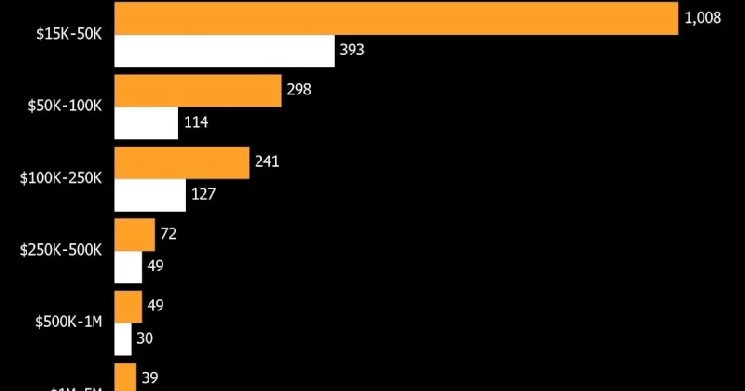
A sitting president averaging roughly 40 trades per day is, to put it mildly, unusual. Donald Trump’s first-quarter financial disclosure reveals approximately 3,700 transactions, representing an estimated $220 million to $750 million in trading volume, a figure that has ethics watchdogs and market analysts reaching for their reading glasses.

The bulk of the activity centers on large-cap US equities, with a pronounced tilt toward the technology and semiconductor sectors. Nvidia, Broadcom, and Intel all appear as new positions, with multiple transactions exceeding $1 million each. At the same time, the disclosure shows major reductions in holdings of Amazon, Meta, and Microsoft through transactions ranging from $5 million to $25 million apiece.

The portfolio pivot

That kind of rotation isn’t inherently suspicious. Plenty of sophisticated investors have been making similar moves. But plenty of sophisticated investors don’t also set tariff policy, negotiate trade deals with chip-manufacturing nations, or sign executive orders that can move semiconductor stocks by double digits in a single session.

Advertisement

One transaction stands out in particular. A $1 million to $5 million stake in Dell Technologies was initiated on February 10, prior to a presidential endorsement of the company. The timing raises the kind of questions that congressional ethics committees were theoretically designed to investigate.

Whether the trades were executed by Trump personally or by advisers managing his portfolio, the disclosure doesn’t fully clarify. The filing references “President Trump or his advisers” as the decision-makers, a construction that provides just enough ambiguity to be deeply unhelpful.

The information asymmetry problem

The president has direct influence over export controls, tariffs on imported chips, and the allocation of CHIPS Act funding. Taking new positions in Nvidia, Broadcom, and Intel while simultaneously holding the policy levers that determine those companies’ regulatory environment is, at minimum, optically catastrophic.

Members of Congress have faced similar scrutiny for years, most notably during the controversy around stock trades by lawmakers who sat on committees overseeing the industries they were investing in. The STOCK Act of 2012 was supposed to address this by requiring timely disclosure of congressional trades. But the presidency operates under different, and in many ways looser, ethical guidelines when it comes to personal financial activity.

The sheer volume of transactions makes oversight practically difficult, too. Reviewing 3,700 trades for potential conflicts requires cross-referencing each transaction’s timing against policy announcements, executive orders, regulatory actions, and even informal presidential statements that might have moved specific stocks.

What this means for investors

The scale of the trading, potentially up to $750 million in a single quarter, also means the transactions themselves could have market impact, particularly in less liquid names or during concentrated buying periods. A presidential disclosure showing new multi-million-dollar positions in specific companies functions as a de facto endorsement, regardless of whether it was intended as one.

cryptobriefing.com