en.bitcoinsistemi.com
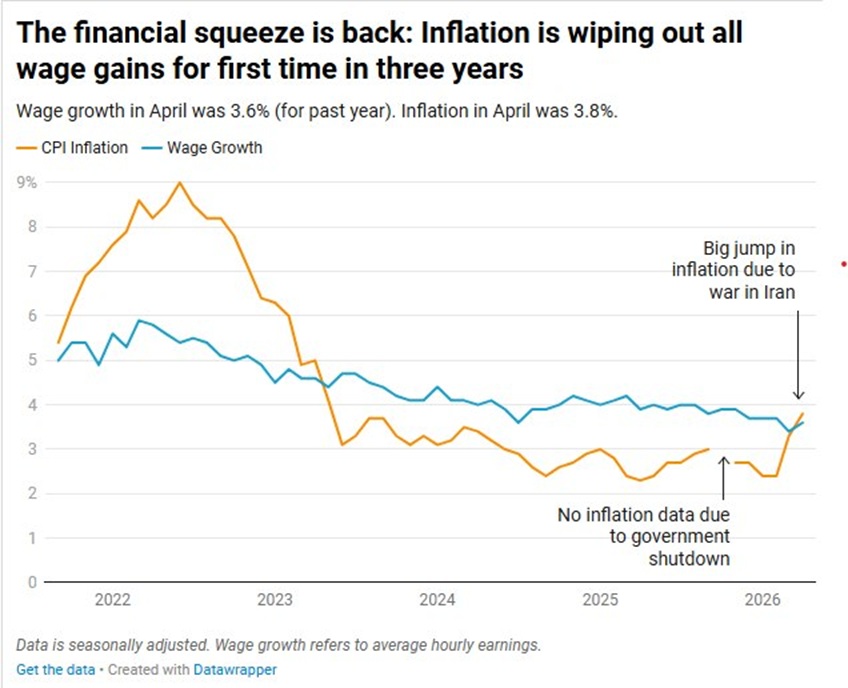
In the US, inflation rose above expectations in April to 3.8% year-on-year, driven by increasing energy prices stemming from the Iran conflict. Rising fuel prices also increased transportation, food, and manufacturing costs, raising concerns about broader inflationary pressure on the economy.
According to the data, the average price of gasoline has risen from $3.14 last year to approximately $4.50. US President Donald Trump, meanwhile, has stated his support for temporarily suspending the federal gasoline tax to ease pressure on drivers.
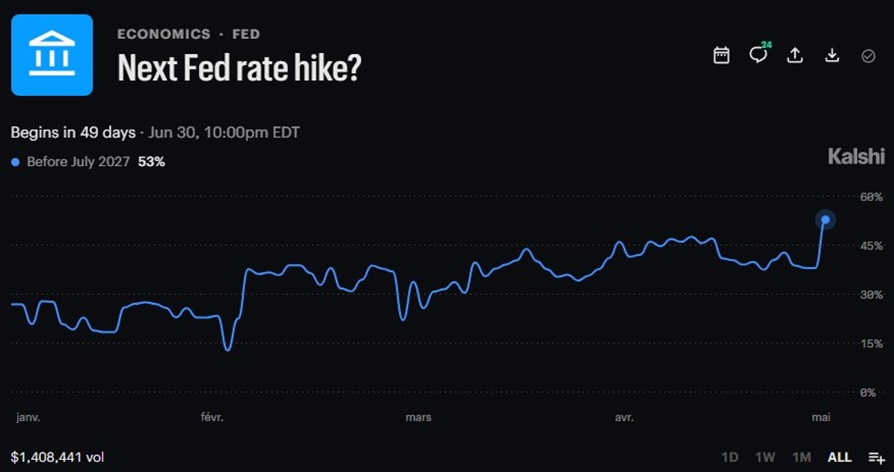
Rising energy costs are said to weaken consumer spending, prompting markets to reprice expectations regarding the Fed’s interest rate policy. In the forecasting market, the probability of the Fed raising interest rates before July 2027 has risen to 53 percent. With approximately 49 days remaining until the next policy cycle, investors are reportedly divided on whether the Fed will act sooner than expected or prefer to wait longer.