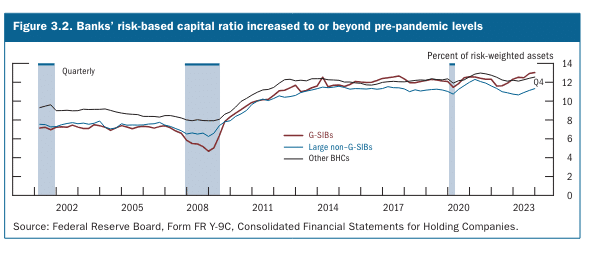
Stress tests paint a grim picture
The report’s stress test scenarios anticipate a 58% drop in equity prices in the projected severe scenario for 2026. In this same scenario, CPI inflation would fall to 1%, and the 3-month Treasury rate would sit at 3.1% through the first quarter of 2029. Unemployment would rise meaningfully in this scenario, with a potential recession stretching from 2026 into 2029.
These are stress test scenarios, not forecasts. The Fed designs them to be severe by construction to see whether banks and financial institutions can survive the worst-case playbook.
The crypto-shaped hole in the report
Despite the explosive growth of digital asset markets, the report contains no meaningful assessment of cryptocurrency-related risks. The Fed’s stability reports have historically focused on traditional vulnerabilities: leveraged lending, commercial real estate, Treasury market liquidity, and counterparty risk among systemically important banks.
The IMF’s own April 2026 report takes a similar approach, warning about elevated stability risks from high debt levels and geopolitical tensions while recommending enhanced liquidity facilities, but offering no specific updated assessment of digital asset risks.
What this means for investors
For traditional market participants, a $1 to $2 trillion balance sheet drawdown, even spread over years, will tighten financial conditions. For crypto investors specifically, the absence of digital assets from the report means the Fed isn’t actively flagging crypto as a systemic threat. It also means the central bank isn’t building the analytical framework needed to respond when crypto markets intersect with systemic risk.
The Financial Stability Report is part of the Fed’s semi-annual assessments aimed at increasing transparency on systemic risks, a practice that evolved from financial reforms after the global financial crisis. The broader picture is a financial system carrying elevated risk from high debt levels, geopolitical uncertainty, and a balance sheet still bearing the scars of pandemic-era emergency measures.

 cryptobriefing.com