
 en.cryptonomist.ch
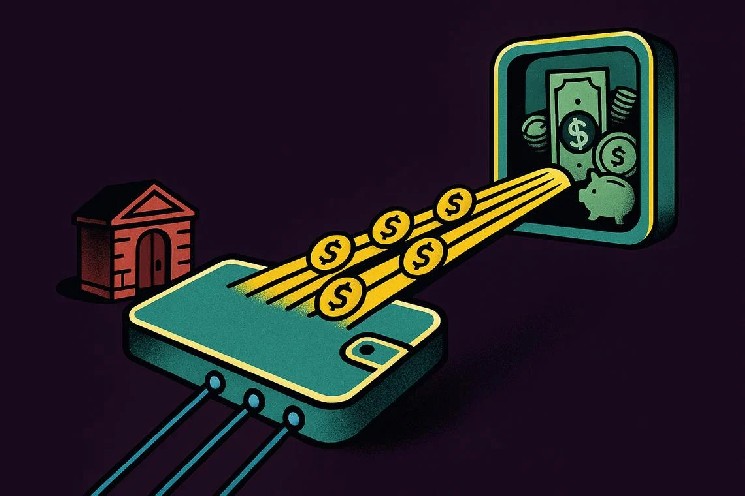
Financial inclusion crypto is no longer just a slogan attached to digital assets. A growing body of data suggests something more concrete: on-chain tools are increasingly being used to address real gaps in banking, remittances, savings, and investing, especially in emerging markets where traditional access has lagged for years.
The scale of that gap is hard to ignore. According to the World Bank, 1.3 billion adults remain unbanked, while 4.7 billion adults lack access to credit or loans. In other words, the problem goes beyond whether someone has a bank account. For many people, the deeper issue is whether basic financial services are available, affordable, and usable.
That broader view is what makes the latest case for crypto adoption more interesting. Rather than focusing only on speculation or trading, the argument is that stablecoins, tokenization, and programmable on-chain finance are starting to function as practical alternatives where legacy systems remain expensive, slow, or simply unavailable.
The scale of the financial inclusion crypto gap
Unbanked and underbanked populations
The headline number is stark: 1.3 billion adults remain unbanked, according to the World Bank. Most of them live in low- and middle-income countries, where formal banking access is still uneven.
However, the underbanked population is even larger. Another 4.7 billion adults lack access to credit or loans, which shows that financial inclusion is not a simple yes-or-no question. Someone may have a deposit account and still be locked out of borrowing, digital payments, yield-bearing savings, or affordable cross-border transfers.
That matters because it changes how the crypto debate is framed. The issue is not only whether blockchain can replace banks. Instead, it is whether on-chain systems can provide parts of the financial stack that many people still cannot access at workable prices.
In that sense, financial inclusion crypto becomes less about ideology and more about infrastructure. If the core bottlenecks are cost, access, and distance, then mobile-first and internet-native rails have an obvious opening.
Why stablecoins matter for payments
Lower costs and faster settlement for stablecoins remittances
Cross-border payments remain one of the clearest examples.
Stablecoins can reduce remittance costs by up to 99% and settle faster, a combination that directly targets one of the oldest pain points in global finance. For households sending small amounts across borders, even modest fees can take a meaningful bite out of income. Faster settlement also matters when transfers are used for day-to-day needs rather than long-term savings.
The numbers behind stablecoin growth are also getting harder to dismiss. According to Artemis data cited in the report, adjusted stablecoin volume surpassed Visa in 2024. That comparison should be handled carefully. Even so, it signals how large the market for stablecoins has become.
Why this matters is simple: remittances are not a niche use case. They are often the financial lifeline for families in lower-income economies. As a result, when a payment rail gets dramatically cheaper and faster, it is not just a technical upgrade. It can change who gets served and how often money moves.
There is also a strategic shift here. Stablecoins remittances are turning crypto from an investment story into a utility story. If users come in for payments and savings rather than trading alone, that broadens the industry’s relevance far beyond market cycles.
How tokenization expands market access
Tokenization retail access to public equities and private markets
Payments are only one side of the argument. The other is investment access.
Tokenization is increasingly presented as a way to widen access to equities and private markets. The pitch is straightforward: digital representations of financial assets can allow fractional ownership, broader distribution, and in some cases more flexible market access for retail users who would otherwise be shut out.
That gap is especially visible in private markets. According to Altrata, 87% of US firms with revenue above US$100 million are privately held. If so much value creation happens before companies ever reach public markets, retail investors are often left arriving late.
This is where tokenization retail access becomes a serious theme rather than a buzzword. Tokenised equities, tokenised private credit, tokenised private equity, and even pre-IPO contracts are all being framed as ways to bring more people into markets that have historically been reserved for institutions and wealthy investors.
The bigger implication is not that tokenization erases all barriers overnight. Rather, it attacks a structural mismatch. Capital formation has moved deeper into private markets, while public access has remained narrow. On-chain distribution offers one possible route to narrow that divide.
Binance says adoption in emerging markets is changing
Emerging markets Binance data points beyond trading
One of the most telling signals in the report is behavioral, not just macroeconomic.
Binance says emerging-market users are increasingly active beyond trading. That includes activity linked to savings, payments, and broader financial use rather than pure speculation.
The shift is also large in scale. The share of Binance users from emerging markets rose from 49% in 2020 to 77% in 2026, according to the report. That is a significant change in user mix, and it fits the broader thesis that demand for on-chain finance is strongest where conventional systems leave the biggest gaps.
There are also signs that users are treating crypto platforms as part of a wider personal finance toolkit. The report says users in these markets are more likely to engage with multiple products, not just spot trading. In addition, it points to stronger savings behavior in stablecoins, with a larger share of users in emerging markets holding substantial portions of their portfolios in those assets.
That matters because it suggests adoption may be evolving from market participation into financial behavior. If users are storing value, moving money, and seeking access to investment products through the same rails, crypto becomes more embedded in daily economic life.
- Stablecoin use is being linked not only to transfers, but also to savings-oriented behavior.
- Emerging-market users appear more likely to use multiple crypto products beyond trading.
- The demand pattern lines up with places where banking, credit, and investment access remain weakest.
Programmable money adds a new on-chain use case
Another layer in the story is now emerging around AI agents and programmable money.
The report frames this as a new on-chain use case, with USDC nanopayments and ERC-8004 cited as examples of programmable finance components. The basic idea is that machine-driven activity may require payments and settlement structures too small, too frequent, or too automated for legacy rails to handle efficiently.
This is still a developing area. Still, it adds something important to the broader financial inclusion crypto conversation: on-chain finance is not only trying to serve people excluded from banking. It is also being positioned as infrastructure for entirely new kinds of economic actors and payment flows.
That does not replace the human inclusion case. Instead, it expands the range of problems crypto rails are trying to solve.
Why the argument is gaining traction
The appeal of this thesis comes from how the pieces fit together.
The World Bank’s 1.3 billion unbanked adults and 4.7 billion adults without access to credit or loans show the scale of the access deficit. Stablecoins offer a payments and remittance use case with lower costs and faster settlement. Tokenization aims to widen access to both public and private capital markets. Meanwhile, Binance user trends suggest people in emerging markets may already be using crypto for more than trading.
Put differently, these are not isolated narratives. They connect into a broader claim that on-chain finance can close structural gaps left open by traditional finance.
That claim is not the same as saying crypto has already solved financial exclusion. However, the evidence cited here helps explain why the conversation has shifted. The strongest crypto use cases may be the least flashy ones: moving money cheaply, saving in digital dollars, and opening doors to assets that were once out of reach.
If that pattern continues, the next phase of adoption may be defined less by hype and more by whether on-chain systems keep proving useful in the places that need financial access most.