
 thestreet.com
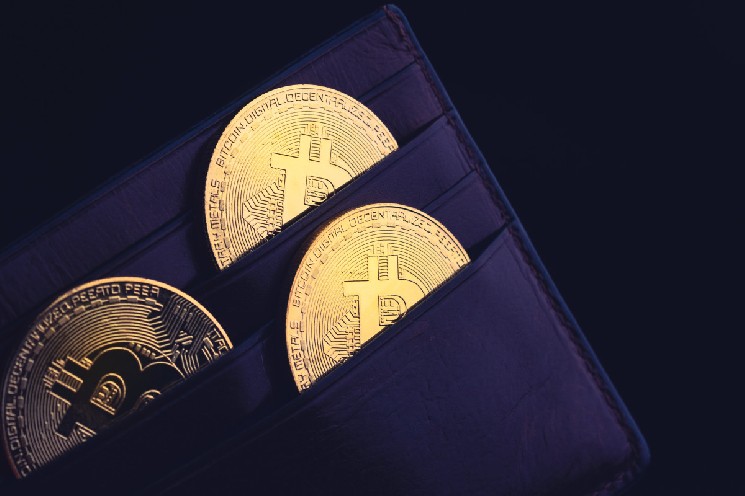
Crypto wallets were originally built around coins and tokens.
Now some are trying to turn themselves into broader financial apps by giving users access to tokenized versions of traditional assets.
Bitget Wallet's latest push is into tokenized U.S. equities, described in a recent TheStreet Roundtable interview with their COO, Alvin Kan.
The idea is not to replace a traditional brokerage account but to give crypto-native users another place to park capital without leaving the on-chain ecosystem.
"We're not aiming to replace the brokers," Kan said. "I think it's supplementary."
The appeal of tokenized stocks
The clearest use case is convenience for investors who already hold much of their wealth in crypto.
Kan said users can "directly access U.S. equities" in the wallet, arguing that "whether it's tokens, stablecoins, equities, you can all buy them in one single app."
Instead of selling tokens, moving back into fiat and then buying stocks through a conventional broker, users can buy tokenized equities inside a single app.
For that audience, the value proposition is less about reinventing stock ownership than reducing friction. A wallet that already handles tokens and stablecoins can also become a place to gain exposure to companies like Apple or Palantir without an extra set of transfers.
Kan also argued that tokenization could widen access. He pointed to users outside the United States who may not have the same access to U.S. equities through local financial infrastructure. In that framing, tokenization is mainly a distribution tool.
"There are people around the world, millions of them, who don't have the same access to U.S. equities," Kan said. "A lot of people say maybe it's about liquidity. It's really solving the distribution issue."
Tokenized stocks have reached a total value of $941 million, with monthly transfer volume surging to $2.94 billion, up nearly 86% over the past 30 days, as per data from Rwa.xyz.
More News:
- Think tank sends brutal warning for crypto as it faces ‘hell’ without CLARITY
- Veteran trader warns Bitcoin recovery could take longer than 2026
- Uniblock raises $5.2M to simplify the future of blockchain development
Impact on the crypto industry at-large
The more ambitious argument is what happens after those assets are brought on-chain. In decentralized finance, assets can often be used as building blocks in other applications.
Kan suggested tokenized equities could eventually be used as collateral or plugged into other DeFi workflows.
"Maybe you can collateralize some of your tokenized equities to do other stuff in DeFi. There's a lot of possibilities out there," he said.
That possibility helps explain why tokenization has become such a popular theme across crypto. The attraction is not only offering a digital wrapper for an existing asset, but making that asset easier to move, combine and potentially use in new financial products.
As of today, the tradeoff is that tokenized markets do not always offer the same liquidity, protections or infrastructure as traditional ones.