Aon said in August that its analysis showed 120 re-insurers wrote nearly $2 trillion of gross written premium in 2024.
Source: Matthew Sigel, head of digital assets research at VanEck
Instead of sending funds through traditional bank wires, the premiums were paid using stablecoins on blockchain networks. The pilot demonstrates how financial institutions are experimenting with blockchain settlement systems rather than relying solely on conventional payment infrastructure.
The approach could have implications for the insurance industry, where premium payments typically move through banks, clearing systems and international wire transfers — processes that can take several days, particularly for cross-border transactions. Stablecoin transfers can settle within minutes.
The pilot did not involve a new insurance product or an onchain policy. The underlying insurance coverage remained unchanged, with the only difference being the use of stablecoins to settle the premium payments.
Stablecoins gain traction among financial institutions
Aon’s pilot also comes amid a more supportive regulatory backdrop for stablecoins following the passage of the $GENIUS Act, which established a federal framework for issuing and supervising dollar-backed stablecoins in the United States.
The development reflects a broader shift as traditional financial institutions increasingly explore stablecoins for payments and settlement infrastructure. Several major banks, including Barclays, JPMorgan Chase, Bank of America and Citigroup, are either confirmed or reported to be in various stages of developing stablecoin or tokenized payment systems.
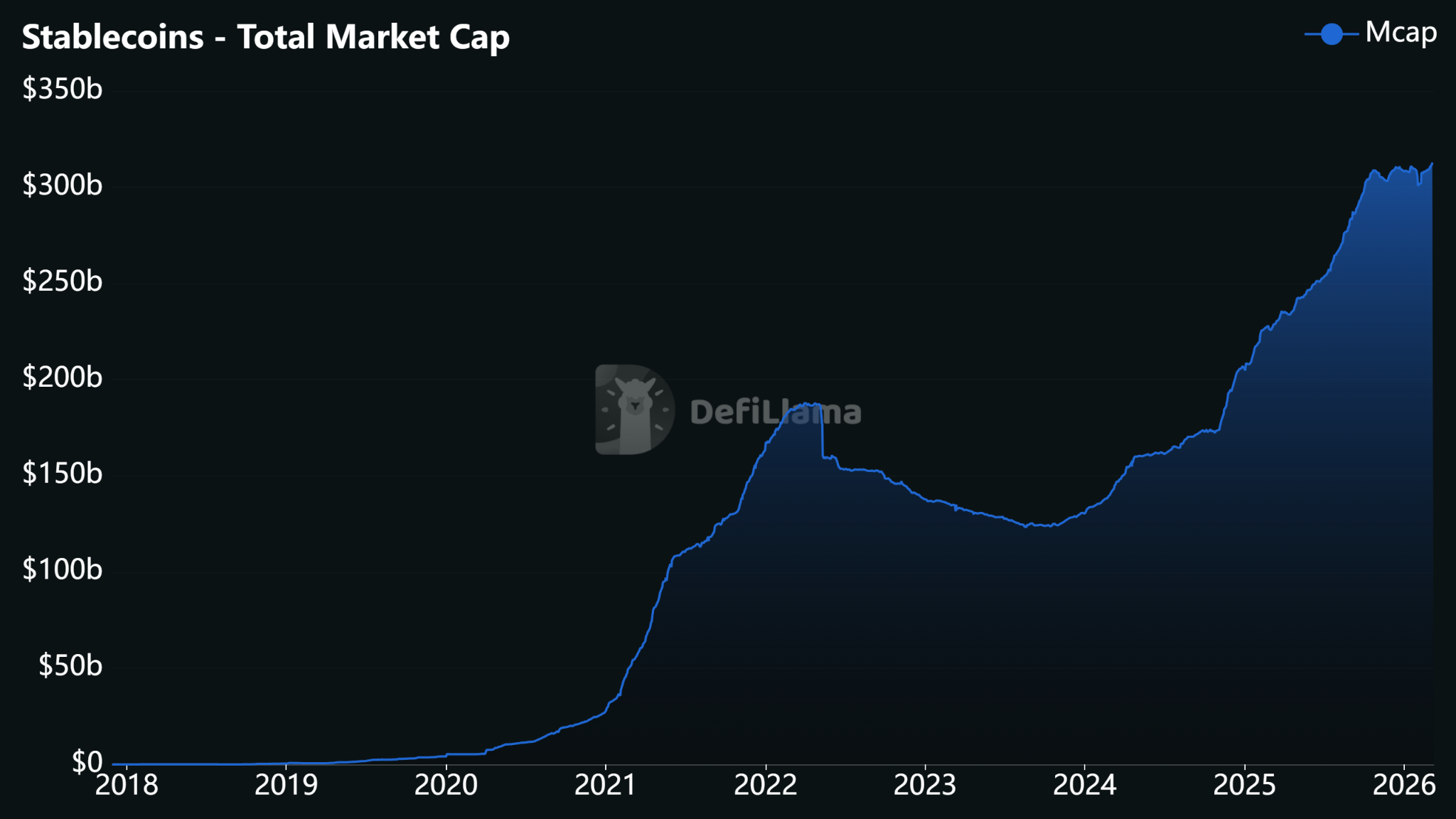
Stablecoins have reached a cumulative market value of $313 billion, led by $USDC and Tether’s USDt. Source: DeFiLlama
At the same time, crypto-native companies are expanding into the stablecoin payments stack. For example, Ripple has been building infrastructure aimed at supporting stablecoin custody, settlement and treasury management for institutions.

 cointelegraph.com