
 beincrypto.com

At least four DeFi protocols recorded negative revenue in March 2026, according to DeFiLlama data, signaling that transaction fees are no longer sufficient to cover operational costs across several networks.
The underperforming protocols include Zora, Blast (BLAST), HumidiFi, and Kairos Timeboost, each posting revenue figures that fell below zero for the month.
Negative Revenue Signals a Structural Gap
Negative protocol revenue typically means the costs of running and incentivizing a network outpaced what it collected in transaction fees and other income streams.
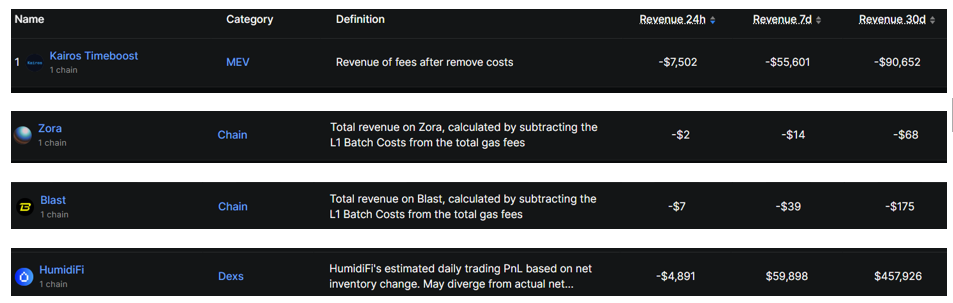
For newer or smaller protocols, this gap can reflect low user activity, aggressive subsidy programs, or both.
While we are busy discussing war, inflation, oil routes, and Bitcoin…
— Ted (@TedPillows) March 5, 2026
Blast generated -$7 in revenue over the past 24 hours. pic.twitter.com/uVfGjWiJul
The timing is notable. Both Blast and Zora previously attracted substantial venture backing. Blast raised $20 million, while Zora secured $60 million at a $600 million valuation.
Despite that capital, neither has converted investor confidence into a sustainable revenue model at this stage.
How is it possible to have negative revenue? 😂
— DBCrypto (@DBCrypt0) March 5, 2026
I mean, we all knew this launch was a grift from day 1
But negative revenue?!? pic.twitter.com/FT988fmK8o
VCs Have Already Moved On
The revenue deterioration reflects a broader structural shift in how capital allocators view DeFi.
Venture capital firms have deployed more than $2 billion into crypto projects since the start of 2026, with average weekly inflows exceeding $400 million. However, the composition of those deals tells a different story for DeFi.
According to a BeInCrypto analysis of early 2026 funding activity, capital is no longer moving toward Layer 1 blockchains, decentralized exchanges, or community-driven protocols.
Look at the top deals: Rain $250M (stablecoin rails for Visa), BitGo $212M (first crypto custodian heading to NYSE), BlackOpal $200M (RWA tokenization).
— Ryan Kim (@0xryankim) February 13, 2026
Notice what's absent? No L1s. No DEXs. No "community-driven" anything. Every dollar went to infrastructure and compliance.
Stablecoin infrastructure, custody solutions, and real-world asset (RWA) tokenization have become the dominant investment themes.
Ryan Kim, founding partner at Hashed, has argued that VC expectations have fundamentally changed. They have shifted from tokenomics and narrative-driven projects toward real revenue, regulatory advantages, and institutional clients.
In 2021, the winning pitch was: "Here's our tokenomics. Here's our community. Here's our narrative."
— Ryan Kim (@0xryankim) February 13, 2026
In 2026, VCs ask three questions: "Show me the revenue. Show me the regulatory moat. Show me the institutional clients."
The bar didn't just rise — it moved to a different…
Meanwhile, DeFiLlama’s revenue rankings show that the highest-earning protocols in the current environment are Tether, Circle, and Hyperliquid.
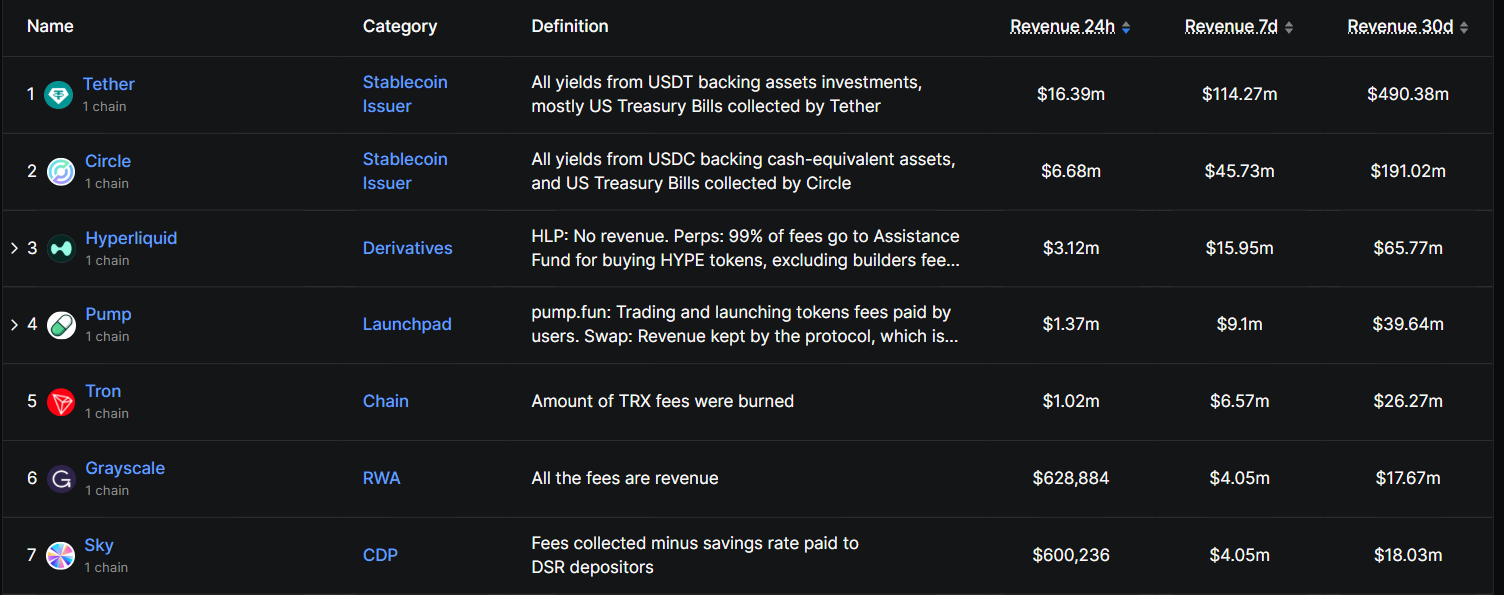
These entities combine institutional scale, fee efficiency, or genuine trading demand. For instance, Circle is said to have moved $31 billion in $USDC via Crosschain interoperability, marking a 740% YoY growth.
Crosschain interoperability is no longer a bottleneck for stablecoins.
— Circle (@circle) March 5, 2026
In Q3 alone, $31B in $USDC moved via CCTP, representing 740% year-over-year growth as demand for seamless crosschain liquidity accelerated.
CCTP enables native, one-to-one $USDC transfers across blockchains… pic.twitter.com/7ULLafV1en
The gap between those leaders and loss-making protocols like Zora or Blast reflects a market that is actively filtering for sustainability.
The data points toward a market undergoing concentration rather than expansion. Protocols without clear revenue models face mounting pressure as the investor sentiment that once supported speculative valuations continues to contract.
Whether Blast and Zora can close the gap between their fundraising pedigree and their on-chain economics will likely depend on user growth and fee capture.
Notably, geopolitical headwinds and a risk-off market could make achieving these metrics more difficult in the near term.