
 cryptopolitan.com
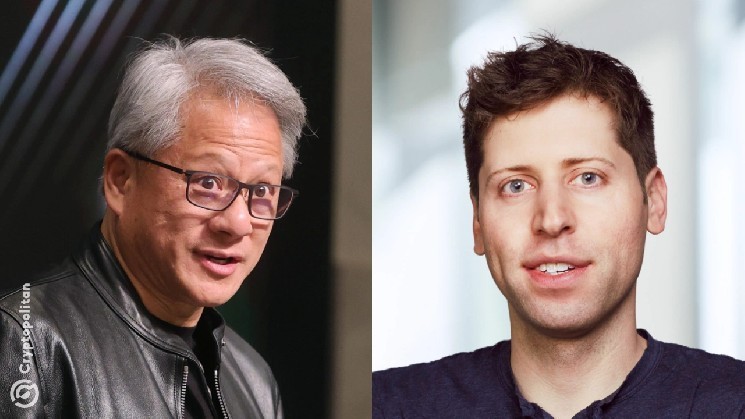
Nvidia CEO Jensen Huang says Nvidia’s $30 billion check to OpenAI could be the last one. He said OpenAI may go public near the end of the year.
Speaking Wednesday at the Morgan Stanley Technology, Media & Telecom Conference, Jensen said Nvidia is not planning another big round.
He also rejected the number floated in September. Nvidia and OpenAI had talked about a $100 billion figure tied to an infrastructure plan.
Jensen said that size of investment is “not in the cards.” He explained why, saying, “The reason for that is because they’re going to go public.”
Nvidia puts limits on future funding
Jensen said Nvidia’s interest is also cooling on Anthropic, an OpenAI rival. He said Nvidia’s $10 billion investment there will likely be its last. Nvidia had announced plans to invest in Anthropic in November, in a statement released alongside Microsoft.
His comments follow months of questions about how far Nvidia and OpenAI would go together. In a quarterly filing in November, Nvidia said the earlier $100 billion plan might not happen. In January, The Wall Street Journal said the agreement was “on ice.”
Nvidia repeated the warning in a quarterly filing in February, saying there was “no assurance” it will enter an “investment and partnership agreement with OpenAI,” and there was no guarantee any transaction would be completed.
Nvidia’s $30 billion stake in OpenAI was disclosed as part of a $110 billion funding round that OpenAI announced on Friday. The same round listed a $50 billion commitment from Amazon and a $30 billion commitment from SoftBank.
OpenAI changes Pentagon terms after user backlash
While Jensen was talking money, Sam Altman, CEO of OpenAI, was dealing with Pentagon blowback.
On Tuesday, Sam told employees the company does not control how the Pentagon uses OpenAI products in military operations. Scrutiny is rising, and AI workers have ethics worries.
Sam told staff, “You do not get to make operational decisions.” He also said, “So maybe you think the Iran strike was good and the Venezuela invasion was bad. You don’t get to weigh in on that.”
On Saturday, OpenAI said its Pentagon agreement had “more guardrails” than any previous deal for classified AI deployments, including Anthropic’s. Then on Monday, Sam posted on X that more changes were being made.
One change aimed to make sure the system would not be “intentionally used for domestic surveillance of U.S. persons and nationals.” Another change said intelligence agencies like the National Security Agency could not use the system without a “follow-on modification” to the contract.
Sam also said the rollout was rushed. He wrote the company made a mistake by pushing “to get this out on Friday.” He added, “The issues are super complex, and demand clear communication.”
Sam also wrote, “We were genuinely trying to de-escalate things and avoid a much worse outcome, but I think it just looked opportunistic and sloppy.”
OpenAI faced backlash from users after the Pentagon announcement. Sensor Tower data showed ChatGPT uninstalls jumped after the news dropped on Friday. The firm said the daily average uninstall rate was up 200% versus normal levels.
In the Pentagon announcement, OpenAI said it would protect its “red lines” with a multi-layer approach. It said it keeps control over its safety stack, deploys via cloud, keeps cleared OpenAI staff involved, and uses contract protections plus existing protections in U.S. law.
The company claimed that it backs democracy, wants collaboration between AI work and the democratic process, sees new risks, and wants U.S. defenders to have the best tools.