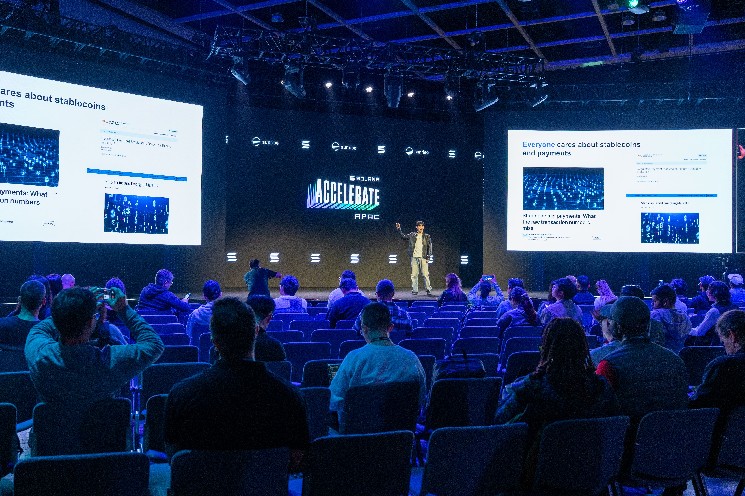
Asset managers including Mirae Asset and ChinaAMC shared the stage with infrastructure players such as CME Group, Fireblocks and Cumberland, showing how closely the ecosystem is courting traditional financial firms.
Payments also featured heavily. Multiple sessions centered on payment rails, compliant stablecoin infrastructure and cross-border use cases, with a clear emphasis on real-world adoption rather than speculative trading.
Infrastructure and AI were another pillar. Talks from Alibaba Cloud and several crypto-native builders highlighted the growing overlap between blockchain settlement layers and AI-driven applications, reinforcing Solana’s long-standing pitch around speed and scalability.
The overall mood in Hong Kong was simple and almost stubbornly consistent. Build.
Not the “buidl” that shows up in bull markets as a vibe check, but the kind that shows up when prices are down 70% over a year, attention is scant and nobody’s pretending the last few months have been fun. But that wasn’t the frame the event operated in.
Panels kept circling back to the same practical questions: How do stablecoins work at scale, how do you onboard institutions without breaking compliance and what metrics actually matter when you’re selling onchain rails to asset managers and banks. How do you make wallets feel less like science projects and how do you build tokenization infrastructure that survives a regulator’s first serious audit also took center stage
If anything, the downturn seemed to sharpen the messaging, with less talk about narratives and more about settlement, custody, payments, identity and the boring operational details that decide whether “real adoption” is real or just a meme.
A key vibe takeaway was not that Solana is immune to market cycles, but that the people building on it are trying to act like the cycle doesn’t get to decide what matters.

 coindesk.com