
 cryptopolitan.com
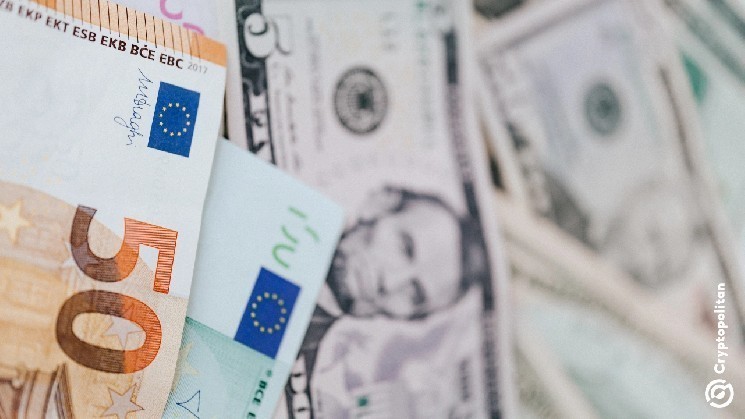
As of December 2025, American companies Visa and Mastercard are processing nearly two-thirds of card payments in the Eurozone, and Europe is finally sick of it.
If things ever get ugly(ier) between the U.S. and Europe, the people here could find themselves locked out of their own money.
Martina Weimert, who runs the European Payments Initiative (EPI), called the situation urgent. “We are highly dependent on international solutions,” she said. Her group includes 16 banks and financial companies, like BNP Paribas and Deutsche Bank, and they’re trying to build something new.
“Yes, we have nice national assets like domestic card schemes… but we don’t have anything cross-border,” Martina added. “If we say independence is so crucial… we need action urgently.”
Officials push back on U.S. control of European payments
The European Central Bank says Visa and Mastercard processed almost two-thirds of Europe’s card payments in 2022. That’s a lot of power. And it’s not just numbers. There are 13 EU countries that don’t even have their own payment network. Even in countries that do, those systems are dying out. Cash is disappearing fast too.
Mario Draghi, the former ECB president, didn’t hide his concern. “Deep integration created dependencies that could be abused when not all partners were allies,” he said. “Interdependence… became a source of leverage and control.”
Things are tense. Belgium’s cybersecurity chief warned that Europe already “lost the internet” because of how much American tech runs everything. Payments are heading the same way if no one stops it.
The EPI is trying to stop it. In 2024, they launched Wero, a digital payment app that works kind of like Apple Pay. So far, it has 48.5 million users across Belgium, France, and Germany. But it doesn’t work everywhere yet. Full expansion for online and store payments is expected by 2027.
Martina said many banks and stores already know they need a real cross-border solution. But now that world politics are heating up, she said, it’s “becoming a mainstream topic.”
ECB bets on digital euro as clock ticks toward 2029
The European Central Bank is going all in on something else: a digital euro. It’s a public money project. Their goal is to make sure people in Europe can still send and receive money using a system run by Europeans.
Piero Cipollone, who’s leading the project, said it clearly. “As European citizens, we want to avoid a situation where Europe is overly dependent on payment systems that are not in our hands.”
But not everybody is excited. Some banks think it’ll hurt private projects. Some politicians don’t like it either. The European Parliament is voting on it this year, and it’s expected to be very close.
If the vote passes, stores will be legally required to accept digital euros by 2029. The infrastructure will also be open so private companies can build on top of it. Aurore Lalucq, who leads the European Parliament’s economic committee, supports the plan. She said it could help Europe build something that finally competes with Visa and Mastercard.
Still, Martina doesn’t think it’s coming fast enough. She said, “The problem with the digital euro is it will come in a couple of years, maybe after the mandate of [US President] Donald Trump. So I think we are a little bit out of time.”