
 news.bitcoin.com

U.S. equities extended their selloff Thursday, Feb. 5, 2026, as technology shares led broad declines across major benchmarks amid renewed risk-off sentiment.
Nasdaq Leads Market Declines as Risk-off Sentiment Returns
U.S. stock markets opened sharply lower, continuing a multi-session pullback that has weighed heavily on growth-oriented sectors. The tech-heavy Nasdaq Composite was among the hardest hit, putting the index on pace for its worst three-day performance since April 2025, as investors trimmed exposure to high-valuation stocks and rotated toward defensive positioning.
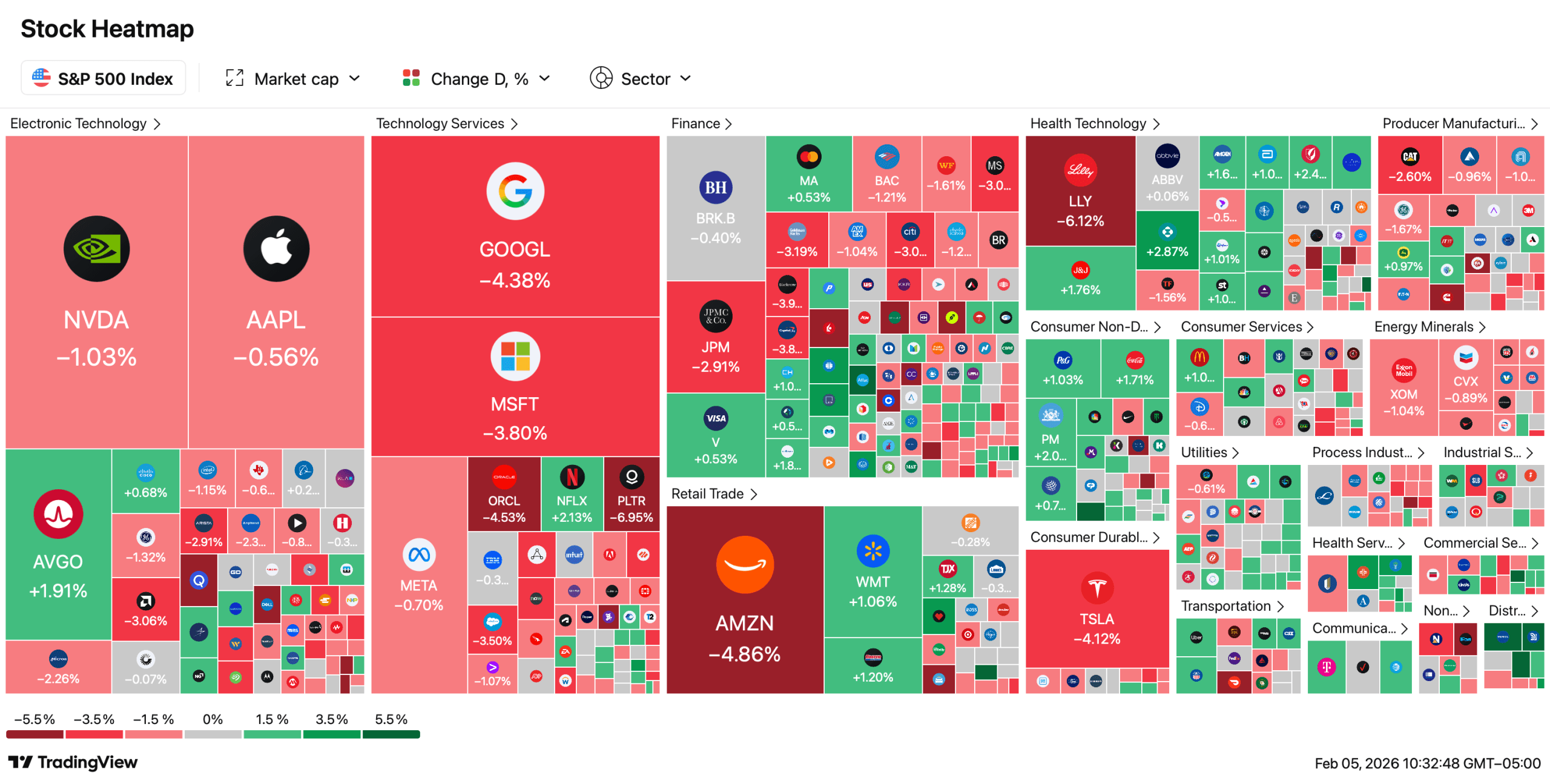
By mid-morning, the Nasdaq Composite stood at 22,500.96, down 403.62 points. The S&P 500 fell 94.64 points to 6,788.08, while the Dow Jones Industrial Average slid 598.18 points to 48,903.12. The NYSE Composite also traded lower, reflecting broad-based weakness across sectors.
Technology shares bore the brunt of the selling as concerns mounted over capital expenditures tied to artificial intelligence initiatives and stretched valuations. Software and semiconductor stocks continued a multi-day retreat, erasing hundreds of billions of dollars in market value since late January. Chipmakers were particularly pressured following earnings reactions, despite some companies beating estimates.
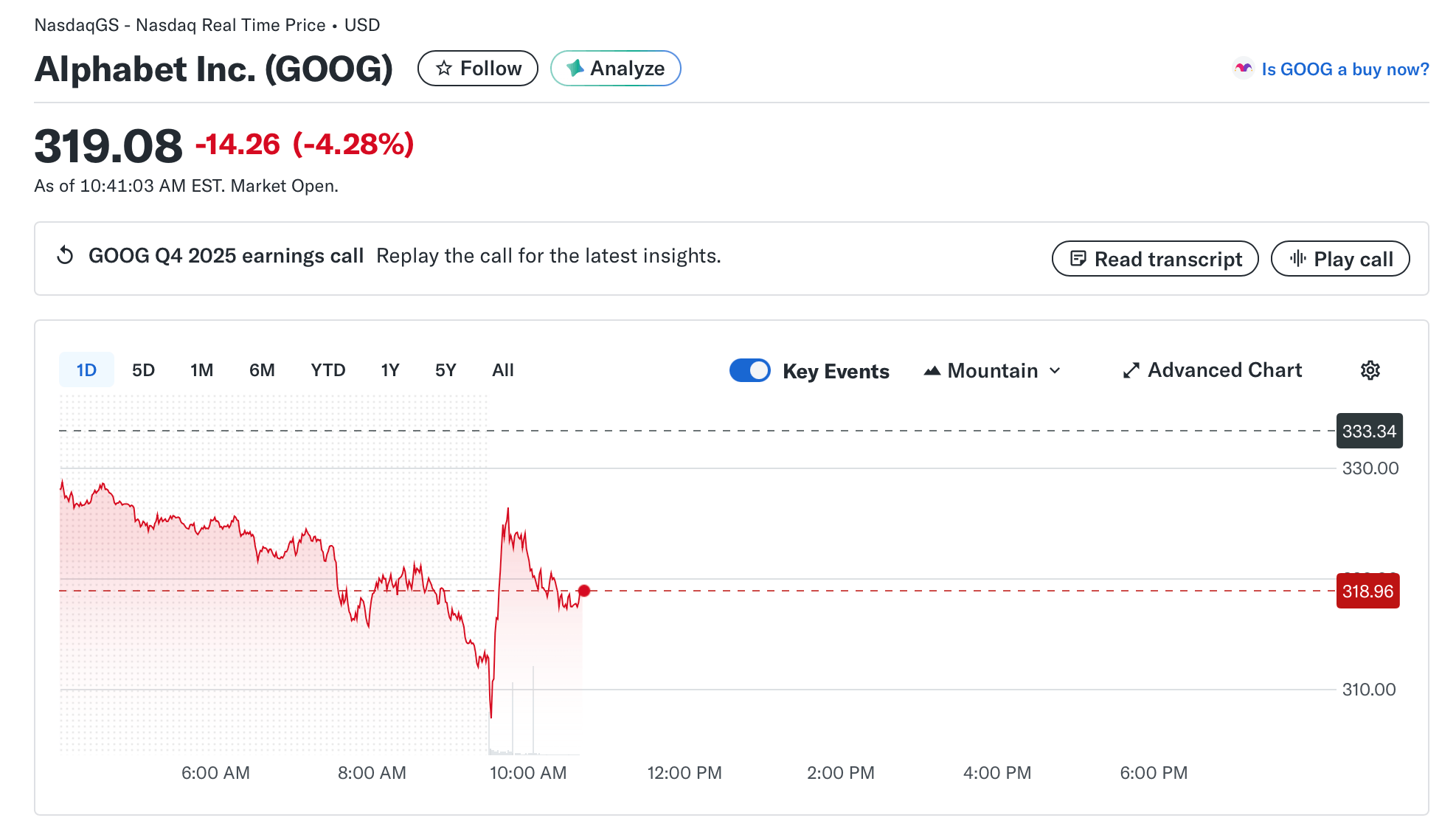
Communication services stocks also declined, with Alphabet (Google) shares dropping sharply after outlining aggressive AI spending plans. Health care stocks added to the downside, while other defensive sectors offered limited support. The Cboe Volatility Index hovered near 21, signaling elevated uncertainty among investors.
Economic data added to the cautious tone. A rise in unemployment claims and softer private hiring figures revived concerns about slowing growth, reinforcing a move away from risk assets. Futures markets reflected the unease, with S&P 500 and Nasdaq futures pointing lower ahead of the opening bell.
Market participants also continued to reposition portfolios amid a broader sector rotation. Value-oriented stocks have outperformed growth names since the start of the year, while small-cap shares showed relative strength earlier in 2026, suggesting investors are reassessing exposure after last year’s rally.
Global markets echoed the weakness, with major indexes in Europe and Asia also trading lower. A firmer U.S. dollar and ongoing geopolitical tensions added to the pressure, contributing to a synchronized pullback across asset classes.
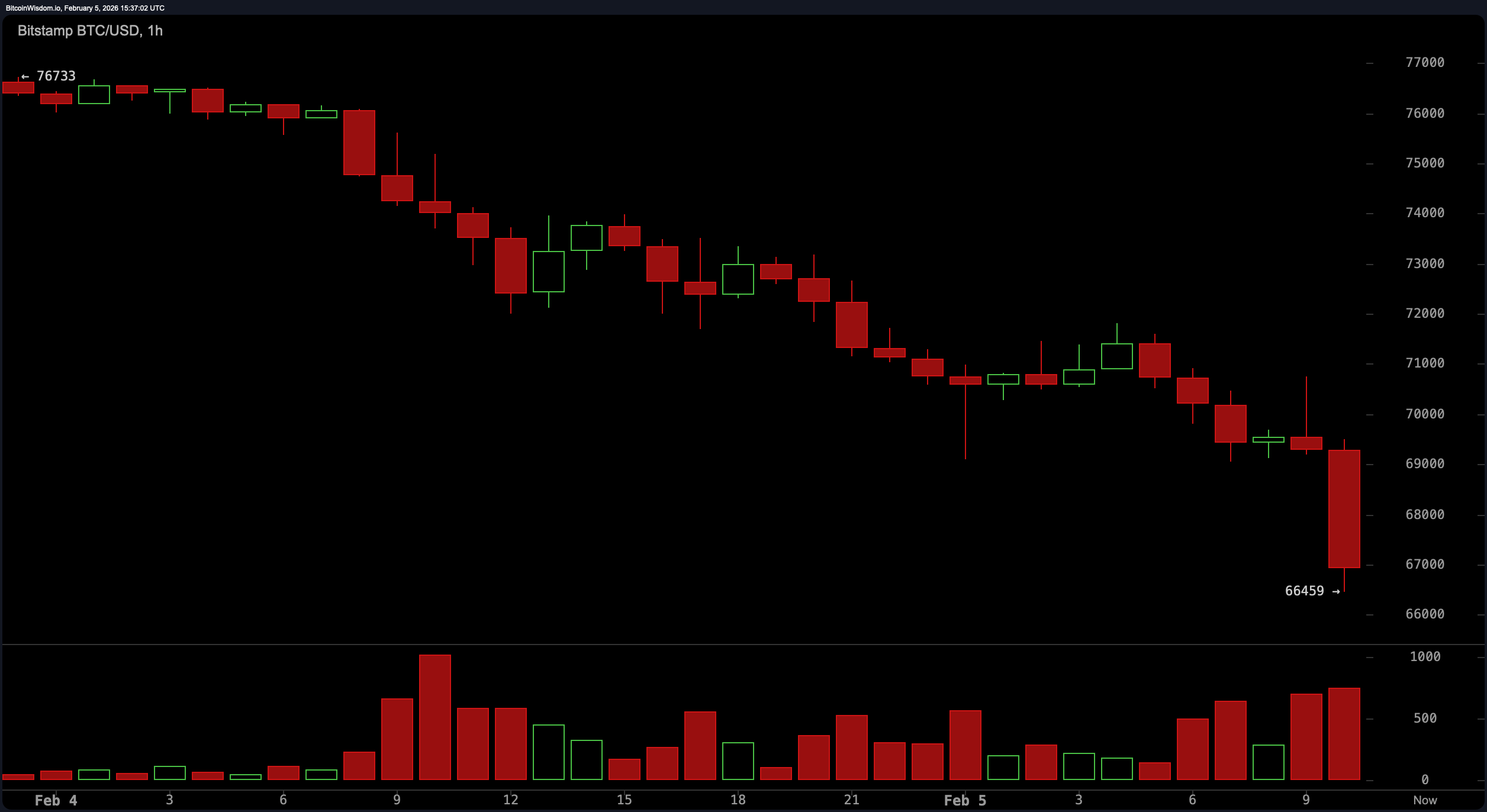
Beyond equities, bitcoin fell below the $67,000 level for the first time since November 2024, extending a steep decline from its October 2025 $126,000+ peak. Precious metals also retreated, with gold and silver posting notable losses as investors reduced leveraged positions amid heightened volatility.
Looking ahead, analysts expect choppier trading conditions throughout 2026, citing elevated equity valuations, election-year uncertainty, and questions surrounding the sustainability of AI-driven spending. While some strategists point to potential opportunities in undervalued sectors, near-term sentiment remains cautious as markets adjust to shifting macroeconomic signals.
FAQ ❓
-
Why are U.S. stocks falling on Feb. 5, 2026?
Equities declined as investors sold technology shares amid valuation concerns and weaker economic data. -
Which indexes were hit the hardest?
The Nasdaq Composite led losses, followed by the S&P 500 and Dow Jones Industrial Average. -
What sectors drove the selloff?
Technology, software, semiconductors, and communication services were the biggest laggards. -
Is market volatility increasing?
Yes, with the VIX near 21, signaling heightened uncertainty across markets.