
 coindesk.com
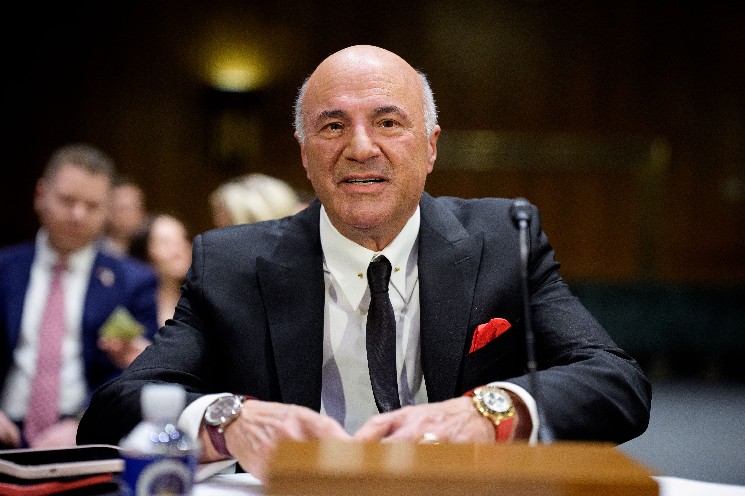
Shark Tank investor Kevin O’Leary said infrastructure is the future of crypto and artificial intelligence, and he is betting big.
O'Leary said in an interview with CoinDesk that he now controls 26,000 acres of land across multiple regions, aimed at powering the infrastructure behind AI, cloud computing and crypto. That figure includes 13,000 acres in Alberta, Canada — already disclosed — and another 13,000 acres in undisclosed locations currently undergoing permitting.
O'Leary, who has been an investor in crypto, said he has over 19% of his portfolio in crypto-related investments, including digital assets, infrastructure and land.
The business mogul already invested in bitcoin miner BitZero in Norway, and has likened bitcoin mining to a real estate play. His theory is that both the mining and data center businesses require massive amounts of land and power to even start building anything. Just as real estate developers constantly look for good land to build skyscrapers, miners and AI firms are doing the same.
However, he doesn't want to build the centers himself; rather, he wants to acquire the land and power, then lease them back to the company to build.
“My job is not necessarily to build a data center,” O’Leary said. “It’s to prepare shovel-ready permits of all of the above mentioned.”
In fact, he thinks if these firms don't have the land first, most of the announced data centers won't be built. He claims about half of the data centers announced in the last three years “will never get built,” describing the rush into the space as a “land grab without any understanding of what it takes.”
The lands that he acquired are being prepared to support energy-intensive infrastructure, including bitcoin mining in the short term and hyperscalers and government data centers in the long term. The sites are being developed with full utilities in mind — including power, water, fiber and air rights — and will be leased out once shovel-ready.
O’Leary said the power contracts in some of these locations, which he wouldn’t disclose, are more valuable than bitcoin itself — especially those offering sub-six-cent per kilowatt hour pricing. That, he says, is what makes infrastructure more important than tokens in the long run.
All about bitcoin and Ether
O'Leary's pivot to infrastructure comes as he grows more skeptical of most of the crypto market.
He said he believes institutional capital — the kind that moves markets — only cares about two assets: bitcoin and ether. While recently launched exchange-traded funds (ETFs) have helped bring in some retail capital, he said they mean little to institutions.
“In the context of the financial services market and asset allocation, [crypto ETFs] aren’t even a teenage pimple… they're just nothing," he said, adding a jab at smaller coins. “The numbers tell you, you only need to own two positions to capture 97.2% of the entire volatility [of] the entire crypto market since inception, and it’s just bitcoin and ethereum."
“All the poopoo coins are still stuck down anywhere from 60 to 90% and they’re never coming back," he said.
A recent report from Charles Schwab showed that nearly 80% of crypto’s estimated $3.2 trillion market value is tied up in foundational blockchains like Bitcoin and Ethereum, underscoring how much of the industry’s value remains concentrated in its two largest networks, even as thousands of newer projects compete for attention and investment.
Regulation is everything
So what will entice the large financial institutions to go beyond investing in just bitcoin and ether? Regulations, according to O'Leary
He says the real inflection point will come with regulation. One of them is the crypto market structure bill currently being worked on in the U.S. Senate, which he is watching closely.
However, he criticized a clause in the current draft that bans yield on stablecoin accounts — a restriction he said unfairly advantages traditional banks and that ultimately caused crypto exchange Coinbase to pull back support for the bill earlier this month.
“That is an unlevel playing field,” he said. “Until we allow those that use stablecoins to offer yield to account holders, this act will probably be stymied.”
Crypto companies — in particular stablecoin issuers and exchanges which work closely with them, for example USDC issuer Circle and its partner Coinbase — want to be able to offer rewards in some form due to the potential revenue they generate from these products. Coinbase reported earning $355 million in revenue from its stablecoin yield offerings in the third quarter of 2025 alone. But other crypto companies pointed to provisions addressing decentralized finance regulations, securities regulations and regulatory oversight rules as other areas of concern.
Still, O'Leary remains optimistic that the bill will be fixed — and when it does, he believes it will pave the way for massive institutional allocation into bitcoin.