
 coindesk.com
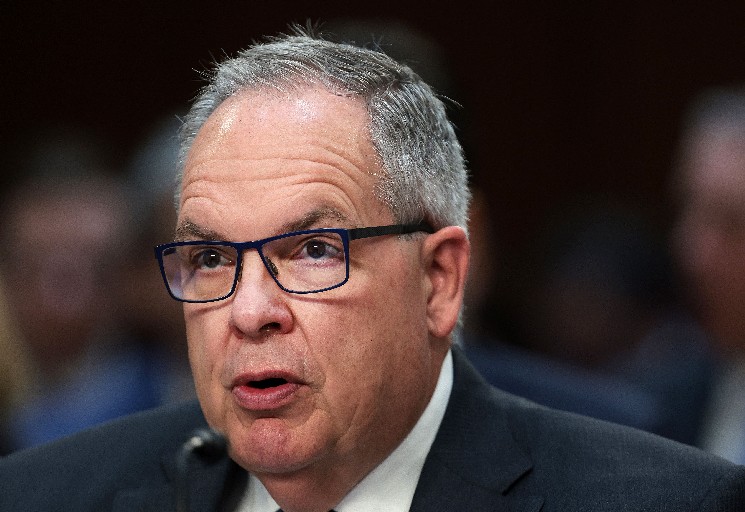
State Street, a bank with a market cap of about $36 billion, is positioning itself as a bridge between traditional and digital finance — and it's not waiting for the future to arrive.
On Thursday, the bank officially launched its Digital Asset Platform, a secure infrastructure designed to support tokenized money market funds (MMFs), exchange-traded funds (ETFs), cash products, and stablecoins. The platform includes wallet management, custodial services, and digital cash capabilities, and is designed to operate across both public and permissioned blockchains.
Speaking on the company’s fourth-quarter earnings call on Friday, CEO Ronald O’Hanley said the financial system is entering a new phase of digitalization, and that State Street intends to be at the center of it. That shift, he stressed, isn’t about cryptocurrencies like bitcoin BTC$95,565.23, but about reengineering traditional financial assets like money market funds and cash; rather, it's about putting them into blockchain to enable them to move more efficiently across new infrastructure.
“We are strategically positioning State Street to be the bridge between traditional and digital finance and the connection point among digital asset platforms,” O’Hanley said.
For this new paradigm of finance, one of the earliest and most practical applications is the tokenization of money market funds (MMFs), a product that State Street already services at scale. Tokenized MMFs, he said, can serve as collateral, enable faster settlement, and offer clients a bridge to a more digital operating model.
State Street isn't the only bank to see the potential for blockchain to transform legacy financial services. Other major banks are moving in a similar direction.
JPMorgan has been using its JPM Coin and Onyx network to settle institutional payments with tokenized deposits. Goldman Sachs has piloted tokenized bond issuances and built its own digital asset platform while Citi is testing tokenized deposits and programmable payments through its Citi Token Services, all laying the groundwork for a financial system where traditional assets quietly move over blockchain rails.
future of finance
In parallel, the bank is also preparing for future use cases that could become central to financial markets, such as settling securities using stablecoins. “To the extent to which stablecoins become some kind of regular way of settling securities transactions, you need these kinds of capabilities to enable that kind of cash, if you will, that digital cash to be able to settle a traditional securities transaction,” he said.
The bank’s ambitions in the digital asset space also include a minority investment and partnership with Apex Fintech Solutions, made in late 2025. The deal was aimed at expanding its capabilities in the wealth services market, particularly as those clients look to access digital assets and rails.
Still, O’Hanley was clear that the financial impact of these efforts won’t show up immediately.
“It’s not really going to be visible in ’26,” he said. “It’s more of a medium-term matter. But all of the investments we’re making now will position us so that we are relevant and part of that growth story over the medium term.”
That relevance, he argued, will come not from speculation, but from infrastructure.
“It really is about the digitalization of transactions … it's to be able to enable those institutions, to make this transition from traditional finance into digital finance, and to do it in a cost-effective way.”