
 coinfomania.com
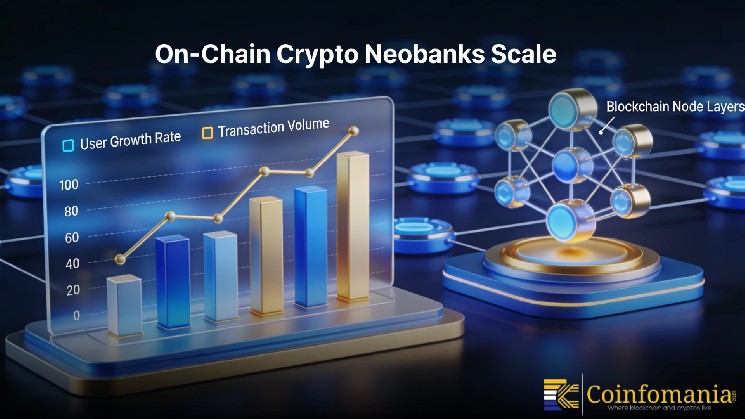
On-chain neobanks are growing at a speed few expected. These crypto-native platforms now manage assets at a level once reserved for traditional banks. Yet, they operate without branches, paperwork or legacy systems. Instead, everything runs on the blockchain, in real time, across borders.
As a result, a new form of digital banking is taking shape.
What Makes On-Chain Neobanks Different?
Traditional banks rely on layers of systems and middlemen. In contrast, on-chain neobanks use blockchain technology as their core engine. Users hold their funds in crypto wallets, not bank accounts. Because of this, users stay in full control of their money.
More importantly, these platforms work around the clock. There are no banking hours. There are no borders. Transactions settle in minutes, not days.
At the same time, many on-chain neobanks look and feel like normal banking apps. They offer clean dashboards, simple balances, and easy transfers. This makes them easier for everyday users to adopt.
Real Banking, Powered by Blockchain
On-chain neobanks no longer focus only on crypto traders. Instead, they now offer real financial services.
For example, users can send money globally using stablecoins with very low fees. In addition, some platforms allow users to earn yield on idle balances. This happens through built-in DeFi tools.
Moreover, several on-chain neobanks offer debit cards. These cards connect directly to on-chain funds. As a result, users can spend crypto like regular money in shops and online.
Because everything runs on-chain, users can track transactions in real time. This adds a level of openness that traditional banks rarely offer.
Why Neobanks Growth Is Happening Now
Several trends are driving this fast growth.
First, stablecoins have become more trusted. Many people now use digital dollars and euros for payments and savings.
Second, trust in traditional banks has weakened in many regions. Because of this, users seek faster and cheaper options.
Third, mobile-first finance has become the norm. On-chain neobanks fit this shift perfectly.
Meanwhile, even large banks now test blockchain tools. This shows that on-chain finance is no longer fringe.
Challenges Still Remain
However, risks still exist. Regulations differ across countries. In addition, users must protect their private keys. Mistakes can lead to loss of funds.
Still, platforms continue to improve security and user design. Over time, this could reduce friction.
A Quiet Banking Shift Is Underway
On-chain neobanks are not just another crypto trend. Instead, they signal a deeper change in how people manage money.
As adoption grows, these platforms may reshape global banking, quietly, but fast.