On Sept. 4, Stripe CEO Patrick Collison wrote on X, “as the use of stablecoins (and crypto more broadly) grows across Stripe, Bridge, and Privy, we found that existing blockchains are not optimized for them.”
“We think of Tempo as the payments-oriented L1, optimized for high-scale, real-world financial applications,” he said.

Source: Patrick Collison
Though no launch date has been given for Tempo, Paradigm Chief Technology Officer Georgios Konstantopoulos said on Friday that the core team behind its open-source projects at Ithaca is joining Tempo to help build the blockchain’s payments infrastructure and scale its engineering efforts.
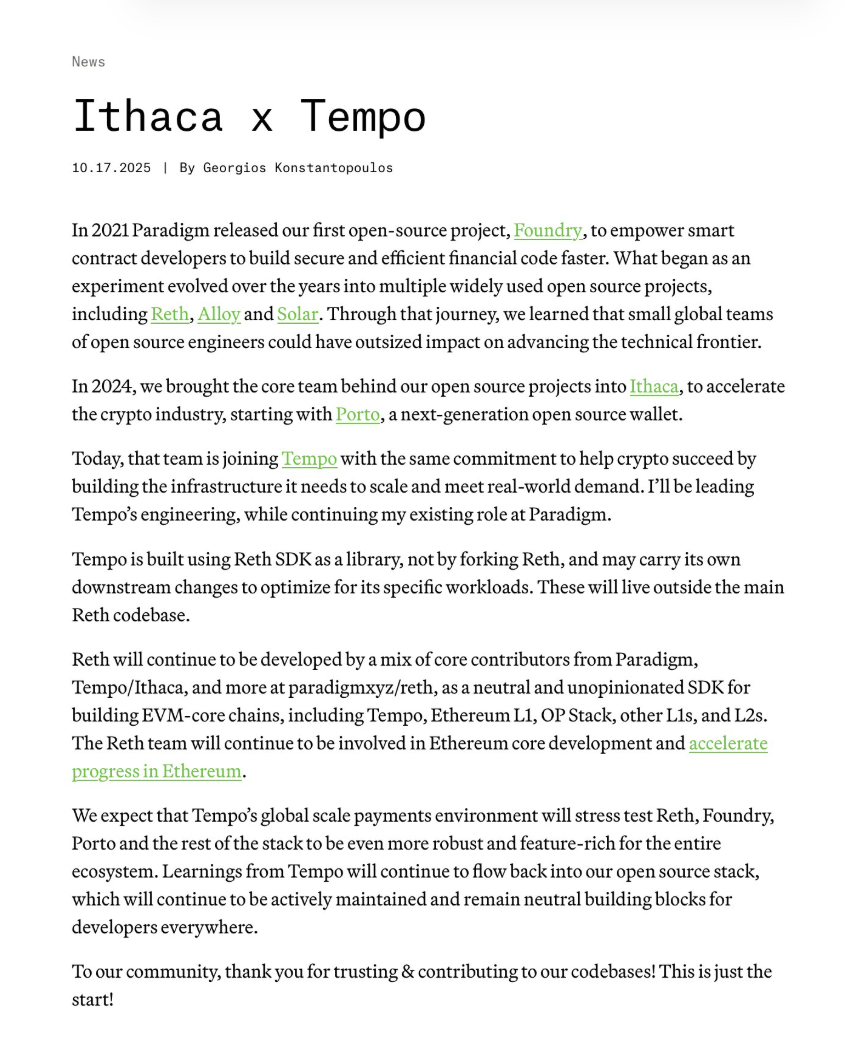
Source: Georgios Konstantopoulos
Related: VC Roundup: Twenty One investors inject $100M into BTC treasury, Jump Crypto backs Securitize
A competitive stablecoin market
While Stripe hasn’t disclosed plans for a native Tempo token, the blockchain’s focus on payments infrastructure puts it in competition with several stablecoin issuers already embedded in global payment systems.
One competitor will be Circle, the issuer of $USDC ($USDC), a stablecoin backed 1:1 to the US dollar that is integrated with Mastercard and Visa. $USDC launched in 2018 and currently has a market cap of $75.6 billion, trailing only Tether’sUSDt ($USDT).
In August, Circle announced it will launch a layer-1 blockchain later this year to offer “enterprise-gradefoundation” for stablecoin payments, capital market applications, and foreign exchange.
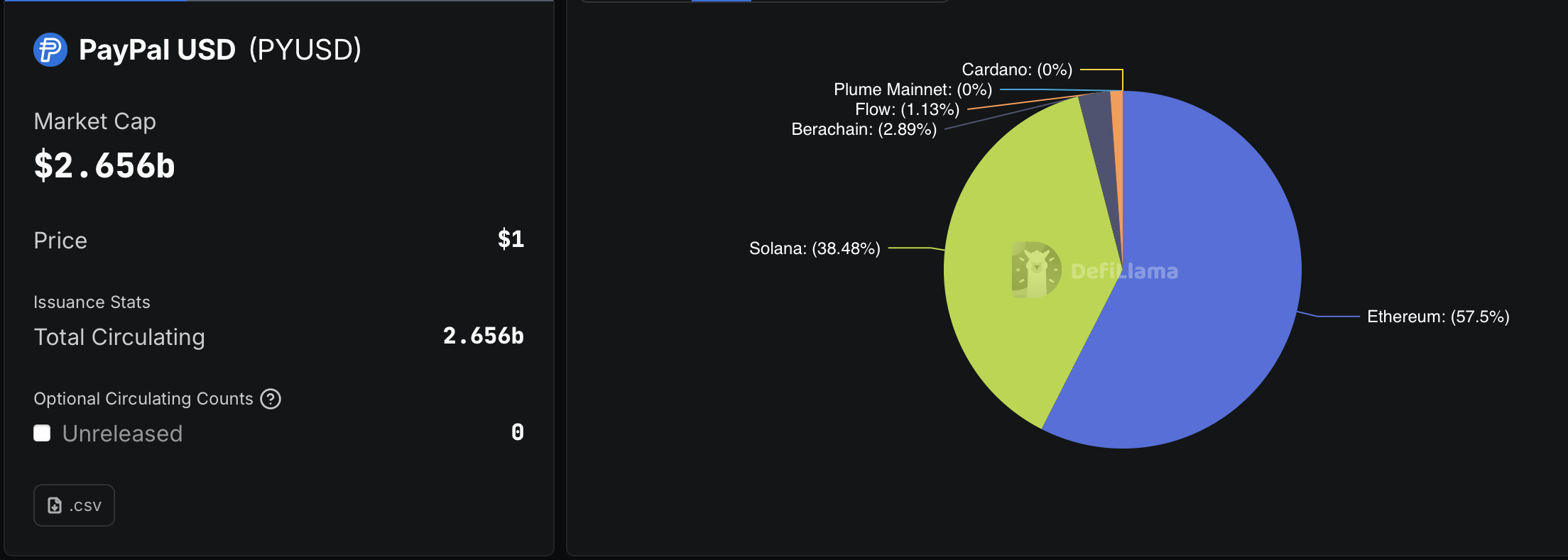
PYUSD market cap. Source: Defillama
Much of the recent momentum in the stablecoin space follows the passage of the GENIUS Act in the US. The legislation was enacted in July to establish federal rules for stablecoin issuers.
Stablecoins pegged to the euro are also becoming more popular, as the European Union aims to compete with US dollar-denominated tokens.
Magazine: Japan tours on XRP Ledger, $USDC and $USDT payments via Grab: Asia Express

 cointelegraph.com