
 en.coinotag.com

HSBC tested a quantum processor in algorithmic bond trading and reported a 34% improvement in predicting bond prices and order fill likelihood, demonstrating quantum computing’s near-term utility for financial markets and accelerating industry planning for quantum-resistant cryptography.
-
HSBC used quantum processing to improve OTC bond order predictions by 34%
-
Quantum methods were integrated into algorithmic trading to estimate fill probability and reduce slippage risk.
-
Cryptocurrency encryption remains at theoretical risk from future quantum advances; migration planning to quantum-resistant cryptography is ongoing.
What is HSBC’s quantum computing bond trading test?
HSBC quantum computing bond trading refers to the bank’s experimental integration of a quantum processor into an algorithmic trading workflow to estimate the probability of filling OTC bond orders at target prices. The trial produced a 34% improvement in predictive accuracy versus classical methods in the test environment.
How did HSBC integrate quantum computing into algorithmic trading?
HSBC placed a quantum processing unit inside a pricing and order-fill estimation module used by algorithmic strategies. The quantum processor evaluated probabilistic models for price moves and liquidity, producing signals that augmented classical algorithms. The test measured prediction accuracy and simulated execution outcomes over representative OTC bond order sets.
Philip Intallura, HSBC’s group head of quantum technologies, said the results indicate financial services are approaching a practical frontier for quantum use, not a distant theoretical milestone.
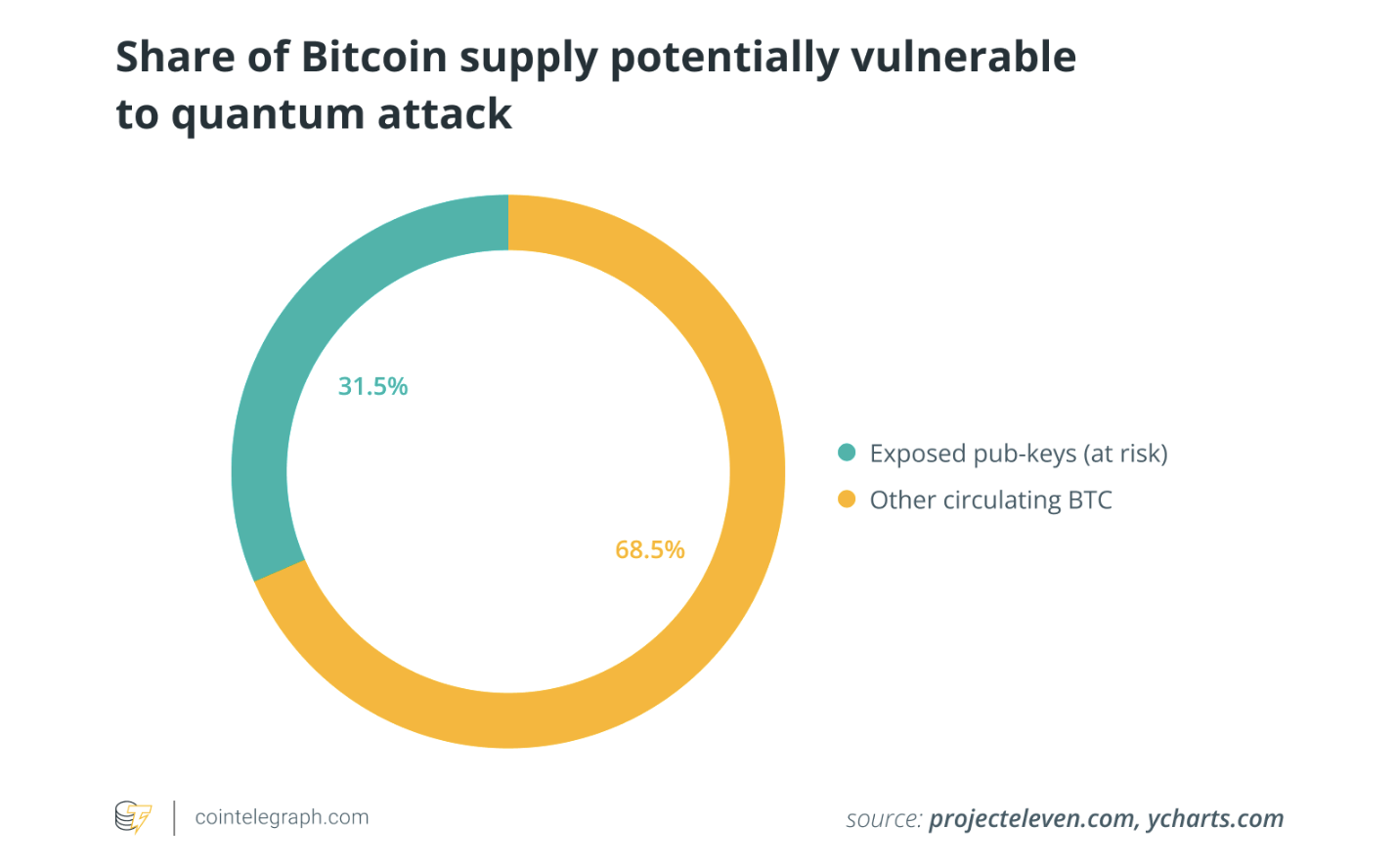
The share of the Bitcoin supply vulnerable to quantum attacks. Source: Cointelegraph
Why does this matter for cryptocurrencies and encryption?
Quantum computing threatens public-key cryptography foundations used by many cryptocurrencies. While HSBC’s trial focused on trading efficiency, the underlying capability to run quantum algorithms at scale renews urgency around assessing cryptographic risk timelines and planning transitions to quantum-resistant algorithms.
Forecasts vary: some developers estimate a possible “Q-Day” around 2030–2035, while others expect decades more of classical-cryptography resilience. Research tests in 2024 that broke small keys (22-bit) show practical quantum attacks remain far from cracking modern 2,048–4,096 bit RSA keys today.
When should institutions begin migrating to quantum-resistant cryptography?
Start risk assessments immediately and implement migration roadmaps within standard cryptographic lifecycle plans. Institutions should inventory keys and sensitive data, prioritize assets with long confidentiality needs, and test post-quantum algorithms in parallel systems. Regulatory guidance and vendor roadmaps should guide rollout timing.



