en.coinotag.com
Russian adviser Anton Kobyakov alleges the US may use dollar-backed stablecoins and gold to reduce or devalue its roughly $37.4 trillion national debt by shifting obligations into crypto instruments; the claim is presented as an allegation and lacks public, detailed policy documentation.
-
Allegation: US using stablecoins to devalue debt — reported by a Kremlin adviser.
-
US officials say stablecoin policy aims to preserve dollar dominance and support demand for U.S. debt instruments.
-
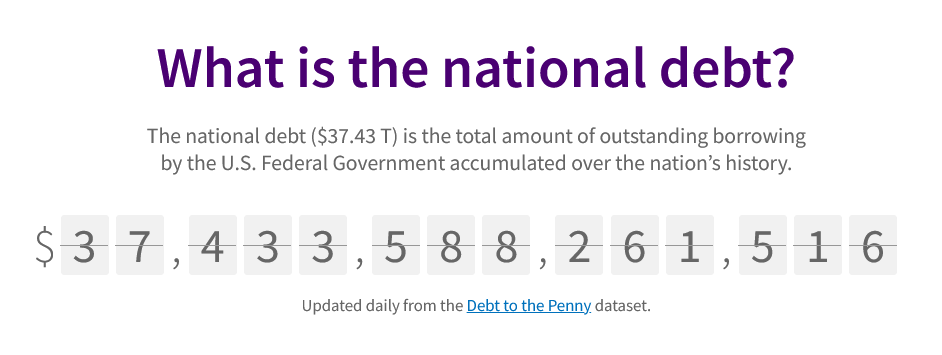
US national debt stands at approximately $37.43 trillion (US Treasury data); stablecoin policy and legislation such as the $GENIUS Act are central to the debate.
An adviser to Russian President Vladimir Putin said the US is strategically using crypto and gold to devalue its debt to “urgently address the declining trust in the dollar.”
What did the Russian adviser claim about stablecoins and US debt?
stablecoins devalue US debt is the core phrase used by the adviser Anton Kobyakov, who said Washington could move federal obligations into dollar-backed stablecoins or leverage gold to reduce the real burden of outstanding debt. The claim frames this as a strategic response to declining trust in the dollar, but it is presented as an allegation without detailed policy evidence.
How did Kobyakov describe the proposed mechanism?
Kobyakov suggested shifting debt into US dollar stablecoins and pushing global markets toward crypto and gold as alternatives to the traditional currency system. He compared the approach to historical debt-management shifts in the 1930s and 1970s, but provided no operational details on how tokenization would legally or technically devalue debt.
How could stablecoins theoretically affect U.S. debt valuation?
Any mechanism to move sovereign obligations into stablecoins would require legal changes, market adoption, and custodial arrangements. Below are potential steps often discussed in policy and academic circles, presented as conditional mechanisms rather than confirmed policy actions:
- Issuance or conversion: Government or authorized entities issue dollar-backed tokens representing claims on Treasury assets.
- Redenomination: Existing debt instruments could be exchanged or linked to tokenized instruments under new legislation or accounting rules.
- Market effect: If widely adopted, tokenized instruments could change liquidity dynamics or price discovery for US debt, affecting yields and valuation.
These steps are hypothetical frameworks frequently referenced in expert commentary; they do not constitute documented US policy implementing debt redenomination via stablecoins.