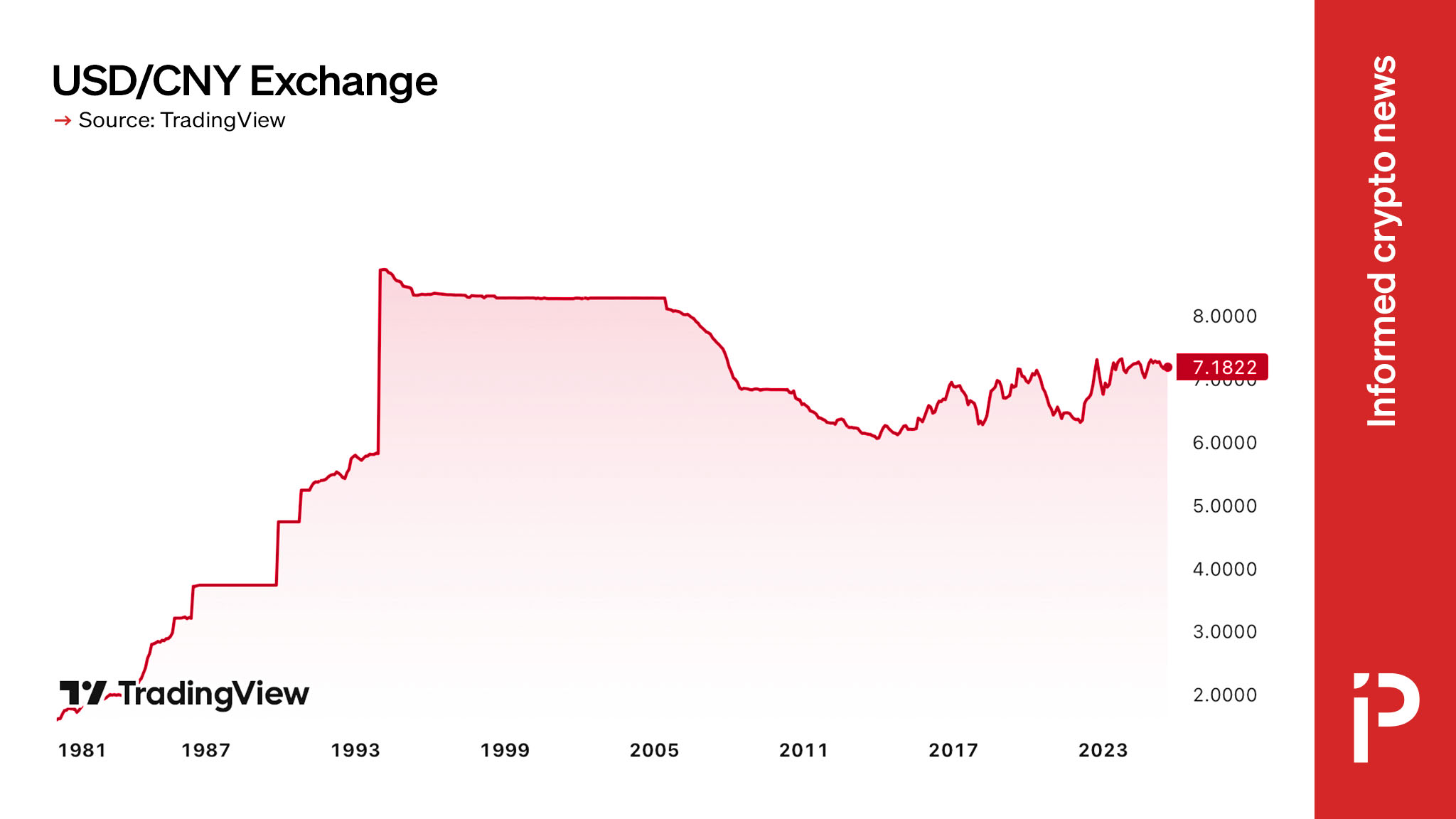
Additionally, know your customer and anti-money laundering laws have substantial penalties in China, and the renminbi can be used far more effectively to sanction individuals, companies, or countries than the US dollar because almost everyone strictly uses the yuan digitally, and the People’s Bank of China can exert full control over any aspect of the currency.
While this enables the CCP to ensure a semblance of price controls, it also has led to many Chinese nationals hunting for ways to exit the currency for more useful international currencies like the US dollar and euro, leading to a significant amount of capital flight. China also has not seen any widespread use of the yuan outside of Mainland China, even with war-torn allies like Russia and Iran.
There’s already a Yuan stablecoin
For those familiar with Tether, the largest cryptocurrency company in the world and the stablecoin with the highest market capitalization and most volume, they may also be aware that in 2019 Tether issued an offshore yuan stablecoin.
Since then, the Chinese national who helped them create the stablecoin and find some initial demand, Zhao Dong—known as the OTC king in China once upon a time—has been arrested and sentenced to years in prison. Almost no more Tether yuan has been minted since the arrest.
This suggests that not only are there inherent issues with the ability for Chinese nationals and foreigners to utilize Chinese stablecoins, but it also proves there’s a strong lack of demand for yuan-denominated stablecoins to begin with.
Less control or no demand
China faces a narrowing bridge that it will have to cross while it continues to use Hong Kong as a testbed for all of its stablecoin and cryptocurrency ventures: will it loosen price and capital controls on its currency so that anyone—from businessmen to travelers to criminals—finds the yuan more useful, or will they see their far-reaching dreams of a unified BRICS currency taking down the dollar evaporate into thin air?
It appears as though a renminbi stablecoin could be the first test in years for the People’s Bank of China to either make the yuan a global powerhouse vying with the US dollar in international markets or yet another example of the CCP keeping strong price controls in place to ensure domestic complacency.

 protos.com