And wouldn’t you know it — we’re already seeing this kind of development in Ondo Chain and Converge. Both are “designed to align with regulatory requirements while leveraging the efficiencies and transparency of open blockchain networks.”
“In the coming months, we see the greatest opportunities in the tokenization of illiquid markets, particularly private equity. However, the successful integration of offchain assets into blockchain ecosystems relies heavily on clear and consistent regulatory frameworks,” he continued.
Gonzalez Campo makes the case that tokenizing private equity makes more sense than public stocks due to the high entry barriers and illiquidity that plagues private markets.
“Unlike public stocks, which are already easily traded on traditional brokerage platforms and apps like Robinhood, tokenized private equity allows investors to access fractional ownership in high-growth private companies while adding efficiency to valuation dislocations,” he wrote.
Tokenized stocks, however, do have a bit of interest, as seen in the chart below.
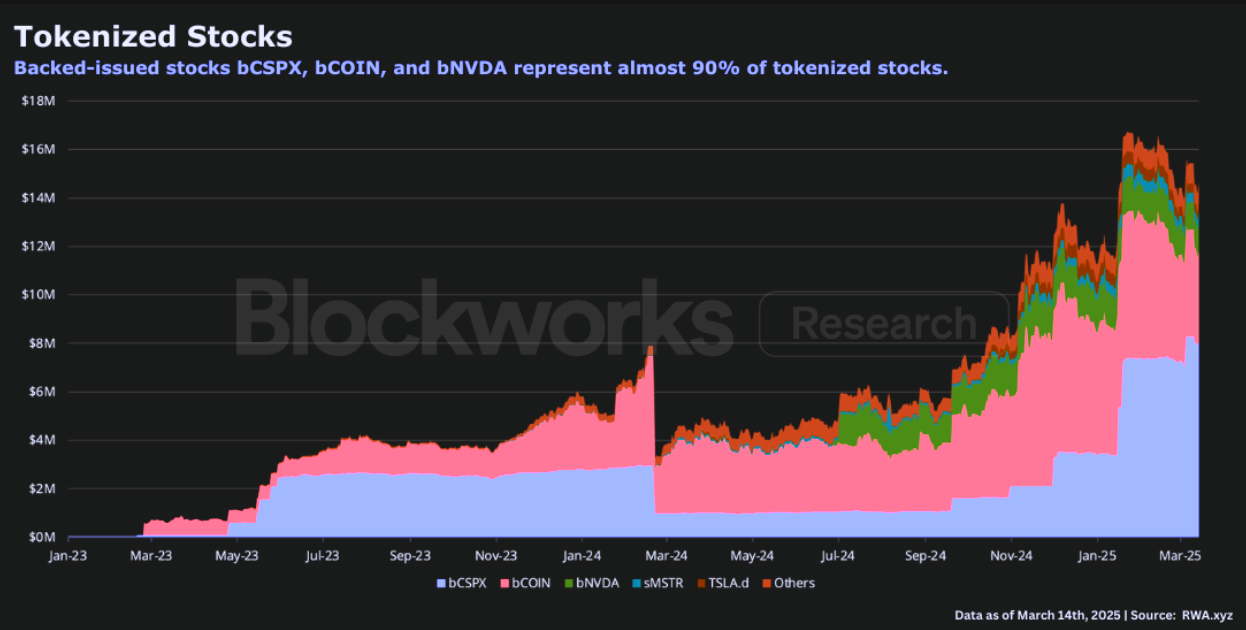
Source: Blockworks Research
Right now, tokenized versions of Coinbase, Nvidia, and the iShares Core S&P 500 UCITS ETF dominate the available tokenized public stocks.
But, “with the right regulatory guidance in the US, we expect that shares of private companies like SpaceX and Open AI will be tokenized over the course of the next four years,” the note said.
Throughout my career, the idea of making these highly exclusive private markets more available to the public has been teased but not really truly acted on — not, at least, in a way where folks really can get a piece of whatever private pie they want.
It’s certainly taken longer than I thought it would after Robinhood changed the game for stock trading years ago. But it’s exciting to see a potential timeline laid out.

 blockworks.co