
 u.today
A major crypto moment is set for Saturday, March 7. The White House will host its first-ever Crypto Summit, where discussions will go beyond Bitcoin ($BTC) and Ethereum ($ETH).
Word is that Cardano (ADA), XRP and Solana ($SOL) could also be on the table for the U.S. Strategic Reserve. Founders and key figures behind these assets are expected to attend - except, of course, Satoshi Nakamoto.
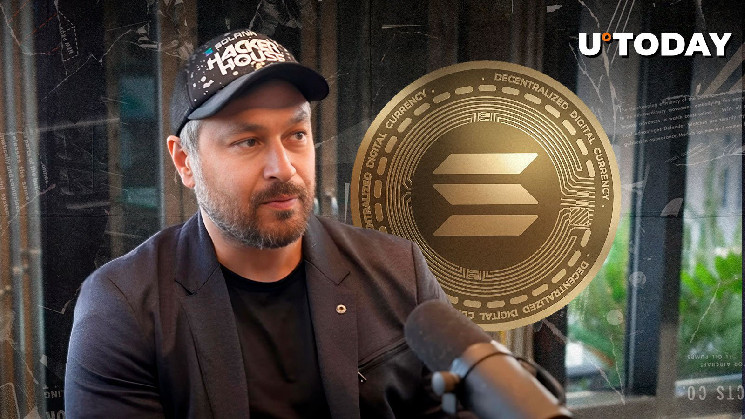
Solana cofounder Anatoly Yakovenko has a clear stance on the reserve idea, with three possible scenarios, in his view.
Three major scenarios for U.S. Strategic Reserve
One, there should not be a reserve at all. Putting the government in charge of decentralization? A direct path to failure, says Yakovenko.
Two, individual states could establish their own reserves as a hedge against any missteps from the Federal Reserve.
Three, if a reserve must exist, it should be based on measurable and rational criteria - whatever they may be. Even if that means only Bitcoin qualifies right now, so be it. If there is a target to meet, Solana’s ecosystem will figure out how to hit it, he is convinced.
Controversy
There is also been some buzz about whether Solana actively pitched $SOL for inclusion in the reserve. Yakovenko pushed back on that, saying he was never approached and never made a case for it.
He also questioned the idea of a “Solana representative” in the first place, likening it to saying there is a "Bitcoin representative." The network, he implied, does not operate that way.
Not everyone is thrilled about broadening the reserve beyond $BTC and $ETH. If anything, the idea is causing more pushback than enthusiasm. Some well-known voices in crypto suspect an agenda - an effort by project founders to boost their holdings through government backing.
Others are concerned about what state involvement in crypto might mean for decentralization as a whole. One thing is certain: as the summit draws near, the debate is not going anywhere.