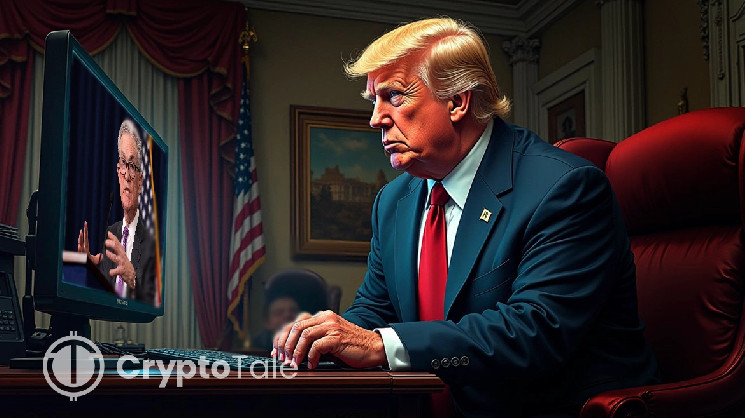
Because Jay Powell and the Fed failed to stop the problem they created with Inflation, I will do it by unleashing American Energy production, slashing Regulation, rebalancing International Trade, and reigniting American Manufacturing, but I will do much more than stopping…
— Donald J. Trump Posts From His Truth Social (@TrumpDailyPosts) January 29, 2025
The cryptocurrency market has shown resilience in response to Powell’s indication of delayed rate cuts. Analysis from Santiment reveals that digital assets have maintained stability despite the Fed’s cautious stance on monetary easing. This reaction marks a shift from historical patterns where cryptocurrency prices closely tracked Federal Reserve policy decisions.
Market data suggests changing dynamics in the relationship between cryptocurrency valuations and traditional financial markets. While the past three years saw tight correlations between crypto assets and stock markets, recent trends point to increasing independence. This decoupling aligns with historical observations that cryptocurrency’s strongest bull cycles occurred during periods of reduced correlation with traditional markets.
📈 Cryptocurrency has not (yet) been phased by Jerome Powell and the Fed's decision to halt interest rate cuts for the time being. Interest rates have been a sensitive topic for investors and traders of all sectors, particularly after they were aggressively cut in 2020 (as a… pic.twitter.com/p49FjhLiKI
— Santiment (@santimentfeed) January 29, 2025
The Fed’s current position builds on its aggressive policy actions of recent years, including the rate cuts of 2020 in response to COVID-19 and subsequent increases in 2022 as pandemic restrictions eased. These policy shifts profoundly influenced investor behavior across asset classes, with rate decisions serving as key market catalysts.
Related: FOMC Meeting: Will Rate Cuts Boost Bitcoin’s (BTC) Price?
Looking forward, Powell’s messaging suggests a balanced approach between controlling inflation and maintaining economic stability. This stance comes as various economic indicators show progress in price stability. However, the Fed appears committed to ensuring sustained improvement before pivoting to more accommodative policies.
Trump’s proposed alternative approach emphasizes structural economic changes, including regulatory reform and domestic production enhancement. His criticism of the Fed’s broader policy focus, particularly regarding environmental and social initiatives, shows ongoing debates about the central bank’s role beyond traditional monetary policy.

 cryptotale.org