Lido estimates a capital multiplier versus solo staking of 2.18 times for a first validator, approaching 2.26 times as more are added. The comparison includes staking returns on the operator's bond and assumes full 2,048 $ETH effective balances, making eventual allocation central to the advertised economics.
The launch moves beyond the proposal-stage route CryptoSlate covered on Oct. 4, when mainnet activation was still pending.
Seed deposits come first
Lido starts the module with a stake-share limit of 0.01% of Lido Core's total value locked, intended to fund roughly 32 seed deposits. It also has a separate 32-seat queue for validators awaiting top-ups. Each seeded key must activate before becoming eligible for that further funding.
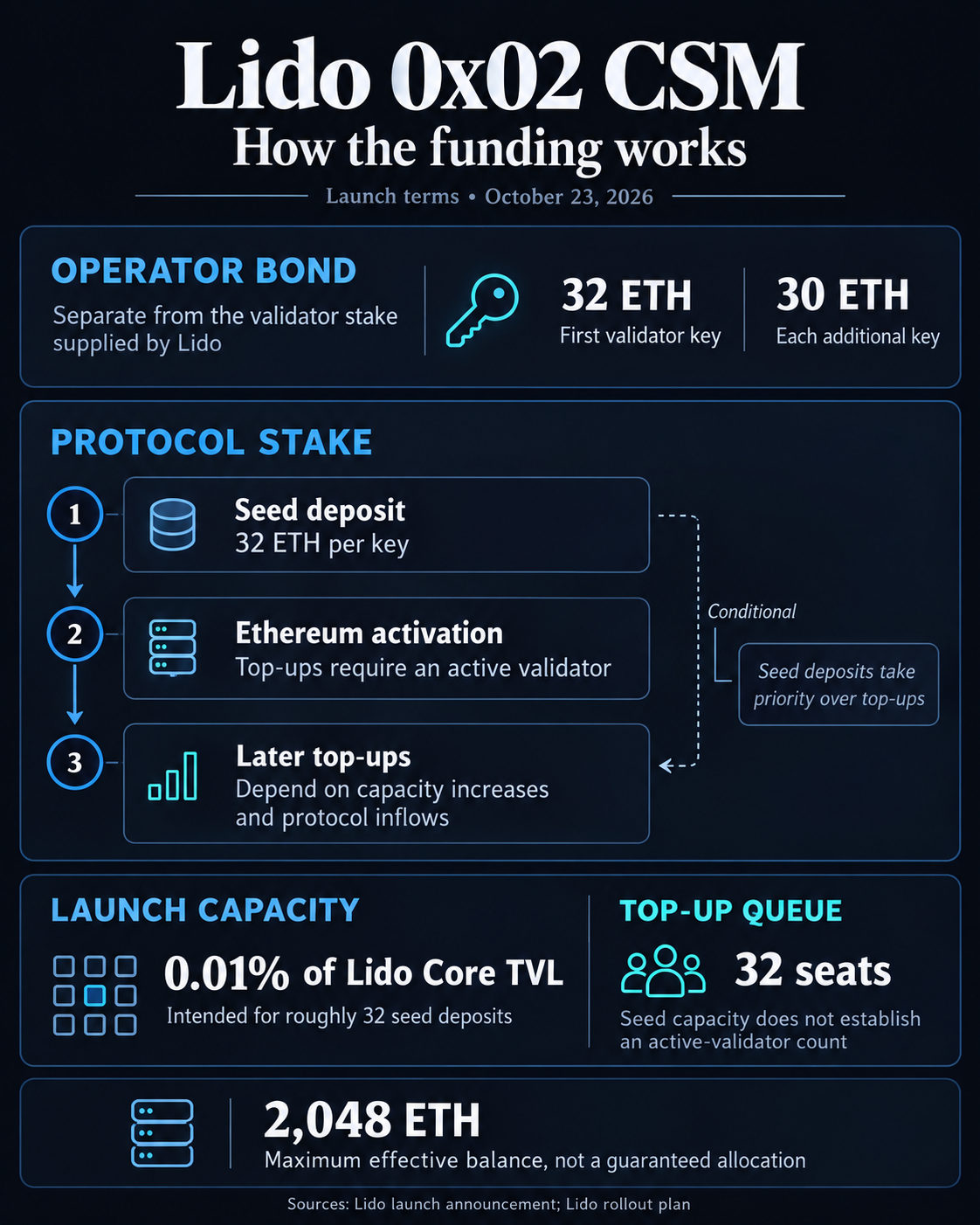
Under the rollout plan, submitted keys first wait for a 32 $ETH seed deposit. Once the initial batch receives seed deposits and activates, the CSM Committee is to propose a capacity increase through Easy Track. If the cap rises, additional stake can flow to active validators, provided the protocol has sufficient inflows.
Seed deposits have priority over top-ups. A validator reaching its top-up target releases a queue seat, making room for another key to receive a seed deposit. The committee can propose further increases as newly seeded validators become active.
Ethereum's entry queue adds another wait. At the October 25 review, Validator Queue showed 1,295,748 $ETH waiting to enter and an estimated wait of 22 days and 23 hours. This network-wide estimate is not an individual CSM activation date.
Lido's operator documentation says top-ups depend on the module's stake-share limit and deposit demand, and a validator may never reach its target. A key marked active can therefore still be receiving additional stake.
Existing operators can continue using 0x01 CSM alongside the new module. There is no native consolidation-based migration from 0x01 to 0x02, so the launch offers another operating route while leaving the existing one available.

 cryptoslate.com