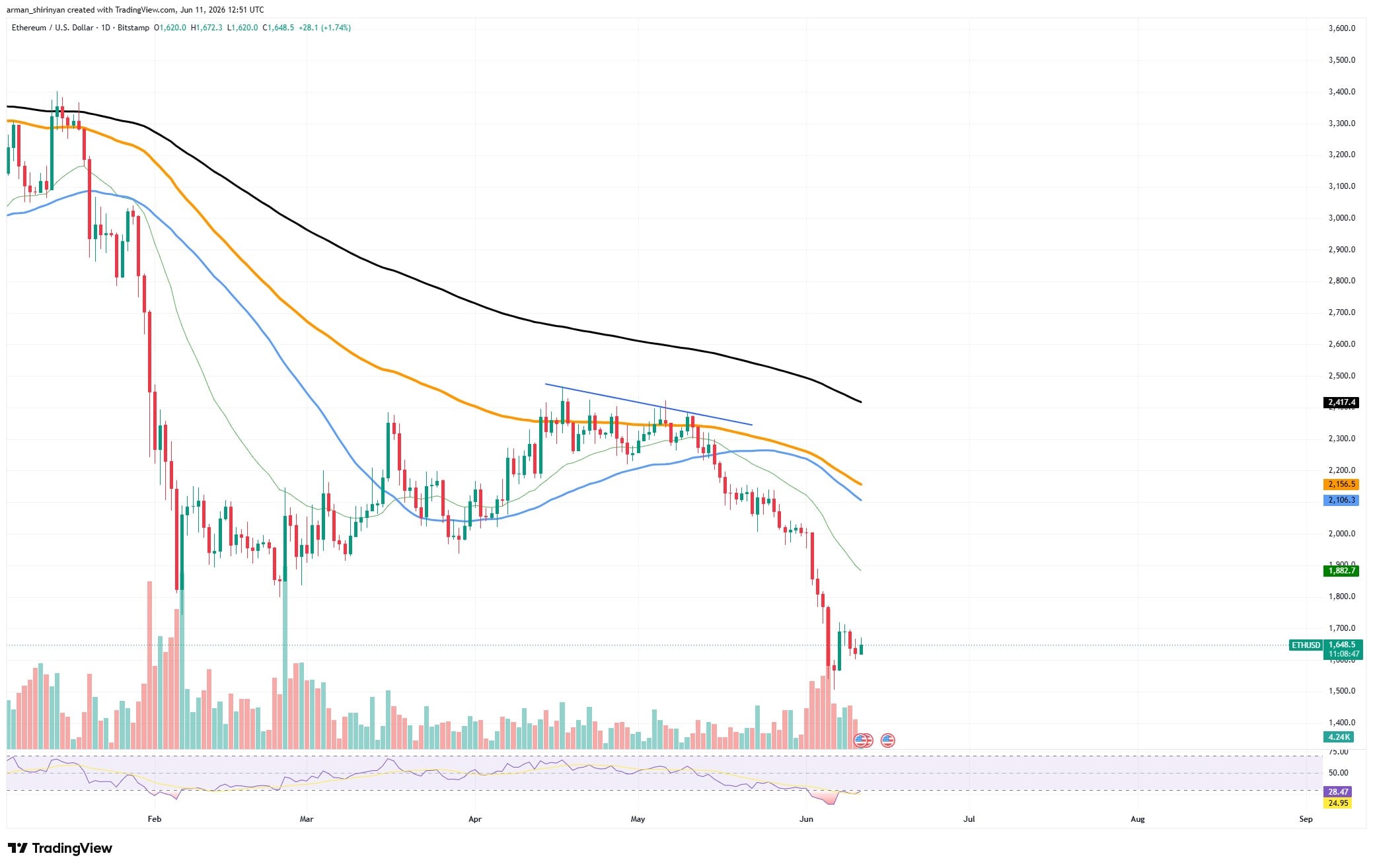
How Ethereum is damaged
Additionally, Saylor is right that competition is now far more fierce than it was in earlier cycles. Retail activity is dominated by Solana, Hyperliquid has grown to be a significant player in perpetuals, and Ethereum's Layer-2 strategy has dispersed liquidity across several networks. These are real difficulties.
The notion that confidence has collapsed is where the argument starts to seem dubious. Institutions would not have continued to develop Ethereum if confidence had really collapsed. In addition to having the deepest smart contract ecosystem and the highest concentration of DeFi liquidity, Ethereum continues to serve as the main settlement layer for numerous institutional blockchain projects. Ethereum will play a part in future digital credit markets, according to some of Saylor's own recent remarks.
This is also a historical irony. In 2024, Saylor claimed that spot ETFs were unlikely and that Ethereum would never gain significant institutional acceptance. Since then, Ethereum ETFs have emerged, drawn billions of assets, and established themselves as a well-known institutional product.
Potential for Ethereum's recovery
Ethereum is in poor condition. The growth of network activity has slowed, there is little price movement, and rivals are gaining market share. Ethereum, however, is not in danger of disappearing. By economic value, developer activity, and institutional adoption, it continues to be the biggest smart contract platform.
While investors wait for evidence that Ethereum's ecosystem can continue to expand in a far more competitive environment, the market has aggressively repriced Ethereum lower.

 u.today