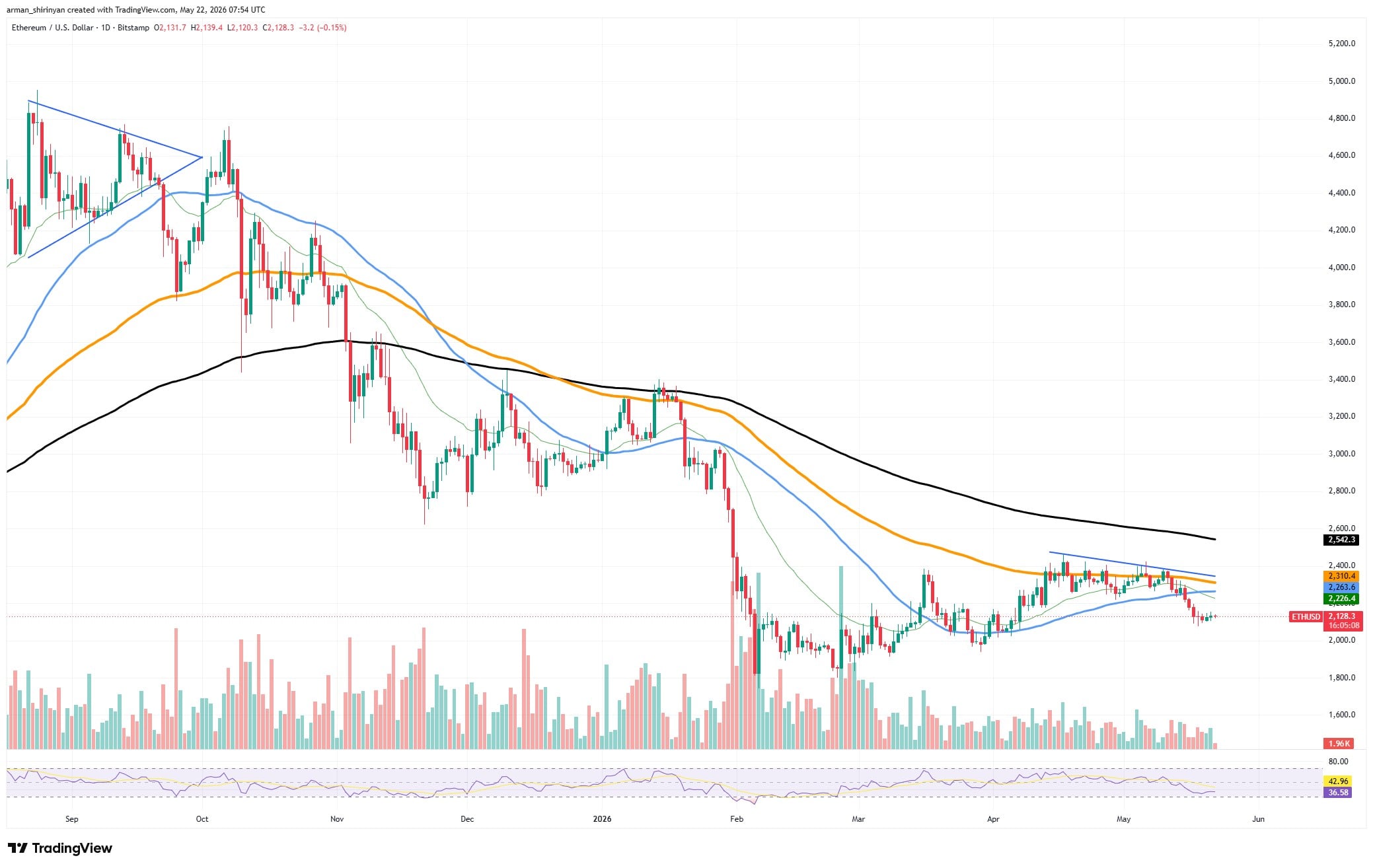
Retail traders, on the other hand, seem less and less inclined to wait for Ethereum's long-term strategy to materialize in terms of price performance. Higher-volatility industries, such as Solana-based assets, tokens connected to AI, and meme coins, have seen a quick rotation of capital. Ethereum benefited greatly from being the default destination following Bitcoin rallies in prior cycles. The rotation pattern appears to be weaker now than it has been since the bull market of 2021.
Fundamental issues arise
There are now more worries about Ethereum's internal organization. Critics contend that while the growth of Layer-2 networks like Arbitrum, Base, and Optimism aided in the ecosystem's scaling, they may also lessen direct value capture for $ETH. Although base-layer fee generation has considerably slowed in comparison to peak-cycle expectations, network activity is still increasing throughout the larger Ethereum environment.
The Ethereum Foundation has been the target of negative narratives that have further damaged sentiment. Traders who were already dissatisfied with $ETH's comparatively poor performance reacted negatively to public wallet movements and treasury sales. With some market participants openly questioning whether Ethereum has lost its cultural and speculative dominance within the cryptocurrency space, online discourse has drastically shifted toward pessimism.
Ethereum continues to be the biggest smart contract ecosystem in terms of total value locked, developer activity, and infrastructure depth, despite the growing pessimism. But dominance by itself is rarely rewarded by markets. Ethereum currently finds it difficult to compete in areas where investors want acceleration, momentum, and stronger capital inflows.
The question of whether Ethereum will endure technologically is no longer up for debate. It concerns whether $ETH can continue to inspire investor confidence in a market that has begun to look elsewhere.

 u.today