
 u.today

One of the most significant architectural updates in Ethereum's history is being quietly prepared. Though recent talks have mostly concentrated on fees and scaling, a more profound shift in the potential validation of Ethereum blocks is now beginning to take shape. From developers and regular users to home validators and lone stakers, this shift may have an impact on the entire ecosystem. Currently, in the consensus-specs features branch, EIP-8025 is at the heart of this change and is anticipated to be formally proposed for inclusion.
Introducing zero-knowledge proofs
Instead of reexecuting each transaction themselves, Ethereum validators can now use cryptographic proofs to validate blocks thanks to the introduction of Optional Execution Proofs. These days, each node independently verifies the accuracy of each transaction on each block.
Although this procedure is effective, it gets more difficult as network activity increases. Over time, participation costs rise as a node processing power, storage and bandwidth requirements increase due to a greater number of transactions.
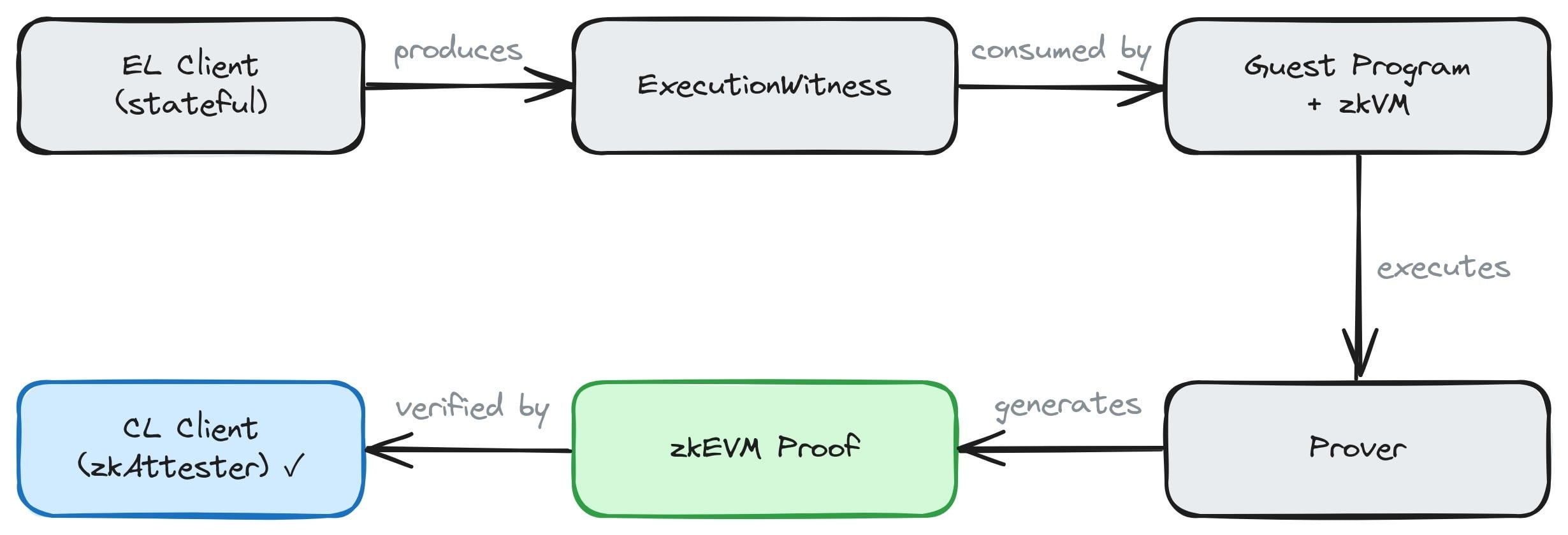
The new method modifies this model. Nodes could check a zero-knowledge proof that the block was executed correctly in place of performing the computation again. Regardless of the block complexity, verification takes about the same amount of time, which could eventually greatly increase scalability.
Roadmap revealed
In order to facilitate this, the Ethereum Foundation has released a 2026 L1-zkEVM roadmap that breaks down development into six work areas: prover infrastructure, consensus layer integration, execution witness and guest program standardization, zkVM guest APIs, benchmarking tools and formal security verification. On Feb. 11, 2026, at 3:00 p.m. UTC, the first L1-zkEVM breakout call is planned, indicating that development coordination is already underway.
It is intended to be an optional system. In order to reduce hardware requirements and make it simpler to run validators on consumer hardware once more, nodes can continue validating blocks as they currently do, while others may opt for proof verification. This change, if it is successful, might enable Ethereum to accommodate increased activity while maintaining decentralized and easily accessible verification.
In the upcoming years, we will finally see if proof-based validation is a key component of Ethereum's next development or some other piece of a puzzle yet to be discovered.