This behavior shows a recurring pattern: whenever Ethereum experiences notable declines due to liquidation, this whale group tends to accumulate sizable sums, their strategy appears to be focused on absorbing liquidity during fear-driven sell-offs, often placing themselves ahead of eventual recoveries rather than chasing rallies.
Out in the open
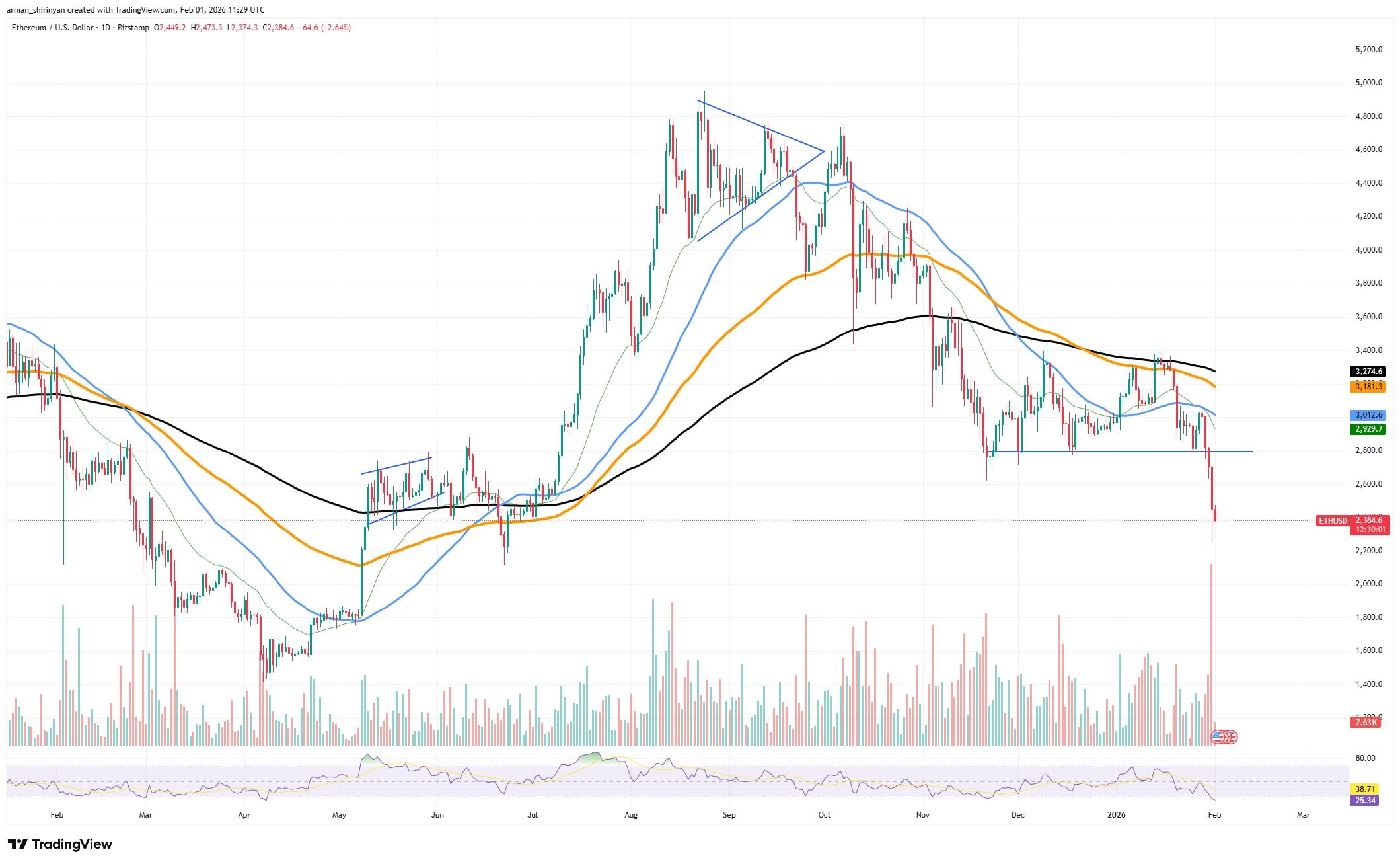
In technical terms, Ethereum recently broke below a consolidation range that had been in place for most of January, triggering stops and accelerating the decline. Short-term bearish control is established now that the price is below the 50 and 100 EMAs, however, the $2,400-$2,350 range, where demand has regularly surfaced during prior corrections, is a historically significant support.
Additionally, the volume during the most recent decline has increased, indicating circumstances akin to capitulation, these spikes often signal the end of a sell-off, especially when paired with clear whale accumulation. This combination suggests that although volatility may continue, downward momentum may be nearing exhaustion.
There is still a need for caution. If the market as a whole keeps declining and Ethereum clearly loses the $2,400 mark, its price may fall toward the next support level, which is near $2,200, however, stabilization and eventually a recovery bounce could result from a successful defense of this region, especially if whale accumulation persists.
Right now the most important question is whether large buyers like 7 Siblings are signaling a long-term bottom or are just positioning early.

 u.today