One blob unit fits 128 kilobytes of data, meaning Ethereum can now store up to 2,688 KB in a single block.

Source: Terence Chan
Blobs help keep Ethereum mainnet steady
While blobs boost transaction throughput on Ethereum layer 2s, they also help stabilize gas fees on the Ethereum mainnet as the network becomes less congested.
YCharts data shows that Ethereum transaction fees have been far more stable since the first BPO hard fork on Dec. 9, 2025.
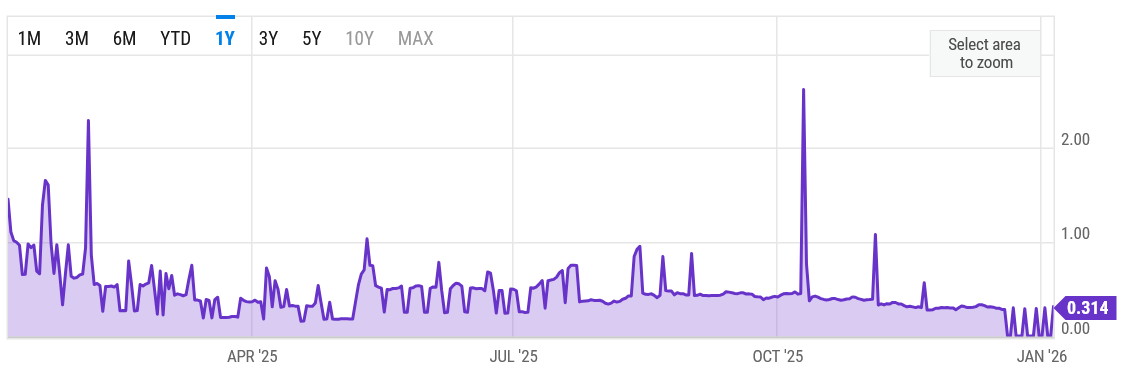
Change in Ethereum fees over the last 12 months. Source: YCharts
Gas limit raise also on the radar
Participants in the Ethereum All Core Developers meeting on Dec. 15 also discussed the idea of raising the network gas limit from 60 million to 80 million once the second BPO hard fork was implemented.
Related: ETH price taps $3.3K: Here’s what must happen for another 20% rally
Doing that would directly increase the number of transactions and smart contract operations that can fit in each Ethereum block — further boosting overall throughput while potentially lowering fees.
Glamsterdam hard fork is also focused on scalability
Later in 2026, the Glamsterdam hard fork will allow the gas limit to ratchet up to 200 million and introduce “perfect parallel processing.”
Perfect parallel processing will become feasible on Ethereum through Block Access Lists under Ethereum Improvement Proposal-7928, which seeks to transform Ethereum’s single-lane mode of transaction processing into a multi-lane highway, further increasing transaction throughput.
Magazine: How crypto laws changed in 2025 — and how they’ll change in 2026

 cointelegraph.com




