This is a segment from the 0xResearch newsletter. To read full editions, subscribe.
$ETH is trading at ~$1,600 today.
Can $ETH pump again? Wen moon?
 blockworks.co
15 April 2025 17:18, UTC
blockworks.co
15 April 2025 17:18, UTC

This is a segment from the 0xResearch newsletter. To read full editions, subscribe.
$ETH is trading at ~$1,600 today.
Can $ETH pump again? Wen moon?


Getting to the heart of this simple question requires an inevitable detour into the boring, technical weeds of data availability (DA).
The ELI5 explanation of data availability is storage fees, or bandwidth resource. All chains – L1s and L2s – need them to operate, but their primary supplier is the L1.
Here’s the rough train of thought:
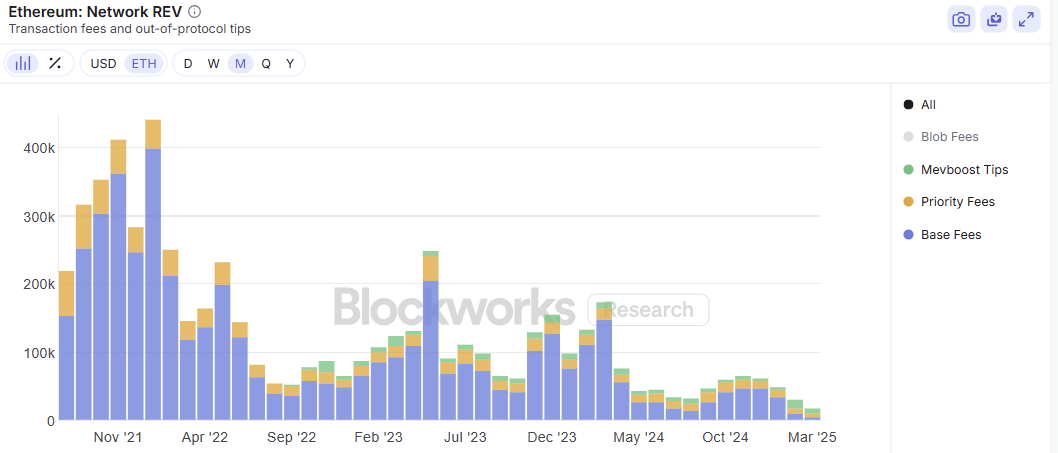
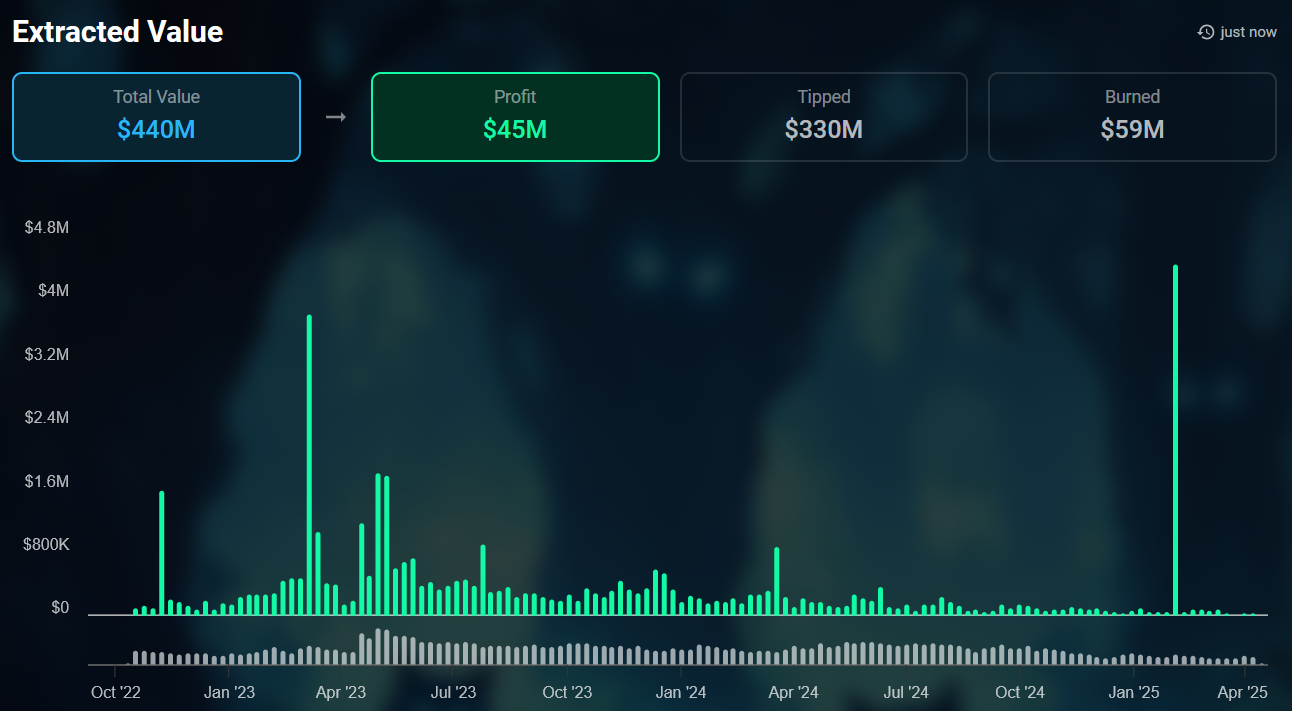
Another way to look at the downtrend of MEV is the diminishing extracted value of sandwich attacks. This is largely due to an increasing amount of Ethereum private transaction orderflow that is not going through the public mempool.
So we’ve established that data availability fees are essential to Ethereum’s success.
That is not just my opinion; it is the explicit position of leading Ethereum researchers like Justin Drake. As he puts it in the latest Ethereum Foundation Reddit AMA, DA is “the only sustainable source of flows for L1s,” not for execution or MEV fees.
(I realize this is a simplification. There are efforts to scale the L1 and to attract institutional capital to the L1, but put that aside for now.)
Now, let’s look at how much Ethereum makes from DA today.
Unfortunately, not much. Since the inception of EIP-4844 in March 2024, Ethereum has generated a total of $26m in fees.
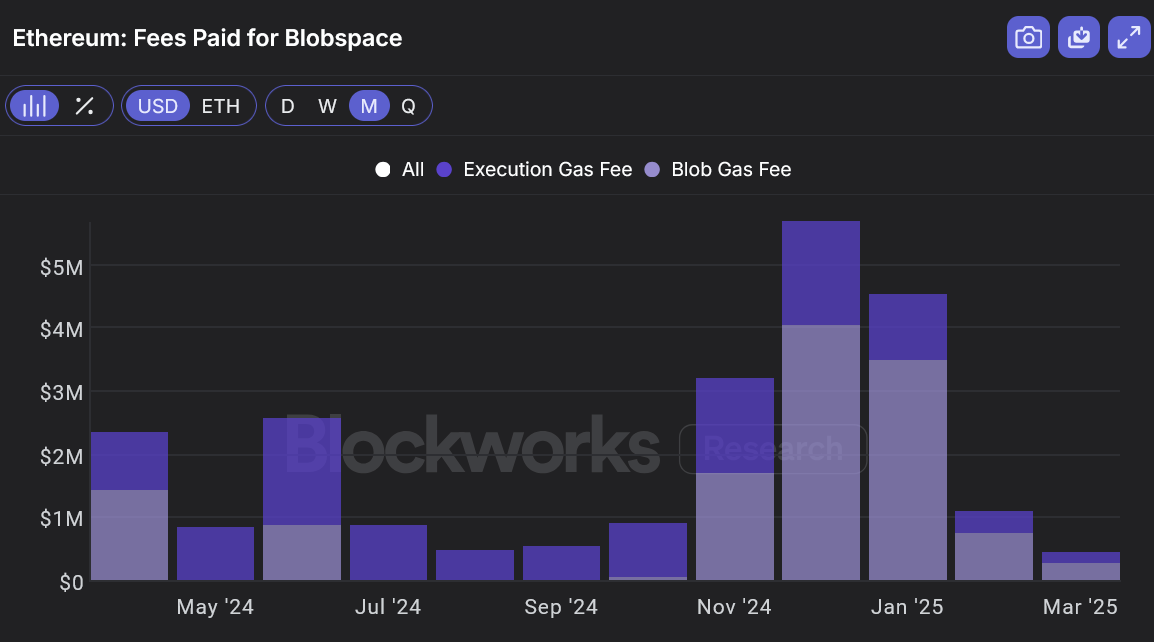
Reaching that fee level is a function of both demand (rollups) and supply (Ethereum L1 DA capacity).
Let’s assume Ethereum had sufficient user demand today. Even then, Ethereum lacks the supply.
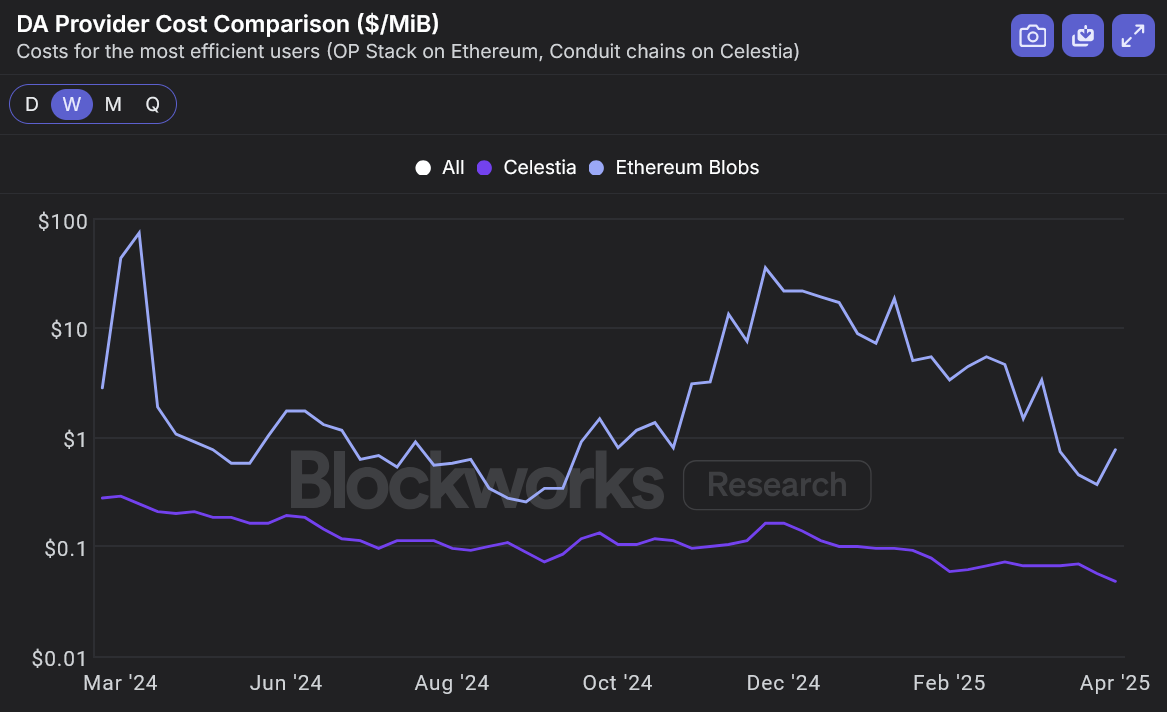
EIP-4844 introduced blobs to Ethereum’s DA capacity in March 2024. Blob capacity is about 384 KB per slot, or approximately 32 KB/s.
For context, alternative-DA layers like Celestia have 8 MB blocks today that are about 182% larger. (Celestia is gearing up for 128 MB blocks.)
Yes, blob capacity is expanding, but it’s slow. DA capacity is set to expand from 3 blobs to 6 blobs in the Pectra hard fork next month. The eventual plan is to expand blob capacity to 48-72 in the subsequent Fusaka hard fork, but who knows when that’s going to happen.
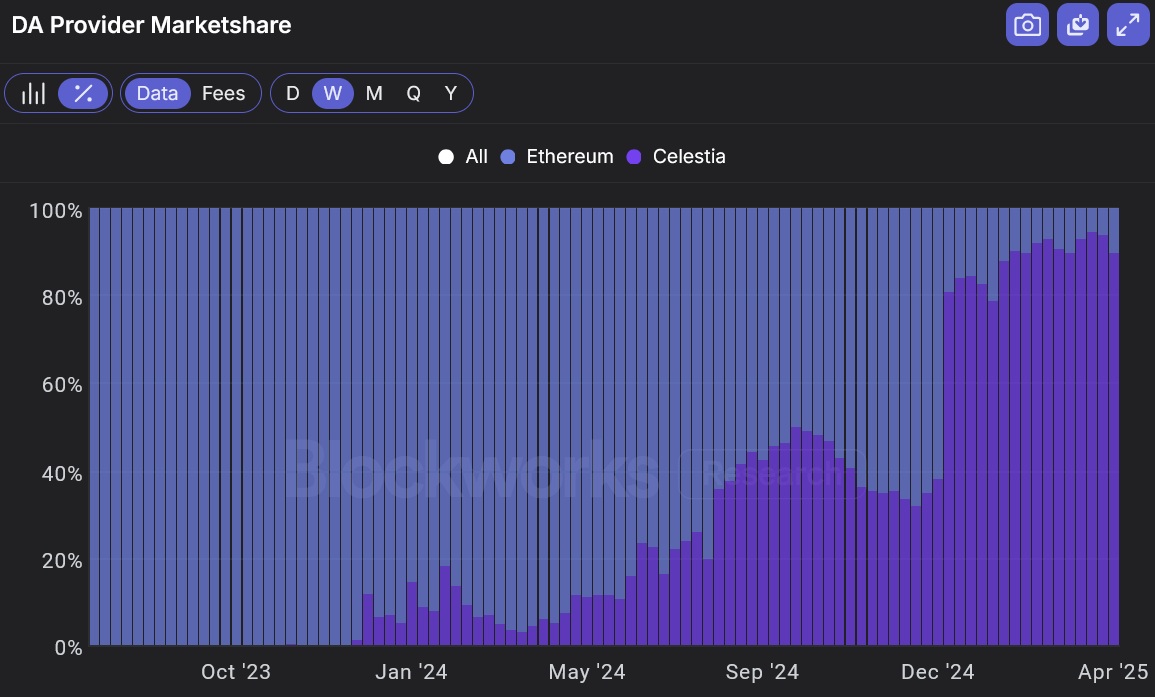
Now, let’s look at the DA market.
More bad news. It’s a competitive market. There’s Celestia, EigenDA and Avail.