
 beincrypto.com
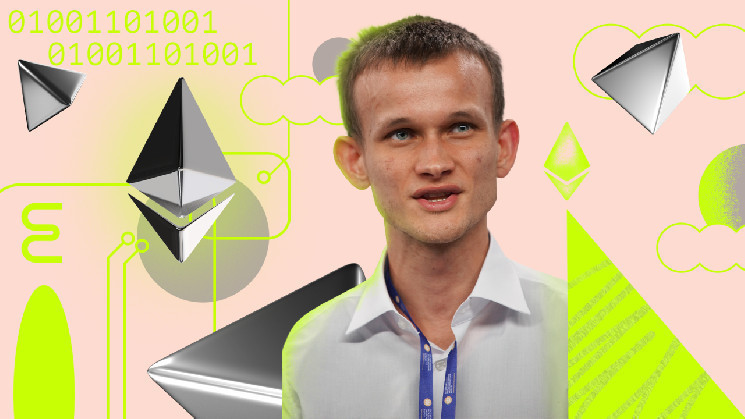
Ethereum co-founder Vitalik Buterin said in a new blog post that DAO-governed stablecoins backed by real-world assets and zero-knowledge decentralized identities would form a crucial part of Ethereum’s future.
Buterin argued that the collapse of FTX has sensitized crypto users to the merits of decentralization. He also believes that a stablecoin issued by an entity with a robust decentralized government would allow many users to benefit from saving and using it as a currency.
Buterin Supports Interoperability of Decentralized Identity Elements
While Buterin favors the concept of digital identity, he believes it is essential to avoid combining different forms of blockchain-based identity into a unified platform. Instead, the focus should be on growing the interoperability of various projects.
Already, several ongoing projects slot in at different layers of the decentralized identity stack.
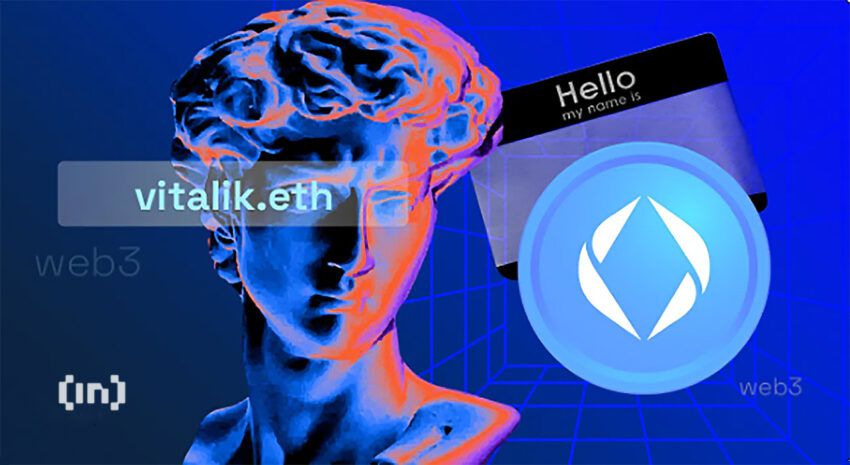
Arguably the most famous project is the Ethereum Name Service (ENS) which assigns a human-readable name to an Ethereum address. Names usually end in .eth and require users to pay an annual fee to ensure their ongoing claim to that name.
Sign In With Ethereum (SIWE) allows a user to use their ETH address to log on to websites without the website knowing any other information.
On the other hand, proof of humanity tools identifies an entity as uniquely human. Buterin argues that this is useful in ensuring that a contributor to DAO governance is indeed human.
/Related
More Articles
Nexo to Leave US After Hitting Brick Wall With Regulators

Circle Forced to Scrap Deal That Could Have Given Crypto Greater Transparency

Ethereum (ETH) Bulls Face Disappointment Despite Price Heading Above $1,300

Bitcoin (BTC) on-Chain Analysis: NUPL Reaches Deep Value Region. Is the Bottom In?

Dogecoin (DOGE) Price Breakdown Fears Escalate Due to Bearish Pattern

What’s Behind the 25% Axie Infinity (AXS) Price Jump?
Other protocols could issue a token attesting to a user’s participation in DAO governance or attending an event. Buterin argues that the Ethereum Name Service could be used in conjunction with the attestation tech to fight spam on decentralized chat platforms like Blockscan. The chat platform could correlate the user’s on-chain activity with his ENS name to prove that they are a genuine participant in the Ethereum ecosystem.
Similarly, a decentralized version of Twitter could use attestations of on-chain activity instead of traditional know-your-customer processes to verify users.
Decentralized Credit Scores a Possibility
Attestations could also be used to determine entities’ credit risk without centralized gatekeepers. This was a problem recently highlighted by Buterin’s fellow Ethereum co-founder Charles Hoskinson.
The most significant barrier to the progress of decentralized identities is maintaining user privacy on-chain, Buterin argues, and the development of ZK-SNARKs. ZK-SNARKS is a type of cryptography where an entity can prove data ownership to a verifier without revealing the data itself. The prover and verifier do not need to talk to each other.
Buterin Weighs In on Sustainable DAO Governance
On the topic of DAOs, Buterin delineates between a decentralized governance structure and a decentralized implementation. The former refers to using participants’ votes to make decisions. The latter refers to a decentralized platform like a blockchain, free from the restrictions of a “single nation-state legal system.”
Improving decentralized governance could involve using different classes of token holders, not just holders of governance tokens. This is similar to how decisions on legislation pass through separate chambers of parliament in a nation-state, he argues.
On the other hand, this reduces the efficiency of the DAO, hampering its ability to alter course rapidly.
Deciding on the right balance between governance structure and implementation depends on the size and nature of the project. Choosing the proper governance will become an essential component of user adoption following the collapse of centralized entities.
For Be[In]Crypto’s latest Bitcoin (BTC) analysis, click here.