
 cryptoknowmics.com
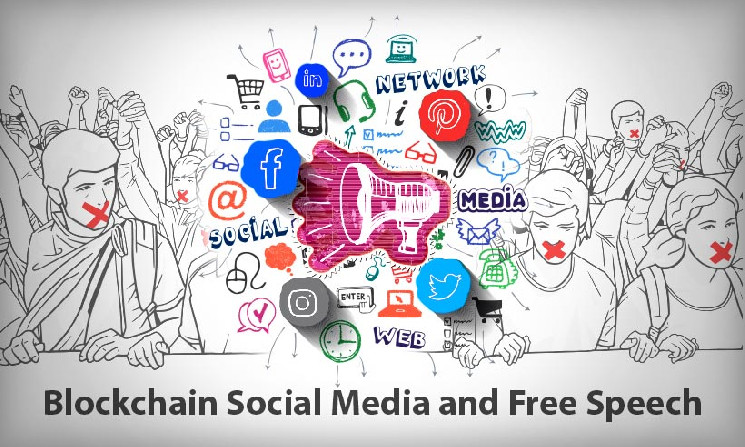
Many of us have learned to self-moderate our online conversations, being cautious about what we say, post, and do. Our tweets, postings, and comments cross boundaries, languages, and cultures. Now that social media mishap are constantly in the news; many people wonder who has the final power to regulate what we may publish online. As a result, censorship in online communities has become a hot subject, hotly argued by both pro-censorship and anti-censorship groups. The global blockchain community can help shape this narrative as proponents of decentralized technology. We explore whether blockchain can truly alter online communications and the ramifications of unlimited freedom of speech via decentralized platforms.
Big Tech on Censorship
Major social media platforms have historically moderated and removed comments that violate their conditions. Comments that directly hurt or seek to injure other members of a platform’s community are deleted. But what happens when a social media platform eliminates content to promote a different agenda? We have witnessed that social media companies have used their censoring abilities to weigh in on political disputes and other topics generally protected by free speech laws. Should censorship be applied on public social media platforms, especially since these online groups have so much power and influence globally? In the United States, an Executive Order issued by the White House in May 2020 said that “Twitter, Facebook, Instagram, and YouTube wield enormous, if not unprecedented, power to shape how public events are interpreted; to censor, delete, or disappear information; and to control what people see or do not see.” While this argument is heightened in the United States because of the widespread use of social media, it is a global issue. As a result, critics frequently accuse conventional social media platforms of spying on users, mining data, and avoiding income sharing with key players. According to many, the issue stems from centralization’s inherent biases, which means centralized social media platforms can only be as objective as the firm that controls them. So, could blockchain change online communication and social media?
Can Blockchain Protect Freedom of Speech?
Due to its decentralized structure, blockchain technology is not susceptible to the same centralized control as traditional social media platforms. Instead, decentralized social media and content platforms aim to give people more control over their data. For example, the blockchain-based platform Mastodon allows users to run a personal server utilizing their own hardware and domain name. The user controls these servers and sets the rules and directions for discussion. While Mastodon has a free API environment where independent developers may design and maintain reader applications, it claims to only show communities that actively moderate. However, community founders, not Mastodon, establish moderating preferences. Some decentralized systems employ blockchain-based currencies to provide a rewarding aspect. Steemit users, for example, can be rewarded with STEEM tokens by other users for creating popular content or posting thoughtful comments, which have secondary market value. Users may reward content providers for writing articles that fulfill the interests of the larger community, similar to how ‘likes’ work on other platforms, but with a monetary incentive and without a centralized authority. Other systems, like the open-source Ethereum-based Minds network, award users with tokens depending on their participation and time spent on the platform and reward the most active users. Another platform, Minds, has also hinted that they are considering a voting-based system where users may vote to remove information, which would make it one of the first genuinely decentralized social media networks.
Decentralized Communications: Serious Considerations
To achieve a truly egalitarian society that respects human liberty, libertarianism often argues that we must accept the good with the bad. Many net neutrality proponents say that unwanted internet material is a sad consequence of safeguarding our rights to freedom of speech, even if some individuals choose to misuse it. Regardless, decentralized societies require inclusive social media networks to thrive. Unmoderated online communities often evolve into places where most web users don’t want to go, and it isn’t easy to have a completely free online platform without certain users feeling ostracized or targeted. This raises some challenging ethical issues. If material on a social networking platform becomes harmful or disparaging to an individual or group of individuals, they can opt-out or start their own inclusive online community. Others might advocate for the complete elimination of the more problematic online communities and censorship of contentious individuals, claiming that they represent a risk of inflicting harm and asking platform owners to delete linked accounts and material on users’ behalf — in other words, active censorship. This can lead to overzealous moderation in online communities. There may be a better approach through blockchain — a distributed and community-led moderation process that does not rely on censorship from a centralized curator holding unlimited authority but on meticulous moderation via a democratic process enabled by each and every user via decentralized technology. A community might therefore pick its own course and enable decent actors to participate. In principle, decentralized social media systems may return control to users by letting them govern and regulate their own online communities and choose what information they create and consume based on community consensus rather than centralized approval. How do you feel about social media, blockchain, and censorship? Is a decentralized system better? What about the risks of distributing false information? Inversely, a decentralized platform can allow more voices to be heard, allowing major media channels to not always dominate the narrative.