Daniel Packham, VP and Head of Provider Network at Talos, said clients had requested solver-sourced liquidity without having to establish a second operating model.
The release describes that operational burden as a barrier to onchain trading: desks have historically needed separate custody arrangements, counterparty exposure management, wallets, gas tokens and reconciliation processes. Meanwhile, Talos data show that monthly spot volume on Ethereum decentralized exchanges exceeded $26 billion in October 2026.
Solvers compete across blockchains and centralized venues
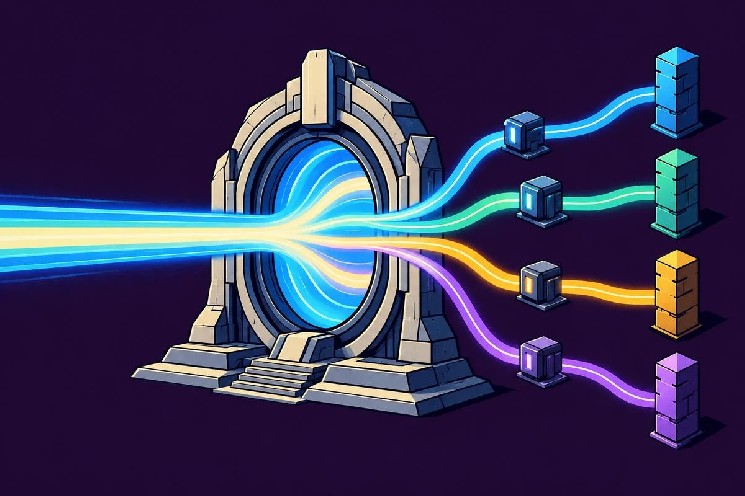
$NEAR Intents uses competing liquidity providers, known as solvers, rather than a liquidity pool to price swap requests. Those solvers draw inventory from more than 30 blockchains and centralized venues worldwide, according to the release.
Each solver competes to fill a request at the most competitive price and bears its own inventory risk. The protocol handles routing and cross-chain execution, giving the client a single quoted price and fill.
The release puts $NEAR Intents’ cumulative settled transaction volume at approximately $37 billion, including $4.8 billion over the past month. It reports typical swap settlement in less than one second, with fees below one cent.
Delegated signing connects swaps to existing custody
Talos built a delegated signing service to support the key structure required by $NEAR Intents. An intent is a signed message, rather than an instruction sent to a trading venue.
After a client accepts a quote, Talos creates the intent and sends it to the client’s custodian for approval and signing. Talos then submits the signed intent to $NEAR, where a solver executes it. The signing layer is designed to work across custodians.
Settlement uses a verifier contract designed so that all parts of a trade complete together or none completes. $NEAR Intents also handles bridging and gas management, removing the need for desks to operate those functions separately.
Positions from these swaps sit within the client’s existing portfolio view and reconciliation process. That view brings together onchain balances, staked and delegated positions, and assets held with custodians and centralized venues.
Talos and $NEAR work toward one execution workflow
Talos and $NEAR are working to bring different digital-asset execution models into a single workflow. Their collaboration addresses the distinct custody, signing and reconciliation requirements that accompany competitive quoting networks, onchain perpetual futures venues and tokenized settlement rails.
Alex Shevchenko, CEO of Defuse Labs, which develops $NEAR Intents, described the integration as institutional DeFi access requiring neither a new custody setup nor a new workflow, while offering competitive cross-chain pricing.
The Talos integration with $NEAR Intents is available for client API access requests. The release directs clients to Defuse Labs for fee schedules and onboarding.
Article produced with the assistance of artificial intelligence and reviewed by the editorial team.

 en.cryptonomist.ch