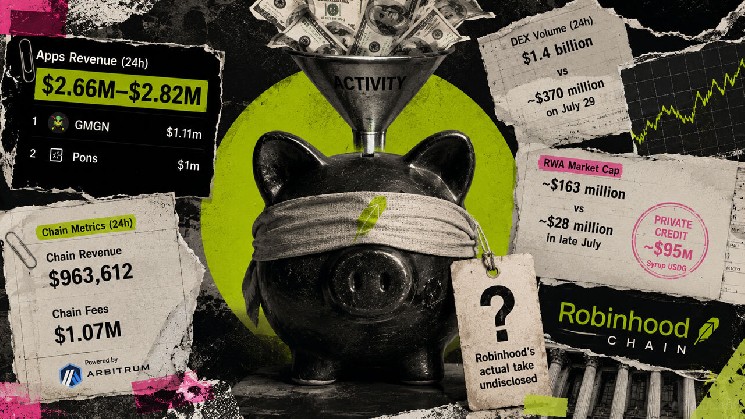
What Robinhood Chain revenue means for the company
Robinhood has described its own monetization in transaction terms. During the company’s second-quarter earnings call, CFO Shiv Verma said Robinhood earns a few basis points per transaction, with approximately half shared with Arbitrum. He emphasized transactions as the basis instead of transaction volume.
The company provided no precise rate, eligible transaction count, fee base or reconciliation to its financial statements. DefiLlama also defines the $963,612 chain figure as gas revenue remaining after Ethereum execution and blob costs and the Arbitrum Expansion Program share. The available disclosures therefore establish substantial fee activity while leaving Robinhood’s exact corporate take unquantified.
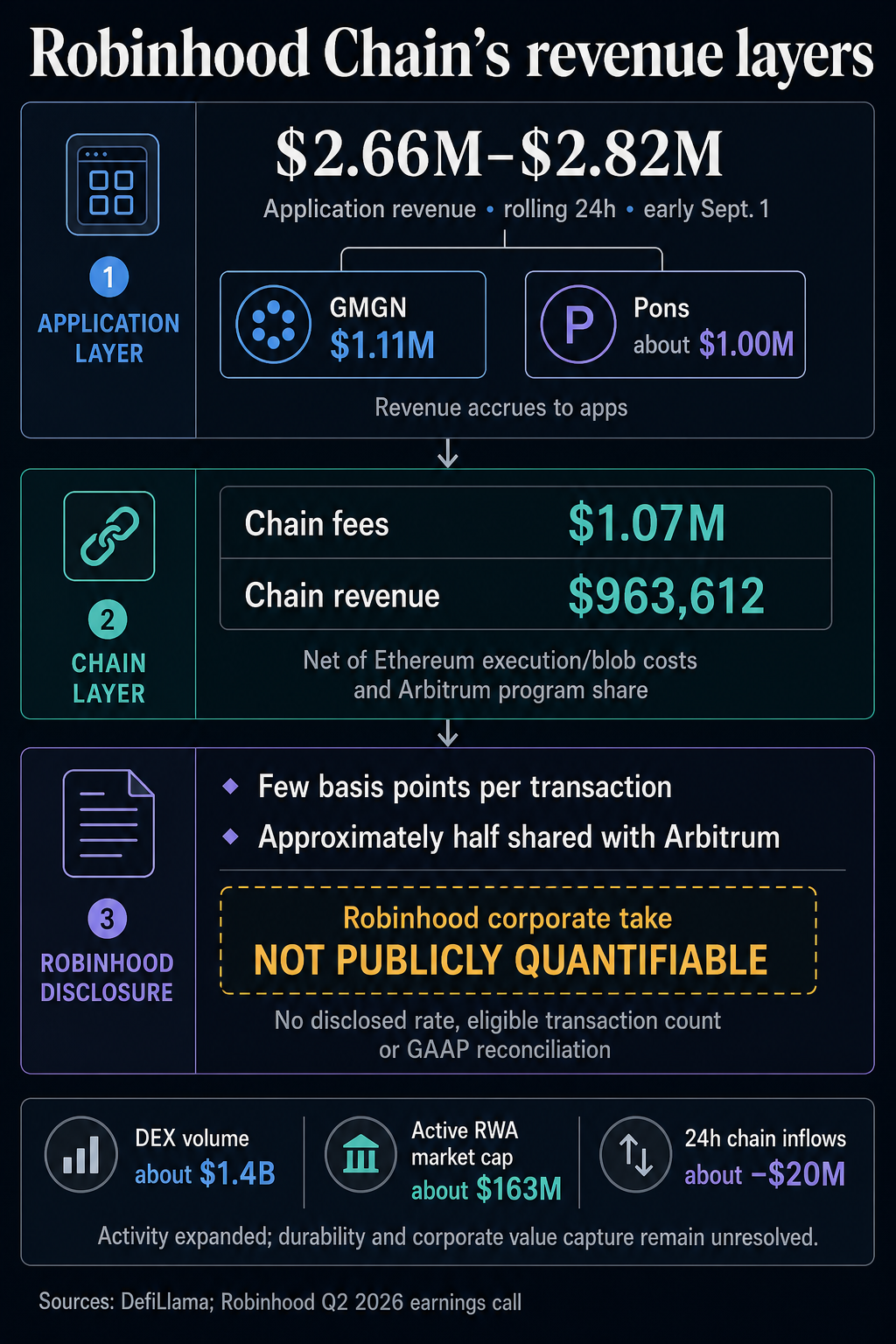
The chain’s growth metrics still matter because sustained use could create a larger future earnings base. Rolling 24-hour decentralized exchange volume reached about $1.4 billion, led by Uniswap, compared with nearly $370 million on July 29. Chain-wide active real-world asset market cap rose from nearly $28 million in late July to about $163 million.
The composition tempers that growth signal. DefiLlama’s RWA table attributed about $95 million of the total to Syrup USDG private credit, the chain’s largest listed asset. The increase therefore reflects broad RWA growth across Robinhood Chain rather than equivalent growth in Robinhood-issued stock tokens.
Other short-term indicators also pulled in opposite directions. Twenty-four-hour chain inflows were negative by about $20 million even as DEX volume and RWA value remained well above their July snapshots. A trading bot and launchpad continued to lead application revenue.
Robinhood Chain has expanded its transaction and tokenized-asset base since July. The Robinhood Chain revenue mix and Robinhood’s limited monetization disclosure leave the larger question unresolved: how much of that growth will become recurring revenue in Robinhood’s accounts.

 cryptoslate.com