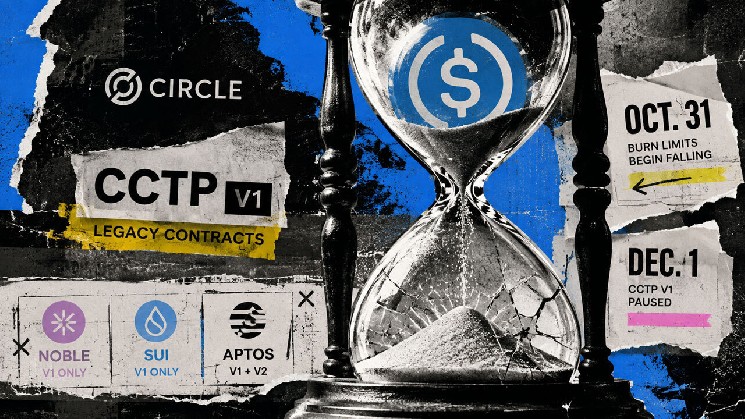
CCTP V1 deprecation: code changes and exposed routes
The migration requires code changes. CCTP V2, now branded simply as CCTP, uses different contract addresses, interfaces and APIs and is incompatible with V1.
Integrators must point to the V2 versions of TokenMessenger, MessageTransmitter and TokenMinter, update their contract interfaces, and change calls to depositForBurn. The V2 function adds parameters for the permitted destination caller, maximum fee and minimum finality threshold. Developers must also replace legacy attestation calls with the /v2/messages/{sourceDomainId} flow, choose standard or fast settlement where available, and handle applicable fees.
Teams that need uninterrupted service face an earlier operational deadline than Dec. 1. The Oct. 31 burn-limit cuts begin a November wind-down in which V1 capacity will progressively shrink.
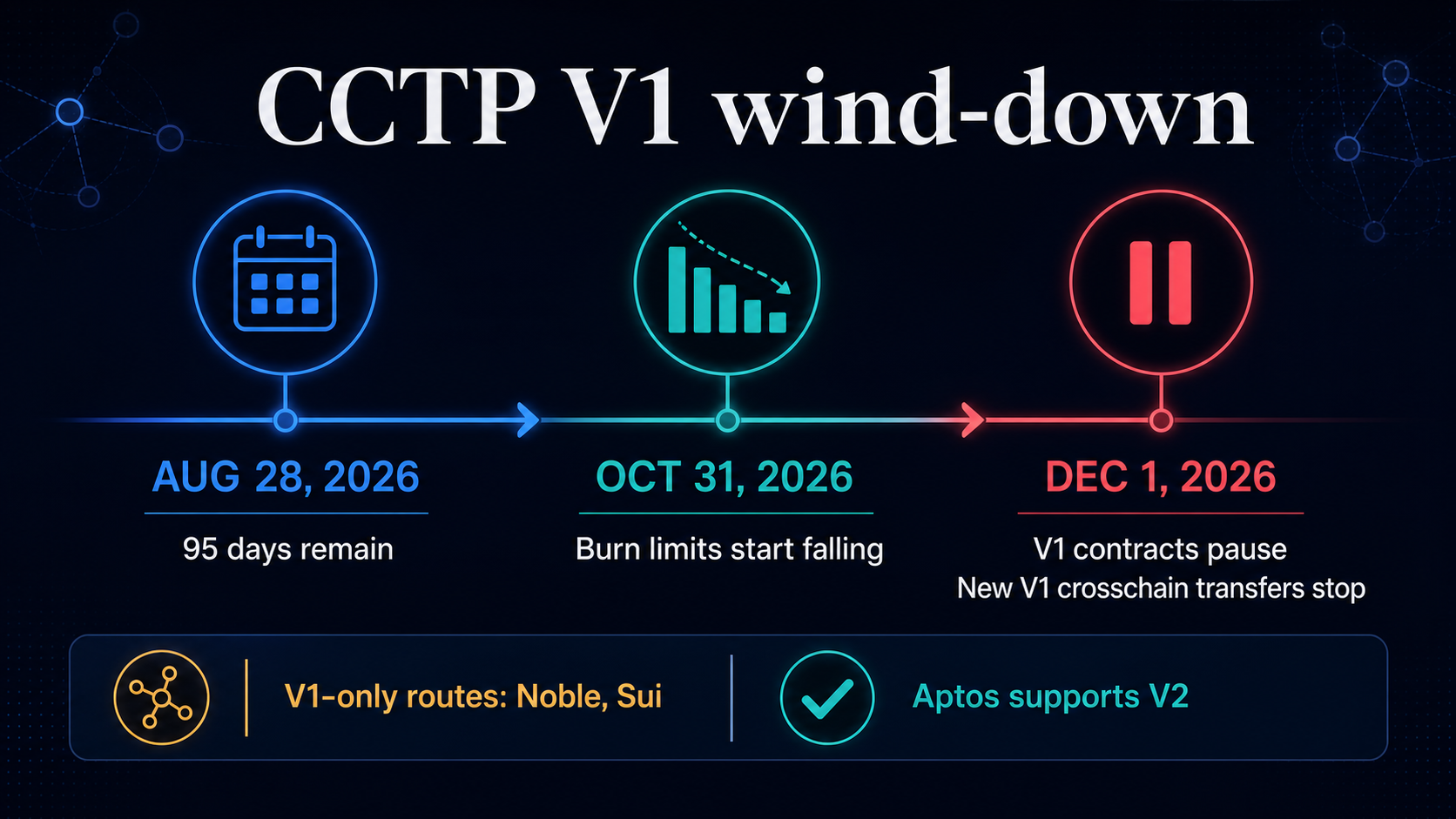
Circle's current supported-chain matrix lists 27 blockchains on the current CCTP network. Aptos is listed among the chains supported only by CCTP V1, alongside Noble and Sui, on Circle's legacy network.
Aptos, Noble and Sui are the only chains Circle currently labels as V1-only. A native CCTP route to or from any of them still depends on the legacy network unless an integrator uses a separately documented alternative. Circle did not identify which exchanges, wallets, bridges or apps continue to call the old contracts, leaving the number of named production integrations facing the cutoff undisclosed.
Circle's adoption figures offer historical scale rather than a measure of current exposure. In a November 2025 update, the company said CCTP had processed more than $110 billion across 5.3 million transfers. Those cumulative totals combined V1 and V2 as of Nov. 14, 2025.
CryptoSlate's earlier Noble coverage described the broader V1 phase-out. Circle's CCTP V1 deprecation dates now set the integration-wide timetable: capacity begins falling Oct. 31, and V1 contracts pause Dec. 1.

 cryptoslate.com