Coinbase taps Chainlink to bring tokenized stocks deeper into DeFi
cryptopolitan.com
25 August 2026 03:47, UTC
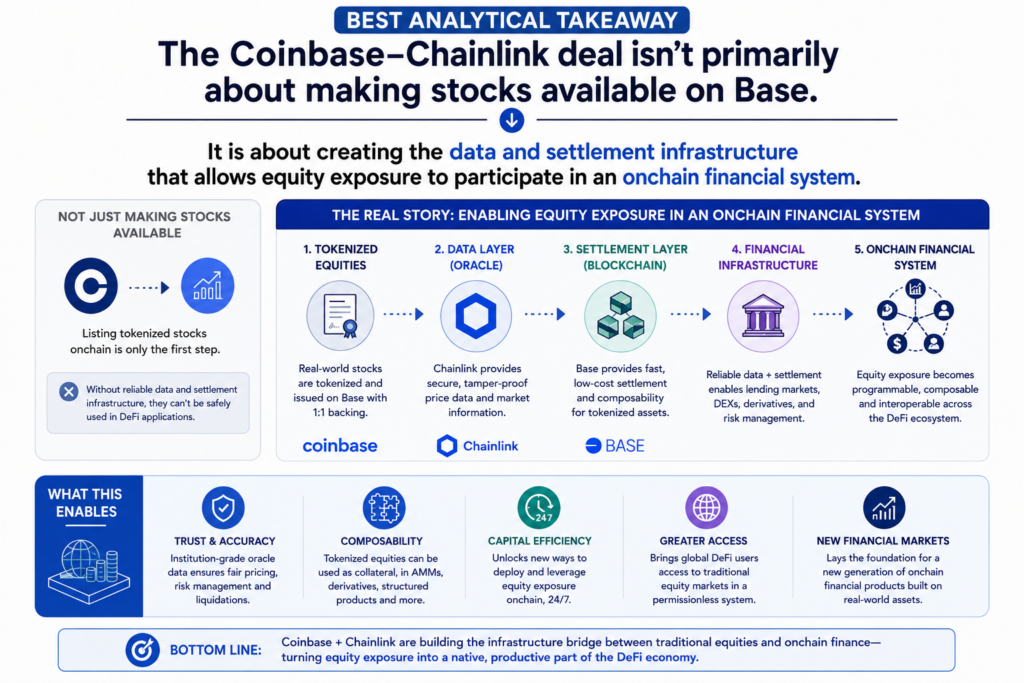
Coinbase has chosen Chainlink to offer price infrastructure for its tokenized stocks, thus allowing shares of companies like Apple and NVIDIA to move around freely in decentralized lending and trading marketplaces.
The agreement is of particular importance for crypto users outside the US, as it allows them to take advantage of blockchain-based versions of US stocks the same way as the decentralized finance (DeFi) sector already does with stablecoins and tokenized Treasury bonds.
In the case of the entire crypto market, the timing is key. The area of tokenized equities has been among the most developed areas of on-chain finance this year, but many of these tokens are still sitting idle in wallets. The new dependable price feeds change the situation dramatically. It will facilitate the use of these tokens for collateral, liquidity, and building blocks for other protocols.
Know when your coins move
Alerts, real-time prices, and market news — all in one app
Point your phone camera to install
4.8 based on 40K reviews in the App Store and Google Play
Why an oracle is the missing piece
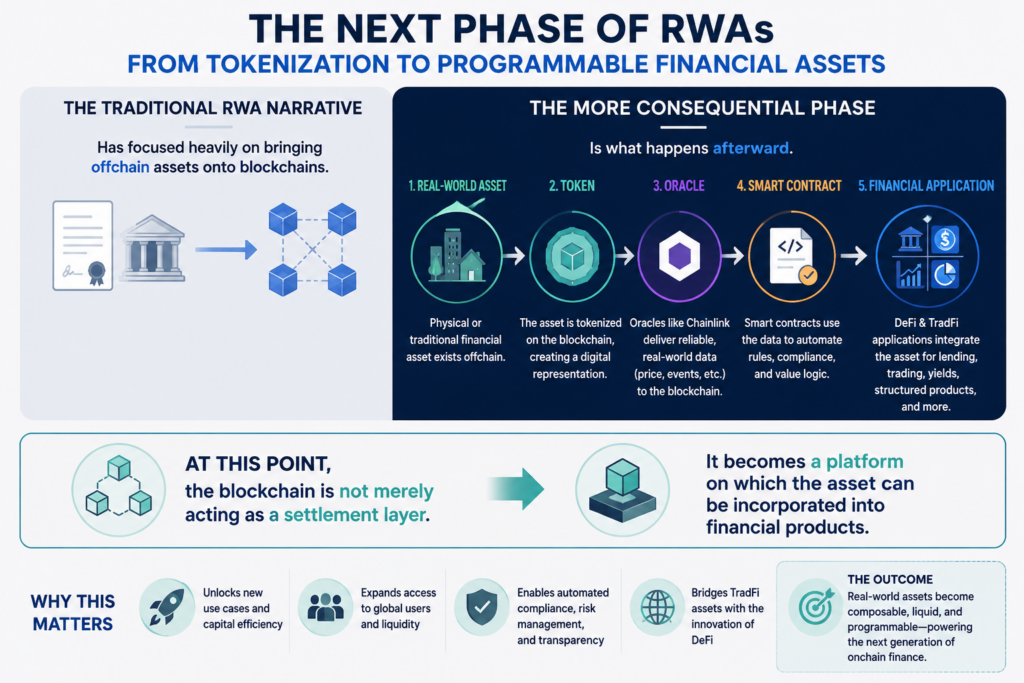
In order for tokenized shares to hold any value or be utilized in DeFi, protocols must first determine their price. According to the technical documents of Base, the price of tokens mirrors that of stocks but is modified with an on-chain adjustment of the multiplier to take dividends and stock splits into account without actually changing the amount of tokens in the pocket.
In the lending market, the absence of a trusted price feed results in the inability of the market to accurately value collateral or liquidate positions when they fall below required thresholds.
Chainlink will assume that function for Coinbase. The report released by Galaxy shows that Chainlink was already included in the Robinhood Chain when it was launched in July, since obtaining accurate pricing information has become critical in providing tokenized equity solutions.
Apple and NVIDIA as collateral on Base
Shares are already being traded natively on Base, which is the Layer-2 Ethereum network of Coinbase. Base claims that the shares have an exact match in terms of the real shares under regulation by Alpaca with a structure ensuring bankruptcy remote.
Through self-custody wallets, users have the ability to own partial stakes in companies like Apple and NVIDIA, trade them through Aerodrome, and use their tokenized position in the case of NVIDIA as security for a loan on Aave.
The shares use Base’s B20 standard, an extension of ERC-20. Once minted, they can interact with DeFi applications much like other on-chain assets. There are no whitelisted wallets on the secondary market, allowing the tokens to move across compatible DeFi protocols.
The regulatory wrapper sits in Abu Dhabi
The legal environment is offshore. On August 11, Coinbase announced that it had received financial services approval from the Abu Dhabi Global Market’s regulator, the FSRA, to operate its global tokenization hub.
Coinbase said tokens issued through the framework are backed by underlying shares, while verified holders receive dividends and voting rights.
Access remains restricted to non-US users in eligible jurisdictions. Coinbase also said transfers are subject to sanctions screening and that assets can be frozen at the wallet level.
Tokenized assets are being used, not just minted
The numbers help explain why the collateral angle matters. As of the end of June 2026, a16z crypto estimated tokenized stocks had reached roughly $1.7 billion in market capitalization, more than five times the $329 million recorded at the end of June 2025. Monthly on-chain transfer volume rose from $53 million in June 2025 to $9.22 billion in June 2026.
Metric
Earlier period
Latest period
Change
Tokenized-stock market cap
$329M, end-June 2025
~$1.7B, end-June 2026
More than 5x
Monthly tokenized-stock on-chain transfer volume
$53M, June 2025
$9.22B, June 2026
More than 170x
RWA deposits in DeFi lending platforms and exchanges
$2.3B, Q2 2025
$7.4B, Q2 2026
More than 3x
Deposits of tokenized real-world assets into DeFi lending platforms and exchanges also climbed from $2.3 billion in Q2 2025 to $7.4 billion in Q2 2026, according to CoinShares and Token Terminal, even as total DeFi deposits fell by about 15%.
Coinbase is not alone in pursuing that demand. Nasdaq is building a gateway with Kraken parent Payward to connect tokenized equities with blockchain networks, The Block reported, while Robinhood Chain already leads in tokenized-stock holders.
The real challenge for Coinbase is going to be if users actually do more than just keep these assets. If token equities continue to become collateral and liquidity on the DeFi ecosystem, the Chainlink integration will play a role in converting tokenized equities from just digital representations of stocks to a more active part of on-chain finance.
The idea is not entirely new. Sentora co-founder Jesus Rodriguez has argued that tokenized equities should not merely “exist onchain” but should “do something onchain,” including serving as productive collateral. Coinbase’s Chainlink integration points toward that same next stage, where reliable market data and blockchain settlement allow equity exposure to interact with DeFi applications.

 cryptopolitan.com