
 coinfomania.com
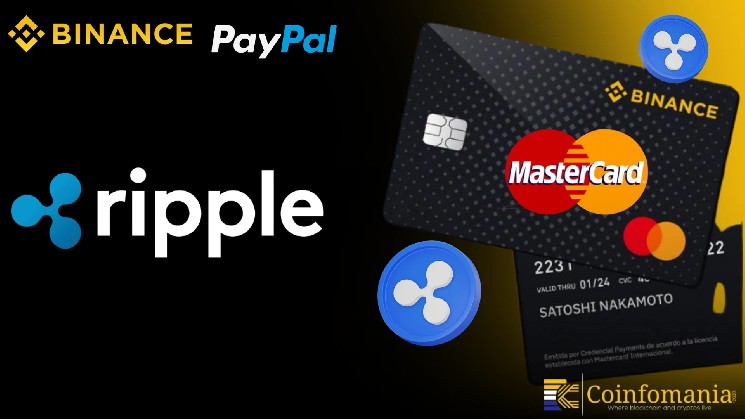
Mastercard is stepping up its blockchain payments strategy by partnering with Binance, PayPal, and Ripple. This initiative, confirmed on March 11, 2026 by CoinRank and CryptoRank, highlights Mastercard’s continued push to integrate blockchain into mainstream finance. The collaboration also features $XRP, emphasizing Ripple’s key role in cross-border payments. Overall, the project shows how traditional finance and digital assets can work together responsibly.
NEW: BINANCE, PAYPAL, AND RIPPLE JOIN MASTERCARD'S NEW PUSH INTO BLOCKCHAIN PAYMENTS$XRP 🔐 pic.twitter.com/oGX64yIpJh
— Amonyx (@amonyx) March 11, 2026
Mastercard Strengthens Blockchain Payments Network
For years, Mastercard has been exploring blockchain technology. It started with pilot programs in 2014, followed by stablecoin enablement in 2021. Moreover, in 2024, Mastercard launched its Crypto Credential to ensure transactions are secure and compliant. By including Binance, PayPal, and Ripple, Mastercard aims to expand its blockchain payments network while simplifying international transactions for businesses and consumers.
Ripple and Partners Drive Blockchain Payments
Ripple’s $XRP token plays a central role in the project, offering liquidity and fast transfers across borders. Additionally, Binance and PayPal bring large user bases and robust payment systems that could accelerate adoption. As a result, blockchain payments could become faster, cheaper, and more transparent. Positive responses from the crypto community indicate strong interest in this collaboration, suggesting that mainstream adoption of digital assets is gaining momentum.
Mastercard Pushes Compliance and Innovation
Furthermore, Mastercard emphasizes compliance as a core part of its strategy. Its Crypto Credential program ensures that all transactions meet regulations while remaining efficient. Likewise, the CFTC continues to oversee derivatives and trading rules for digital assets in the U.S., highlighting the importance of regulatory clarity. By combining compliance, innovation, and blockchain infrastructure, Mastercard and its partners aim to set a new standard for payments globally.
Transforming Cross-Border Payments
Finally, the partnership demonstrates the potential for traditional finance and blockchain to work together. Through collaboration with Ripple, Binance, and PayPal, Mastercard can provide a practical, secure, and regulated way to move money internationally. At the same time, these efforts may encourage other financial institutions to explore blockchain solutions. Ultimately, Mastercard’s push reinforces its role as a leader in payments while promoting innovation in crypto and digital finance.