
 coindesk.com
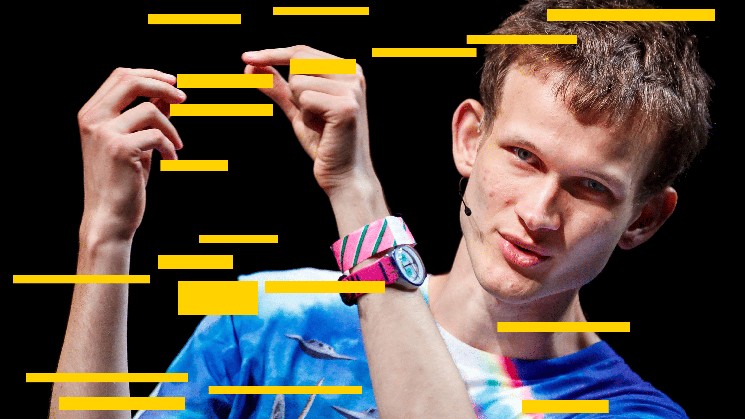
Ethereum cofounder Vitalik Buterin proposed a technical overhaul of decentralized autonomous organizations (DAOs), calling for the use of personal artificial intelligence agents to privately cast votes on behalf of users and help scale digital governance.
The plan, published on social media platform X one month after Buterin criticized DAOs for drifting into low participation and power centralization, aims to shift users away from delegating votes to large token holders.
Instead, individuals would deploy their own AI model, trained on their past messages and stated values, to vote on the thousands of decisions DAOs face.
“There are many thousands of decisions to make, involving many domains of expertise, and most people don't have the time or skill to be experts in even one, let alone all of them.” Buterin wrote. “So what can we do? We use personal LLMs to solve the attention problem.”
First is privacy of content, ensuring sensitive data remains confidential. AI agents would operate within secure environments such as multi-party computation (MPC) or trusted execution environments (TEEs), enabling them to process private data without leaking it to the public blockchain.
Second is the anonymity of the participant. Buterin called for the use of zero-knowledge proofs (ZKPs), a cryptographic tool that allows users to prove they’re eligible to vote without revealing their wallet address or how they voted.
This guards against coercion, bribery, and whale watching, where smaller voters mimic the decisions of large token holders.
These AI stewards would automate routine governance participation and flag only key issues for human review.
To filter out low-quality or spammy proposals, an emerging problem as generative AI floods open forums, Buterin suggests launching prediction markets. In these, agents could bet on the likelihood that proposals would be accepted.
Good bets would earn payouts, incentivizing valuable contributions while penalizing noise.
Buterin also called for privacy-preserving tools such as multi-party computation and trusted execution environments, enabling AI agents to assess sensitive data, such as job applications or legal disputes, without exposing it on a public blockchain.
Read more: From 2016 hack to $150M Endowment: the DAO’s second act focuses on Ethereum security