
 cryptopolitan.com
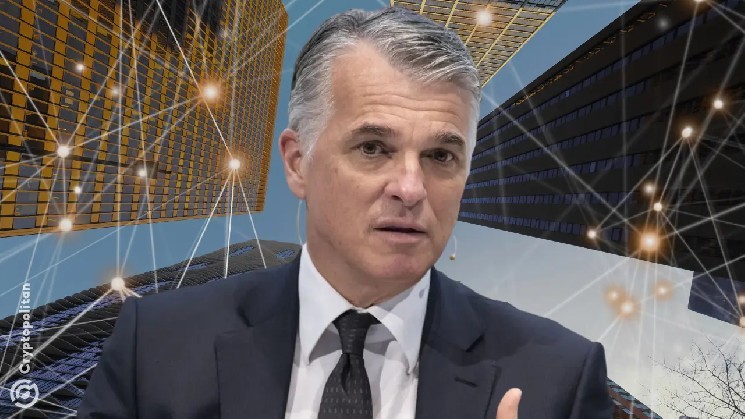
UBS Group AG CEO Sergio Ermotti endorsed blockchain technology on Wednesday, stating that it will be the future of the traditional banking business. He argued that the technology will instill trust in customers to place their assets with financial institutions.
The UBS boss told CNBC that the technology can help firms become more efficient. He believes it will reduce costs for certain operations and help companies free up resources.
Financial institutions aim to integrate digital assets
UBS Bank CEO says that "…blockchain is the future for the traditional banking business."pic.twitter.com/WJJWeXceiR
— Dan Gambardello (@dangambardello) January 20, 2026
Ermotti previously stated that the financial industry will continue to face pressure on gross margins without blockchain technology. He urged financial institutions to remain relevant by maintaining strong capital, products, quality of personnel, and client advice.
Ermotti also believes that blockchain technology will be as important and disruptive as regulation was a decade ago. He argued that blockchain technology still needs to prove itself over the years. He also acknowledged that the technology has to prove its reliability in quantum computing.
“I do believe that Blockchain and that kind of technology is the future for the traditional banking business, and you will see a convergence of that.”
–Sergio Ermotti, CEO of UBS.
The UBS CEO previously championed blockchain technology, stating he was more bullish on it than on digital assets. He said on Tuesday that the next phase of global banking is centered on Bitcoin and other digital assets at its core.
Ermotti is confident that major financial institutions have shifted from debating crypto’s relevance to the traditional banking industry. He revealed that the institutions are currently trying to figure out how to integrate Bitcoin safely and at scale as banks expand custody and products tied to cryptocurrencies.
Ermotti urges financial institutions to diversify investment assets
The UBS boss also revealed during a panel at the World Economic Forum in Davos that diversification is now more important for investors in the industry. He believes the initiative is crucial since there are no safe assets.
Ermotti stated that asset prices are inevitably tied to geopolitical issues. He also acknowledged that it would be hard for investors to diversify away from the U.S. due to its economic prowess. His remarks come after the European pension fund AkademikerPension vowed to offload its U.S. government debt holdings.
The UBS boss also stated that the current volatility affecting financial markets is far from ending. He argued that recent trade conflicts and geopolitical tensions make it hard for markets to remain unaffected.
Ermotti also noted that investor risk tolerance is returning to more typical levels, driven by the U.S.’s heightened monetary policies against countries resisting President Trump’s plan to acquire Greenland. He believes the constant flow of uncertainty is starting to erode client confidence, which he said could eventually become overwhelming for investors.
The UBS boss stated that investors are becoming more cautious amid current global tensions. He believes that investors are holding onto cash and diversifying their investments to minimize risk. Ermotti also warned that it’s currently difficult to find attractively valued assets across any category.
Trump’s remarks on Greenland on Tuesday caused major stock indices to drop, while gold and silver surged to new record highs. The President revealed that he would address the Greenland matter with prominent world leaders this week.
Ermotti doesn’t believe normalcy will return any time soon. He believes that investor confidence will return once there’s progress in resolving trade conflicts and other issues involving Greenland and Ukraine.
The UBS CEO is also confident in the long-term benefits of artificial intelligence technology. However, Harvard Professor Gita Gopinath argued that there’s a difference between AI’s valuation and the technology itself. Gopinath compared the technology to the dotcom period and noted that the scale of exposure to the world economy is larger than it was then.