
 coindesk.com
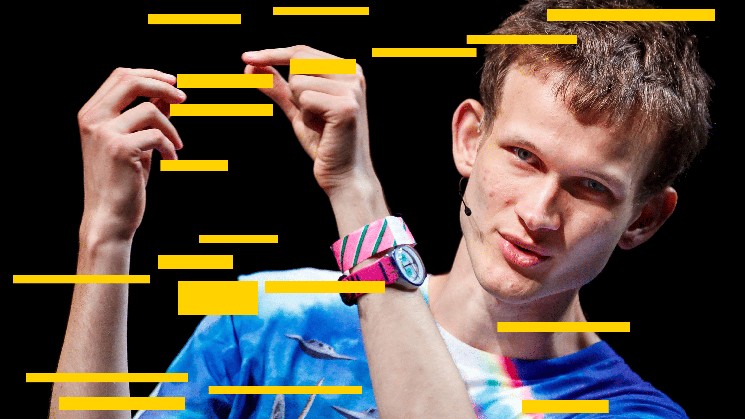
Ethereum co-founder Vitalik Buterin is calling for an overhaul of decentralized autonomous organizations, or DAOs, which are core to blockchain-based democratization of finance, arguing that most have strayed from their promise to shift financial power from banks to everyday token holders.
In a post published on social media, Buterin said that the dominant approach, DAOs governed by token-based voting, has become too easy to manipulate and fails to deliver on the promise of decentralized governance.
“The concept of DAOs has migrated to essentially referring to a treasury controlled by token holder voting - a design which "works", hence why it got copied so much, but a design which is inefficient, vulnerable to capture, and fails utterly at the goal of mitigating the weaknesses of human politics,” Buterin wrote.
A DAO is a blockchain-based governance system run by smart contracts and community of token holders, without central leadership. These token holders propose and vote on decisions like fund allocation, with rules encoded transparently on the blockchain for automatic execution. This structure enables collective ownership and operation, promoting trust through open code and on-chain treasuries
DAOs, in their present form, replicate the same political and coordination problems these systems were meant to solve, leading to many becoming “cynical” about these organizations, Buterin added.
He pointed to the need for more sophisticated DAOs to support critical functions in the crypto ecosystem, including maintaining shared data, resolving disputes, and sustaining long-term projects.
These use cases, he argued, demand governance systems that can balance decisiveness with resilience and resist capture by powerful actors.
Convex and concave decisions
To explain why DAOs should focus on certain governance functions over others, Buterin referenced a framework he has used before on the distinction between convex and concave decision-making.
Convex decisions are those where a clear choice, between A or B, is better than compromise. These often involve strategy or leadership, such as deciding whether to launch a product or shut it down. In these cases, indecision or middle-ground solutions tend to fail. DAOs, he has said in the past, struggle in these settings as confusion and “low-quality compromises” can often become the outcomes.
Concave decisions, by contrast, are situations where the average or median of many inputs produces a better result than any single choice. Examples include determining a fair price for a token or evaluating whether a contract is safe.
DAOs are better suited to these kinds of decisions, where decentralization can add value rather than create gridlock as “relying on the wisdom of the crowds can give better answers,” Buterin argued in 2022.
“Hence, you want systems that maximize robustness by averaging (or rather, medianing) in input from many sources, and protect against capture and financial attacks,” Buterin added.
He also pointed to two key obstacles that need to be solved. These include the lack of privacy in governance and the fatigue participants experience when decision-making is a frequent necessity.
Addressing these challenges, he said, requires integrating new technology like zero-knowledge cryptography, artificial intelligence meant to support decision-making, and platforms designed for constructive coordination.
Artificial intelligence, specifically, should not be put in charge of DAOs, but instead used strategically to enhance human judgement.
The push for better DAOs, Buterin concluded, is how the community can ensure the “decentralization and robustness of the Ethereum base layer also applies to the world that gets built on top.”