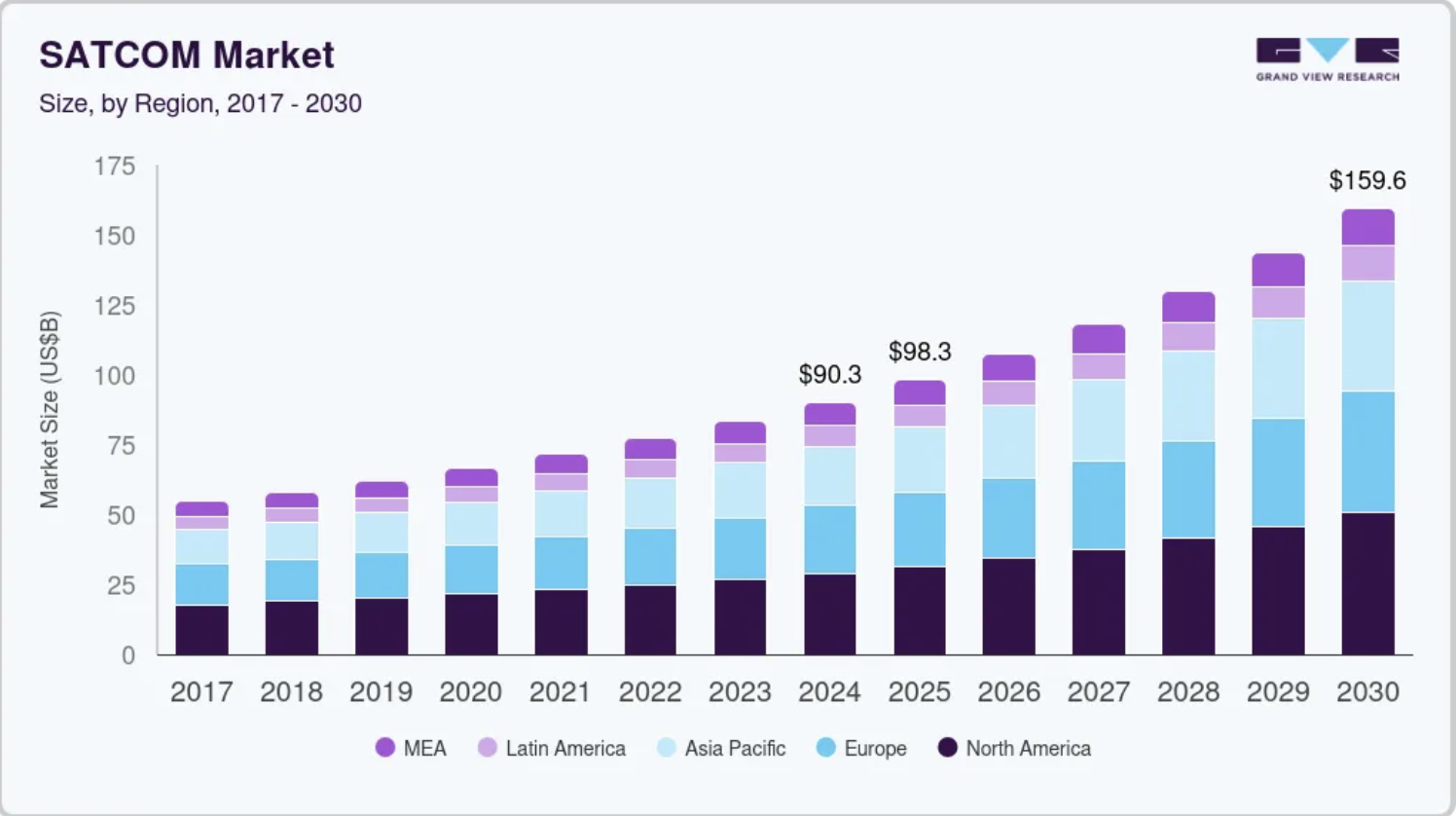
Satellite communications market, the largest sector of the sky-based telecom industry, is expected to swell to $159 billion by 2030. Source: Grand View Research
The company is attempting to take a slice of the sky-based communications pie, a $98.3 billion sector, which includes satellite and aerial-based communications platforms.
World Mobile has already established a ground-based, decentralized wireless network that mixes traditional telecom infrastructure and independent, distributed network providers to create an alternative to legacy telecommunication networks, extending service to underserved communities and patching dead zones.
Related: SpaceX moves $153M in BTC after three-year silence
Challenges to launching atmospheric-based telecommunication networks
Launching and maintaining a stratospheric-based communication platform carries several technical and regulatory challenges, Barnett told Cointelegraph.
The company is aiming for each hydrogen-powered drone, which has a 56-meter wingspan and weighs four tons, to remain airborne for nine days before it must land at a designated refueling station.
This means the craft, and its fuel source, must be as light as possible to achieve maximum fuel efficiency and remain aloft, while also ensuring robust construction that can withstand weather conditions at lower altitudes in the atmosphere.
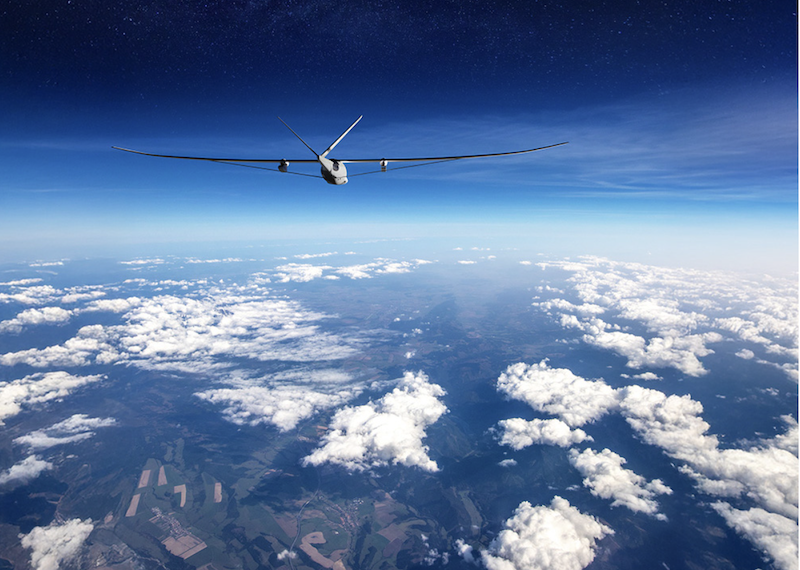
An image of the hydrogen-powered drones launched by World Mobile Stratospheric. Source: World Mobile Stratospheric
At altitudes of 60,000 feet, the drones will sit above weather systems. The Stratosphere also has calmer winds than at lower altitudes, where turbulence can be an issue.
However, even in the stratosphere, the drones must still be protected from cosmic radiation, which can damage electronic equipment. Similarly, the side of the drone facing the sun will be bombarded with heat, which must be displaced to prevent damage.
Meeting regulatory requirements outlined by civil aviation authorities like the Federal Aviation Administration (FAA) in the United States and the European Aviation Safety Agency (EASA) is also a challenge for such projects.
This includes acquiring permits to fly unmanned aerial vehicles (UAVs) and building each drone to standards outlined by government aviation agencies.
World Mobile faces competition from the ground and space
World Mobile has several competitors in both decentralized wireless networks and space-based communication platforms.
Helium Mobile, for instance, is a decentralized protocol that combines a distributed network of wireless nodes and partnerships with established telecom companies like AT&T to extend wireless coverage and provide service to dead zones.
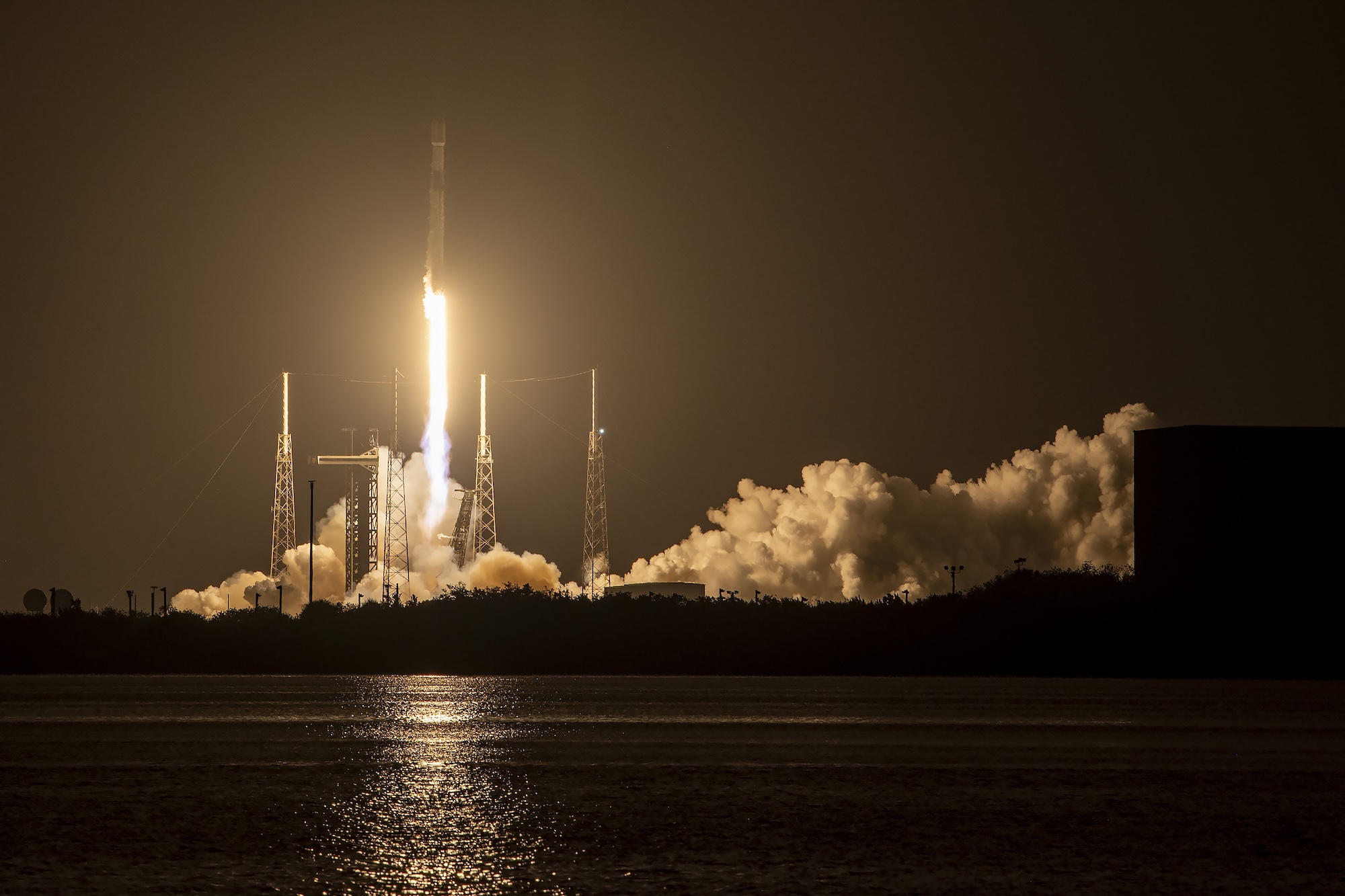
A Falcon 9 SpaceX rocket launches Starlink satellites into orbit. Source: SpaceX
Elon Musk’s Starlink, which provides internet connectivity through satellites, is also competing for market share in communication infrastructure, although the two companies fill a different niche, Barnett told Cointelegraph.
Starlink is more suited to deliver service to remote areas without any cellular connectivity, while World Mobile Stratospheric is suited to areas with a higher density of mobile users, Barnett added.
The satellite communication platform also requires purchasing dedicated hardware for connectivity, Barnett said.
Magazine: Most DePIN projects barely even use blockchain: True or false?

 cointelegraph.com