-
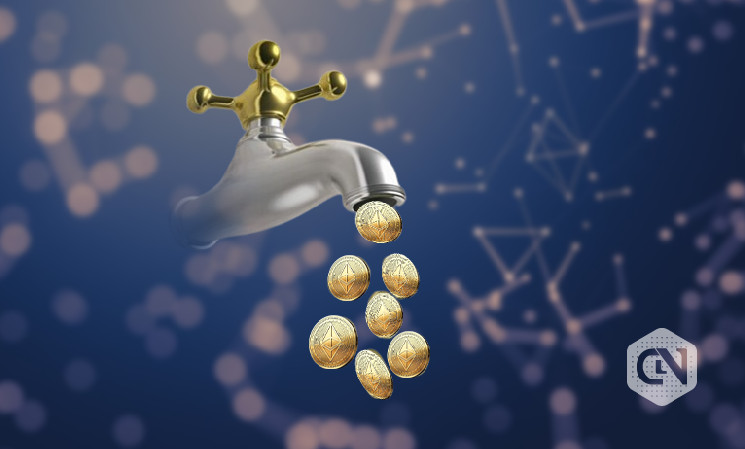
User Onboarding for New dApps: Nowadays, faucets are used to welcome users into new decentralized applications by providing free $ETH or any other tokens associated with them. Faucets that permit experimentation with new services without acquiring initial financial support by issuing free $ETH or other tokens will accelerate adoption and user growth.
-
Educational Tools: Ethereum taps have evolved into educational tools. Through Ethereum difficulties, learners can build practically risk-free knowledge related to blockchain technology, smart contracts, DeFi, and more. Educational platforms usually integrate faucets into their systems, which provide hands-on experience to enhance learning.
-
Incentivizing Participation: This aspect also includes cryptocurrency exchange airdrops, where a company gives tokens during its ICO to gain attention from investors in an economy it wants to penetrate, testnets, beta testing of new apps, etc. (Kirkpatrick 2012). These small amounts of $ETH or alternative token-based rewards are aimed at motivating people’s involvement within the sphere.
-
Supporting Layer 2 Solutions: With scalability issues plaguing Ethereum, Layer 2 solutions like Optimism and Arbitrum are gaining traction. For instance, faucets play an important role in issuing tokens for layer two networks such as Optimism or Arbitrum, which necessitate smooth transitions and user adoption of these scaling solutions.
-
Marketing and Promotion: One of the marketing tools used by blockchain projects is faucets. They give away free tokens to create a buzz and attract people to new projects, thus creating an initial user base and driving early engagement.
The blockchain landscape continues to expand and mutate, leading the Ethereum faucets to reposition themselves to adapt to new challenges and opportunities. They remain valuable tools for user engagement, education, and promotion within the dynamic world of blockchain technology.
Faucets and Sustainability
The traditional Ethereum faucets are not sustainable. In the beginning, developers of these faucets were encouraging network participation by giving out $ETH coins. However, as $ETH’s price grew and the ecosystem grew, these faucets became financially unsustainable. Rising transaction costs and abuse by users with multiple accounts for draining resources further exacerbate the issue of sustainability.
To address this problem, there have been innovative approaches like social and gamified faucets. The social faucets integrate community engagement and social media interactions into their distribution models. By participating in discussions, sharing content, or completing educational tasks, users can earn free $ETH. These activities also help distribute tokens, build communities, and educate individuals on the blockchain.
These games use game mechanics to make people get involved more actively in playing them so that they can win tokens without exchanging them for money. This makes using the faucet model possible over time.
Conclusion
Ethereum faucets have played an important role in introducing new users to the Ethereum ecosystem at its initial stage. However, traditional faucet models face serious problems concerning their sustainability as the blockchain industry continues growing. Several innovative solutions have emerged to solve this problem, such as social and gamified faucets and alternative token distribution mechanisms. By embracing new approaches like this, Ethereum can uphold user engagement, resulting in channeled relationships. This will ensure the long-term survival of faucets among other members within a blooming blockchain community.

 cryptonewsz.com