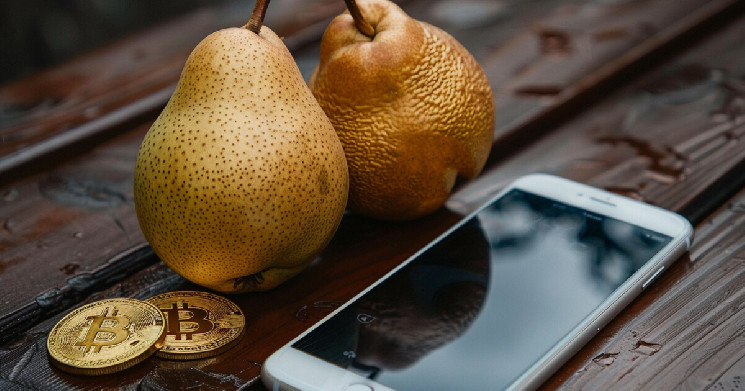
Notably, Ardoino suggested the Pear Phone would not include Google apps by default. He also mentioned plans for a peer-to-peer app store for the device.
The concept builds upon Holepunch’s mission to enable serverless, unstoppable P2P applications that promote user privacy and freedom from Big Tech platforms. Holepunch, which Tether backs, recently launched Pear Runtime, an open-source protocol allowing developers to build P2P apps with no server infrastructure costs.
Pear Runtime powers Holepunch’s flagship Keet app, which enables fully encrypted video calls and messaging directly between devices with no central servers. Bitfinex, Hypercore, and Tether collaborated to found Holepunch with the goal of “unlocking global communications and empowering freedom of speech.”
The Pear Phone concept aligns with Tether’s recent restructuring to expand its focus beyond a stablecoin company. By establishing new divisions like Tether Data, Tether Finance, Tether Power, and Tether Edu, the company aims to drive innovation in AI, P2P platforms, financial inclusion, sustainable mining, blockchain education, and even biotech. This multi-pronged approach positions Tether to harness emerging technologies and shape the future of finance and tech. A potential Pear Phone, powered by P2P apps and Tether’s broader ecosystem, could be a vital piece of this strategy to empower users and challenge the dominance of Big Tech giants.
While still just an idea at this stage, a potential Pear Phone would represent a significant step towards Holepunch and Tether’s vision of a decentralized, user-controlled mobile ecosystem. It remains to be seen if and when the project may come to fruition. But Ardoino’s tweet offers an intriguing glimpse at how Tether’s profits and Holepunch’s P2P tech could converge in a freedom-focused smartphone.

 cryptoslate.com