30K Bitcoin and A LOT of noise — It’s what a Tesla-SpaceX merger really means for crypto
ambcrypto.com
8 m
“Do I think it would be a good idea? Yes.”
That’s what Elon Musk said about the idea to merge Tesla and SpaceX, back in October 2026.
Since then, however, it would seem that this somewhat fanciful idea has only accelerated. Over the last few weeks alone, both Tesla and SpaceX have constituted special exploratory committees consisting of independent directors.
Know when your coins move
Alerts, real-time prices, and market news — all in one app
Point your phone camera to install
4.8 based on 40K reviews in the App Store and Google Play
Will it go through? Probably, yes. After all, despite the CEO of SpaceX and Tesla claiming that he is a “conflicted party,” his companies’ shareholders have often acceded to his wishes. That’s an opinion Walter Isaacson, author of “Elon Musk,” shares too.
Especially after the entrepreneur made his case by stating,
…there’s a lot of merit to combining the companies as we are pretty much in the Super Intelligence singularity.
Needless to say, such a merger will have some legal, regulatory, and financial implications. But what about the crypto sector?
Stash, hold, and diversify
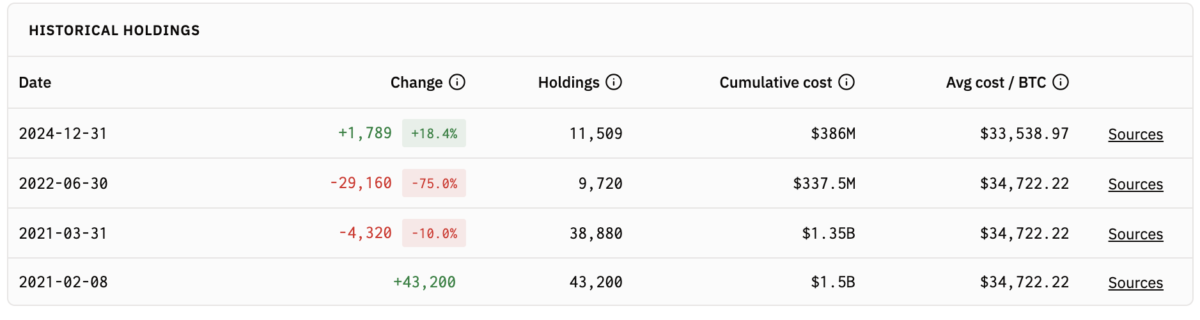
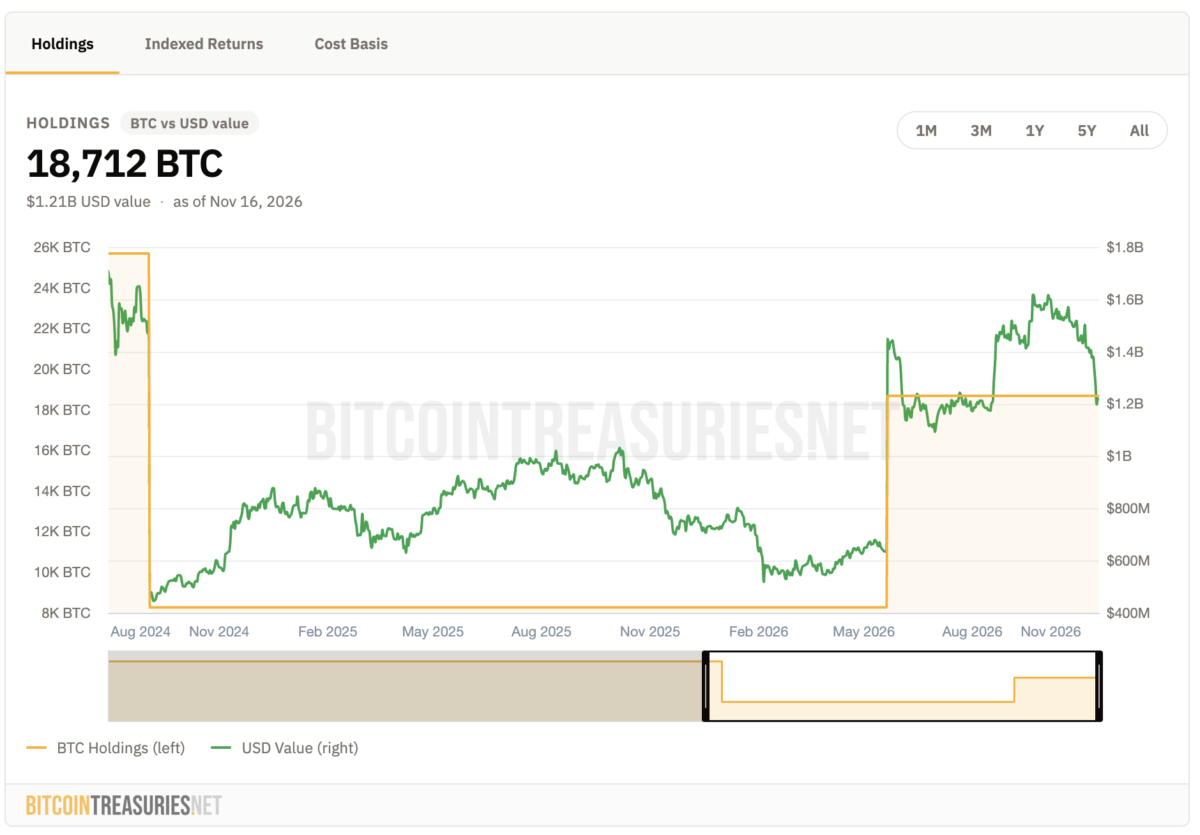
Tesla, Inc., the automotive and clean energy company, holds 11,509 $BTC valued at over $747 million right now. Similarly, SpaceX, the aerospace manufacturer, holds 18,712 $BTC worth over $1.22 billion.
In simple terms, the merger will simply be a transaction that pools in digital assets owned by both these entities into a single balance sheet. This consolidation would allow the merged entity to hold 30,221 $BTC in reserves.
Those are significant numbers. However, here’s where it’s also worth looking at the context and scale and the bigger picture.
Neither Tesla nor SpaceX are crypto companies. They are primarily tech manufacturing companies with valuations of $1.54 trillion and $1.89 trillion, respectively.
Yes, they have crypto holdings, but they aren’t significant enough for each individual entity to suggest that these are more than a passing interest and a diversification opportunity.
To put it in financial terms, for both Tesla and SpaceX, Bitcoin is a non-core balance sheet asset. For them, their $BTC holdings are financially immaterial to their core CapEx. As Dr. Andrei Belonogov, Managing Partner at TechAccountingPro pointed out,
The size of treasuries is relatively small compared to the company’s debt maturities and non-cancellable commitments.
This will remain the case if the merger does go through. If and when it happens, the merged companies’ valuation would dwarf the value of its crypto holdings.
Will there be post-merger jitters?
What about after, though? This is an important question because more often than not, non-core balance sheet assets go through a period of evaluation and restructuring and sometimes, disposal too to streamline operations and facilitate profitability.
Could this happen to the aforementioned Bitcoin holdings then? Well, that’s always a possibility. However, recent history suggests the odds are low.
Consider the purchase and sale history of both these companies, for instance. The last time Tesla sold any of its Bitcoin holdings was back in 2022. Since then, it has bought additional $BTC while also holding on to the stash it already had.
Source: BitcoinTreasuries
Similarly, SpaceX last sold any of its holdings back in 2024. In the two years since, the aerospace manufacturer has only bought Bitcoin. Specifically, over 10K $BTC in May 2026.
Source: BitcoinTreasuries
Now, it’s up for debate how much input the “conflicted party,” Musk, had in any of these sales or purchases. However, it is safe to assume that, given the consistencies between the two boardrooms so far, that will remain the case after the merger too.
At least in the short-term.
What about later though? Well, MetaWin COO Rory Cartwright told AMBCrypto,
The merger doesn’t necessarily mean a sell-off or any spike in price. What it will do, however, is put a roughly $2bn position into a single company’s balance sheet. Bitcoin can be especially volatile, so that may make some investors seasick
He went on to add,
If the board doesn’t want such exposure, we’ll more than likely see a sale. But I’d expect it to be gradual and signposted, rather than a straight-up fire sale.
Will the merged entity enjoy the same degree of flexibility Tesla and SpaceX enjoyed individually when it comes to crypto sales and purchases though? According to Kevin Constantine, Senior Associate at Caldwell Law,
Protections could become relevant to cryptocurrency holdings, particularly if management’s ability to purchase, liquidate, or transfer Bitcoin raised concerns about the companies’ valuations or the treatment of shareholders.
Is the merger good news for the crypto sector?
The fact that both Tesla and SpaceX refused to sell their Bitcoin in 2026, a year that has been particularly bearish for the crypto-sector, is testament to the confidence they have in this asset. It is also a sign of institutional conviction.
After the merger, the merged entity will have the potential to be the sixth-largest corporate Bitcoin holder in the world. Only behind crypto-native firms or treasury-focused players like MicroStrategy and Metaplanet. All while Bitcoin remains its non-core balance sheet asset.
That, more than anything, will be confirmation of Bitcoin’s value as a corporate treasury asset. That might not sound like much on paper, but that is still VERY bullish news.
What could be even better though? According to Chris Mack, CTO at Quote.Trade,
If Musk came out publicly bullish on Bitcoin and crypto, that would change things. Investors would start paying attention to whether he plans to buy more or make crypto part of the business.
That’s not all either. As it stands, both Tesla and SpaceX have significant investments in scaling AI infrastructure. This is likely to continue after the merger, with more capital and resources allocated to AI compute and energy grids.
In a very indirect way, such investments could have a positive impact on AI-focused crypto tokens like RENDER, TAO, and NEAR, especially in the long run.
Roadblocks ahead?
At the time of writing, reports seemed to suggest that Tesla and SpaceX are targeting a potential deal announcement by January 2027 or even as early as December 2026.
That’s an accelerated timeline, one that may or may not have anything to do with Democrats’ victory in the midterm elections. Democrats, many of whom are also planning to probe Elon Musk’s corporate ties.
Even outside the political element, though, it probably won’t be all sunshine and roses. After all, this is a merger between a major U.S. defense and Starlink contractor with an automative company with a significant manufacturing and sales footprint in China.
The regulatory and legal questions involved alone will be a nightmare.
Will crypto be an irrelevant factor then? Speaking to AMBCrypto, Constantine claimed,
Cryptocurrency could become an additional consideration if regulators were concerned that digital assets might be used to transfer value or facilitate transactions in ways that circumvent those restrictions.
As it stands, a lot of things are still up in the air. It’s too early to say how Tesla and SpaceX will quell national security concerns while juggling regulatory challenges with this merger. That’s the unpredictable part.
What is not unpredictable is what will happen to their cryptos and the crypto sector at large if this merger goes through. Relatively speaking, that is.
Final Summary
If the Tesla-SpaceX merger goes through, the merged entity will be among the world’s largest Bitcoin Treasury holders.
The effect on the crypto market could be anywhere between minimal and symbolic.

 ambcrypto.com