Bitcoin (BTC) Demand Hits 2026 Low as Price Retests $62,000
u.today
45 m
Bitcoin is facing increased fear and panic among traders as its price volatility continues to intensify, causing both retail and institutional investors to move with caution.
While Bitcoin is still struggling to regain momentum amid the persistent market downturn, the latest on-chain data from CryptoQuant shows that Bitcoin's demand has dropped to its weakest level in 2026.
Bitcoin demand falls to -255,000 $BTC
The data shows that Bitcoin's apparent demand is rapidly showing signs of weakness, with the metric dropping below -290,000 $BTC before seeing a brief recovery to about -255,000 $BTC as of November 18.
Know when your coins move
Alerts, real-time prices, and market news — all in one app
Point your phone camera to install
4.8 based on 40K reviews in the App Store and Google Play
However, this does not provide any relief, as Bitcoin’s apparent demand remains substantially below its monthly average of around -172,000 $BTC.
As such, it appears that investors’ interest in accumulating Bitcoin remains significantly subdued by the fear of potential losses. Hence, investors are growing increasingly cautious about entering the market amid the rising selling pressure.
Bitcoin retests July lows
The data shows that investors are growing increasingly wary of their Bitcoin positions amid growing uncertainty about its potential price movements, as Bitcoin’s price downturn has only intensified over the past few days.
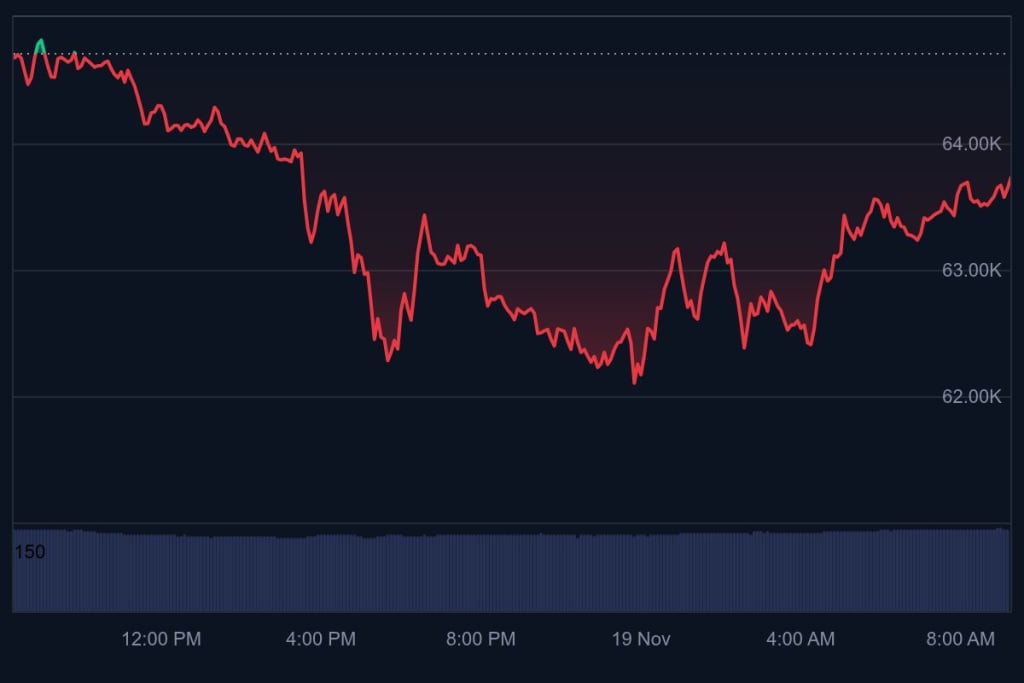
While the asset’s price has dipped further, Bitcoin has suddenly retested $62,000 as of November 18, a price level last seen during the severe price crash in July.
Nonetheless, further data shows that it has briefly recovered to $63,817.43 as of the time of writing, showing a decline of about 1.12% over the past 24 hours.
Source: CoinMarketCap
Bitcoin recovery still in view
Despite Bitcoin’s extremely negative demand and weak price movements, market analysts are still positive about a potential reversal, describing the moment as an opportunity to buy at a lower price.
It has been previously observed that while many investors are becoming increasingly bearish, periods of widespread fear can sometimes flush out weaker hands, thereby triggering a change in market direction.

 u.today